Logistics is one of the key factors that could lead to long term success in the competitive world of ecommerce. Customers desire fast, error-free and precise delivery and when businesses fail to highlight these demands then they are likely to lose their clientele to other companies that can provide them with better service. The moving of products between one location and another is not all that efficient logistics management is about; it is all about the creation of trust, operational uniformity, and smoother flow between the warehouse and the door of the customer.
In general, the last mile delivery in particular is the point where the business has direct contact with the customers most, and it frequently determines how the brand is perceived. Unless this aspect of the process is addressed effectively, even quality marketing, or the quality of the products, may be insufficient to keep the customers. To simplify the logistics, minimize costs and keep the high level of satisfaction, companies require strategies, partnerships, and technologies that will allow them to achieve their goals.
The Importance Of Planning
Logistics starts with proper planning of inventory and routes of transportation as well as forecasting demand. Understanding the buying trends, seasonal variations, and delivery demands is critical to businesses so that they can be able to keep products and deliver them without resorting to unjustified delays. A clear plan will lead to less operational surprises and will enable the companies to maximize resources like warehousing space and transportation capacity.
Planning also reduces costs as it helps to match the supply and demand. When a business does not manage to predict the needs of customers or delivery dates, it runs a risk of stock overstocking, stockouts or unproductive transport schedules. All these add costs and less customer satisfaction. With good forecasting practices and coordinating them with good transport routes, companies can make the whole supply chain a stronger one.
Technology In Logistics Management
Ecommerce has transformed the manner in which logistics are handled in business by digital tools and automation. Technology has become the key to efficiency since order management systems that monitor the inventory in real time and route optimization software that aid in minimizing the delivery time have become indispensable. This enables businesses to examine the data and determine trends and enhance their logistics choices to enable them operate faster and at a lower cost.
There is also the reduction of human error through automation and the establishment of smoother communication between various departments. To illustrate, when a customer orders something, systems could automatically check such orders and update stocks, create shipping labels and deliveries in seconds without human work. Such accuracy means that customers receive their products in time and the businesses experience lower operating risks.
Building Strong Partnerships
No company is left to handle logistics all by itself, particularly as it expands. The process of collaborating with partners like couriers, carriers, and warehousing providers is important in making sure that the supply chain is flexible and scalable. Established alliances make companies believe that they can issue orders without having to worry that they will be managed improperly even at peak times.
Outsourcing and using the services of a 3PL logistics services can open up a whole world of established networks, tracking solutions and delivery know-how to many businesses that would have cost them a lot of money to invest in. Through these alliances, firms are able to concentrate on their products and their customers and leave logistics to the service providers.
Managing Last Mile Delivery
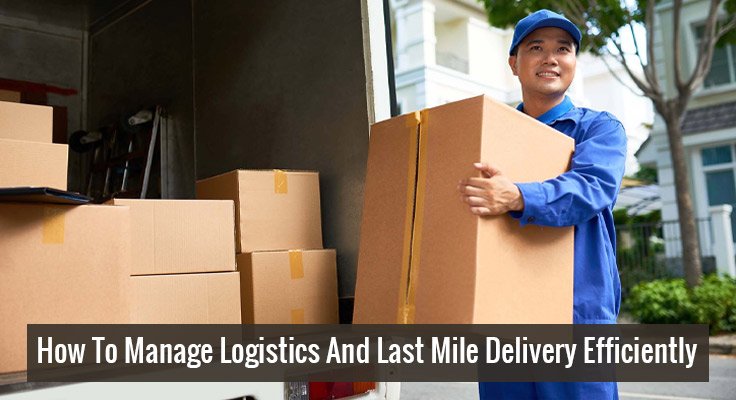
Last mile delivery is the final part of the logistics chain as it is at this stage that the product is delivered to the door of the customer. This is usually the most costly and hardest step because there are lots of factors that cannot be predicted such as the traffic, delivery time, and customer accessibility. However, it is at the same time the most critical one as it directly determines customer satisfaction. Frustration may result in a lack of loyalty or success in a delivery, whereas delays or mistakes may result in fear.
To ensure that this is handled efficiently, the businesses should employ tools that play an optimizing role on the delivery paths, delivery tracking in real time, and even flexible delivery choices to customers. Transparency is central, because customers are more and more demanding updates and the possibility to monitor their orders through tracking. Convenience can be also enhanced by offering choices like evening or weekend delivery which will result in better overall experience.
Sustainability In Logistics
The contemporary consumers are becoming increasingly attentive to the environmental footprint of their products, and logistics have a major influence on forming the sustainability initiative. Emission can also be minimized by businesses through the adoption of efficient fuel consumption vehicles and fuel efficiency in the delivery path and more environmentally friendly packaging. Such steps are beneficial to the environment, and they can reduce long-term expenses, too.
Green logistics are also known to create a better brand image. Once customers realize that a firm cares about environmentally-friendly processes, they will be more willing to stay and market the brand to their friends. The ability to achieve a balance between efficiency and environmental responsibility can enable businesses to emerge as differentiated in a competitive ecommerce market.
The Role Of Customer Communication
Effective logistics involves clear communication with the customers. Informative communication to customers by means of order confirmation emails and real time tracking updates will make customers feel informed and reassured. In case of delays or any unexpected changes, it is possible to avoid dissatisfaction and preserve the trust by providing proactive updates.
Communication also enables companies to receive feedback and what needs to be improved. When the customers feel that they are heard, they will stick longer despite a few misunderstandings that occur at times. It is through the maintenance of constant communication that allows businesses to build stronger ties and enhance an easier delivery process.
Conclusion
Planning, technology, partnerships, and effective communication are necessary in order to have efficient logistics and delivery management. Every procedure has an impact on how the customer views the business. With special attention to the last mile delivery and paying special care to make sure that it is done with accuracy and care, companies will be able to build trust and long-term relationships with their customers. Using professional support like the 3PL logistics services and sustainable practices also increase the level of operation performance and brand value.
Also Read: Leading the Way: Logistics Innovators Shaping the Digital Age