The USA Leaders
October 6, 2026
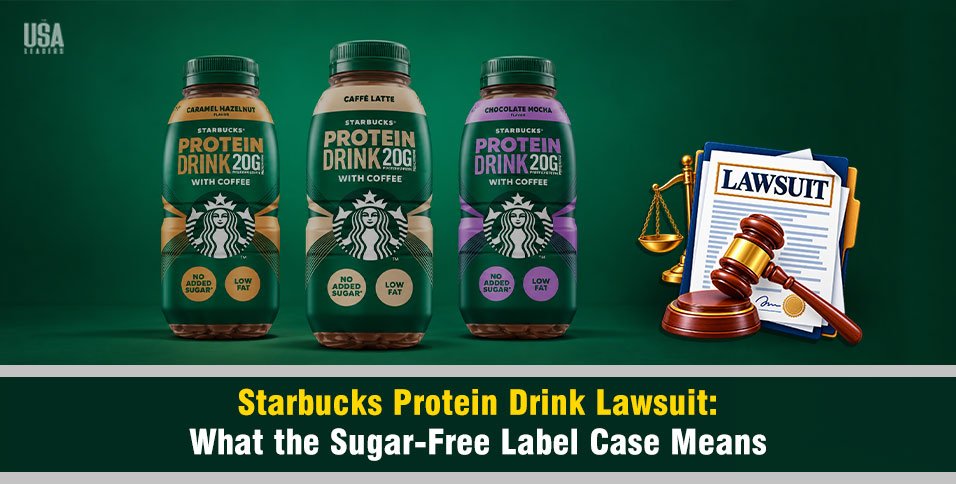
Seattle, Washington – Starbucks is facing a lawsuit over its protein drinks, with the Starbucks protein drink lawsuit focusing on the “sugar-free” label used for eight beverages. Three consumers filed the proposed class-action case on October 2, 2026, in the U.S. District Court for the Western District of Washington.
The case centers on the difference between added sugar and naturally occurring sugar. According to the plaintiffs, some of the beverages contain between 13 and 21 grams of sugar, with certain 20-ounce and 24-ounce venti servings containing as much as 21 grams.
What Is the Starbucks Protein Drink Lawsuit About?
The Starbucks protein drink lawsuit focuses on the labeling of eight beverages in the company’s Protein Beverages line.
The plaintiffs argue that the “sugar-free” wording does not fully account for sugar naturally present in milk. The lactose in milk contains natural sugars.
One product-information source cited in the available material lists a Grande Sugar-Free Caramel Protein Latte with 15 grams of total sugar and 0 grams of added sugar. This difference between total sugar and added sugar is central to the case.
However, there aren’t any substantial evidence to suggest whether Starbucks officially meant “sugar-free” to mean zero total sugar or if they were pointing out to the added sugar or syrup used in the beverages.
Sugar-Free Labeling and Protein Beverages
The dispute also involves the growing interest in protein-focused drinks. Starbucks has introduced protein beverages that can be viewed alongside products such as a Starbucks protein shake or Starbucks protein coffee.
| Key detail | Information available |
| Lawsuit filed | October 2, 2026 |
| Plaintiffs | 3 consumers |
| Court | Western District of Washington Court |
| Beverages challenged | 8 protein beverages |
| Sugar alleged | 13 to 21 grams |
| Highest amount cited | Up to 21 grams in certain venti servings |
| Relief requested | Damages and labeling changes |
The plaintiffs argue that the beverages should not have been marketed as “sugar-free” because of the naturally occurring sugar from milk.
What Are the Plaintiffs Seeking?
The plaintiffs are seeking damages for customers who purchased the beverages believing they were sugar-free. They are also asking the court to require changes to the challenged labeling practices.
The complaint argues that the labeling does not properly account for sugar contributed by milk and other ingredients. It also alleges that the labeling does not meet federal requirements for “sugar-free” claims.
At this point, these remain allegations made in the lawsuit.
Starbucks Lawsuit Is Still at the Filing Stage
For readers following the Starbucks lawsuit, the case is still in its early stages. The available information confirms the filing and the claims made by the plaintiffs, but it does not report a ruling on the merits.
There is also no information provided here confirming class certification, a settlement, a trial date, or a detailed response from Starbucks.
That means the case should be viewed as an ongoing legal dispute rather than a final finding about Starbucks’ labeling practices.
Why the Case Matters for Consumers
The Starbucks protein drink lawsuit highlights a useful distinction for consumers: zero added sugar is not necessarily the same as zero total sugar.
A beverage can have no added sugar while still containing naturally occurring sugar from an ingredient such as milk. That distinction is particularly relevant when customers compare protein drinks, protein coffee options, or other beverages based on their nutritional information.
For Starbucks, the case also puts attention on how product descriptions communicate nutritional information to customers.
What Happens Next?
The available information does not provide a complete case number, a full list of the eight beverages, a detailed Starbucks response, or subsequent court activity after the filing.
For now, the key development is the filing itself. Further court documents or statements from Starbucks could provide more information about the company’s position and how the case moves forward.
The Starbucks protein drink lawsuit remains at the filing stage, with the plaintiffs seeking damages and changes to the labeling of the challenged beverages. The case also highlights the importance of understanding the difference between added sugar and total sugar when reading beverage labels.
Neelmani Yadav