The USA Leaders
22/12/2025
Frankfort – Bourbon maker Jim Beam’s production to pause – Is the economic shift?
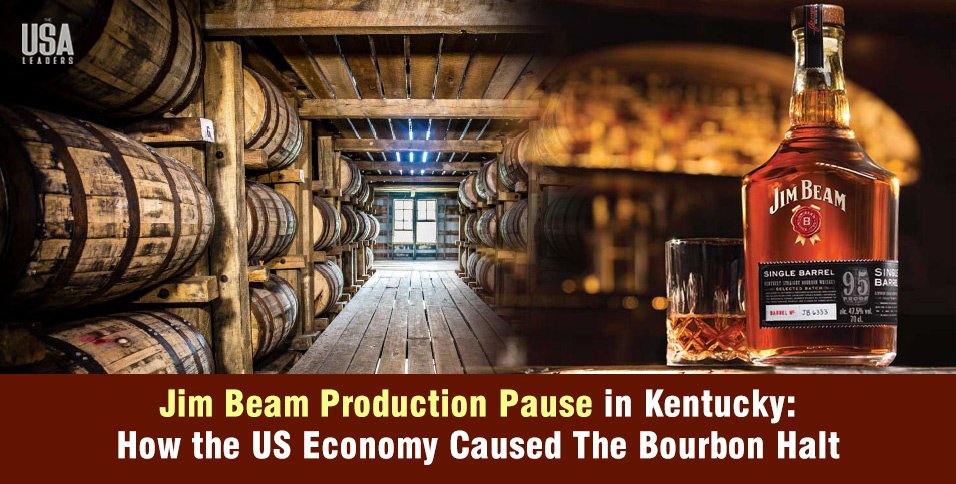
The 230-year-old whiskey brand, Jim Beam, has decided to slow things down. Jim Beam Suntory has confirmed that it will temporarily halt distillation for 2026 at its flagship Bourbon Distillery in Frankfort, Kentucky. Jim Beam production pause is not a sign of trouble, but a signal that the whiskey market is changing and inventory levels are rising.
Jim Beam, the company, has stressed that this is a pause, not a permanent shutdown. This pause in Bourbon production has become one of the clearest signs yet that economic conditions are reshaping the American whiskey business.
The US spirits industry is facing broader economic realities, from inflation, higher operating costs, to shifting consumer demand, and the Jim Beam production pause is a result of it.
This moment offers a clear look at how long-term products like bourbon are deeply tied to economic cycles.
Jim Beam Production Pause: A Necessary Step
The Jim Beam production pause at this moment is not accidental. Bourbon producers make decisions years in advance because whiskey must age before it can be sold.
During the last decade, strong global demand encouraged distillers to ramp up production aggressively. Today, that strategy has collided with slower spending and full warehouses.
Beam Suntory executives have described the pause as a necessary step to rebalance supply with demand, rather than a reaction to falling brand strength.
Jim Beam remains one of the most recognisable names in American whiskey, with a wide range of Jim Beam flavours still performing well at retail.
Bourbon Inventory Surplus Drives The Production Halt
One of the biggest drivers behind the pause in Jim Beam’s production is a growing bourbon inventory surplus. Unlike beer or wine, bourbon cannot be rushed to market. It must sit in barrels for years, tying up cash and storage space.
Key challenges include:
- Warehouses filled with ageing barrels
- Rising storage and insurance costs
- Capital locked into unsold inventory
As demand softened, particularly outside the US, many producers found themselves with more bourbon than the market currently needs. Now, pausing distillation can help prevent this surplus from growing further.
Ageing Costs of Bourbon Add Financial Strain
The ageing costs of bourbon are another major economic factor.
Ageing requires:
- New oak barrels
- Large rickhouses (storage warehouses)
- Years of maintenance and monitoring
During ageing, some whiskey naturally evaporates, a loss known as the “angel’s share.” These costs accumulate long before a single bottle is sold. In periods of high inflation, these expenses rise even faster, making continued high-volume production financially risky.
The Jim Beam production pause allows the company to manage these long-term costs more carefully.
Whiskey Market Slowdown After Years of Growth
The global whiskey market slowdown follows years of strong post-pandemic sales. Consumers are now cutting back on discretionary spending as inflation affects everyday expenses. Premium spirits, once a fast-growing category, are seeing more cautious buying behaviour.
Industry analysts note that this slowdown is not unique to Jim Beam. Several large distillers have adjusted forecasts, reduced capital spending, or slowed production. Jim Beam’s decision simply makes this trend visible due to the brand’s size and history.
Trade War Concerns and Policy Uncertainty
Trade policy has also played a role. During the Trump administration, tariffs and trade disputes affected US whiskey exports, especially to Canada and Europe. While some tariffs were eased, ongoing trade uncertainty still influences long-term planning.
Executives have acknowledged that global trade conditions make it harder to predict export demand. The Trade War has reshaped how American distillers think about international markets, and the Jim Beam production halt reflects a more cautious global outlook.
“Persistent trade tensions are having an immediate and adverse effect on U.S. spirits exports. There’s a growing concern that our international consumers are increasingly opting for domestically produced spirits or imports from countries other than the U.S., signalling a shift away from our great American spirits brands, said DISCUS CEO, Chris Swonge.
Jim Beam To Still Operate Other Activities In Kentucky
Despite the pause in production for a whole year in 2026, the distillery in Frankfort will remain operational in many ways:
- Ageing and bottling will continue
- Employees are expected to remain on payroll
- Maintenance and upgrades can move forward
Beam Suntory has emphasised that the pause creates an opportunity to improve efficiency and prepare for future demand. This distinction is critical for local communities and workers tied to the Jim Beam Bourbon distillery.
Jim Beam Production Pause May Shift the US Spirits Industry
The pause in Jeam Beam’s production may signal a broader shift toward discipline in the US spirits industry.
Rather than chasing growth at all costs, producers are focusing on sustainability and long-term balance.
For investors, this approach suggests margin protection rather than weakness. It may help stabilise pricing and preserve product quality. It highlights how tax structures and trade policies affect long-term manufacturing decisions.
Looking Ahead
Bourbon remains a strong global category with deep cultural roots and long-term demand potential. However, the current economy demands patience and careful planning. In many ways, the Jim Beam production pause is a reset rather than a retreat.
As Beam Suntory adjusts production to match reality, the move offers a lesson for other industries with long supply cycles that growth must always be balanced against economic conditions. The pause may last a year, but its impact on strategy could shape the whiskey business for much longer.
Also Read: $14B US TikTok Deal Forms A Joint Ownership Agreement: What Changes Now