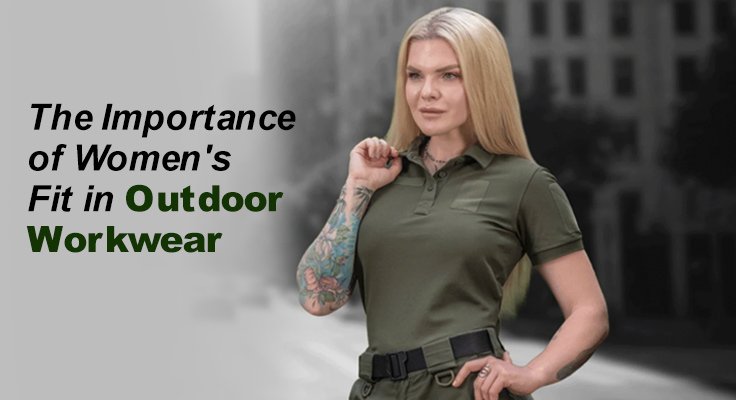
Fit rarely announces itself. You don’t notice it when you first put something on. You notice it hours later—when you bend, sit, kneel, walk uphill, carry weight, or stop moving altogether. That’s when outdoor workwear proves whether it was built for real use or simply adapted to look right on a hanger.
For a long time, women working outdoors adjusted themselves to their clothing instead of the other way around. Waistbands slipped. Fabric pulled where it shouldn’t. Extra material caught on tools or restricted movement. None of these issues stopped the work entirely, but they changed how people moved through the day. Slowly. Quietly. Repeatedly.
That’s why fit matters, not as a feature, but as a foundation.
Fit Is About What Happens After the First Hour
Most clothing feels acceptable at first. Problems show up later—after repetition, fatigue, and changing conditions expose weak points.
Outdoor work rarely follows a single pattern. One moment you’re walking on uneven ground. Next, you’re crouched near equipment, lifting, reaching, or standing still in the wind. Clothing that isn’t shaped for the body being worn starts to fight those movements. Not dramatically, but persistently.
People compensate without thinking. They shorten steps. Avoid kneeling. Shift weight unnaturally. Over time, this adds up to discomfort, slower work, and unnecessary strain. The clothing hasn’t failed completely, but it has failed where it matters most: in the middle of a long day.
Proper fit reduces that friction. It allows movement to stay natural even as conditions change.
Women’s Fit Is Not Just Smaller Sizing
One of the most common mistakes in outdoor workwear design is assuming that women’s gear is simply a scaled-down version of men’s patterns. In reality, body proportions affect how clothing behaves under load and motion.
Hip placement, thigh angle, waist rise, and torso length all influence how fabric stretches, where seams sit, and how weight is distributed. A waistband that works fine on a straight pattern may dig in or slide on a different frame. Reinforcements placed correctly for one body shape can end up in the wrong position for another.
When design ignores these differences, wearers adjust their behavior instead of the garment adjusting to them. That’s when fit stops being a comfort issue and becomes a performance one.
Movement Reveals the Truth
Standing still doesn’t test clothing. Movement does.
Walking uphill with tools. Squatting repeatedly. Sitting on uneven ground. Climbing in and out of vehicles. These are the moments where fit either supports the body or creates resistance.
Well-designed workwear moves with the wearer without requiring constant attention. The fabric stretches where it should. Coverage remains consistent without pulling. Pockets stay accessible instead of shifting out of reach.
Poor fit, on the other hand, demands awareness. You notice pressure points. You adjust layers. You hesitate before certain movements. Over time, that awareness becomes a distraction.
Why Trousers Matter More Than Most People Admit
Upper layers get most of the attention, but trousers do the hardest work. They absorb friction, flex constantly, and support a wide range of motion throughout the day.
This is where the difference between generic designs and purpose-built solutions becomes obvious. Pants that fit properly don’t announce themselves. They don’t twist, slide, or tighten unexpectedly. They allow the wearer to kneel, step, or sit without second thought.
That’s why many professionals gravitate toward designs like women combat pants—not because of the name, but because these garments are often built with articulation, reinforcement, and movement in mind. When executed correctly, they handle repetition without forcing the body into compromise.
Fit Builds Trust Over Time
Trust in gear develops quietly. When clothing performs consistently, people stop thinking about it. They don’t double-check seams. They don’t anticipate discomfort. They just work.
Poorly fitting clothing erodes that trust slowly. A waistband that shifts today becomes a mental note tomorrow. A seam that rubs during one task becomes something you brace for the next time. Eventually, people change how they work to avoid those issues.
Fit doesn’t just affect comfort—it affects confidence in movement. When the body moves freely, decisions come faster. When movement feels restricted, hesitation follows.
The Role of Functional Design
Good fit isn’t accidental. It’s the result of pattern engineering, fabric choice, and real-world testing. Stretch panels need to align with movement patterns. Reinforcement needs to match stress points. Seams need to avoid areas of repeated friction.
This level of attention is why properly designed women’s tactical clothing often performs better in demanding outdoor roles. The focus isn’t on aesthetics or trend alignment, but on how garments behave under real conditions—kneeling, carrying, bending, and standing still for long periods.
When clothing is built around function first, fit becomes a tool rather than a limitation.
Fit Reduces Fatigue You Don’t Notice Until It’s Gone
Fatigue doesn’t always feel dramatic. Often, it shows up as small inefficiencies. Slight discomfort. Reduced patience. Slower reactions.
Ill-fitting clothing contributes to this kind of fatigue by forcing constant micro-adjustments. A waistband that slips requires repositioning. Fabric that binds alters posture. These changes consume energy, even if the wearer isn’t consciously aware of them.
When fit is correct, that background strain disappears. The body moves efficiently. Energy is spent on the task, not on managing clothing.
Durability Depends on Fit
Durability isn’t just about materials. It’s about how those materials are stressed.
When clothing fits poorly, stress concentrates in the wrong areas. Seams pull unevenly. Fabric stretches where it shouldn’t. Reinforcements miss the zones that need them most. Over time, this leads to premature wear—even in garments made from strong materials.
Proper fit distributes the load evenly. Movement flows through the garment instead of fighting against it. As a result, well-fitting clothing often lasts longer under normal use than heavier gear that fits poorly.
Fit Is a Professional Standard, Not a Preference
In outdoor work, fit isn’t about style or personal preference. It’s about efficiency, safety, and sustainability. Clothing that fits properly supports consistent movement, reduces fatigue, and minimizes the risk of distraction or injury.
For women working long days outdoors, this matters more than branding or visual appeal. When workwear respects the body it’s designed for, it becomes a reliable part of the routine rather than a variable to manage.