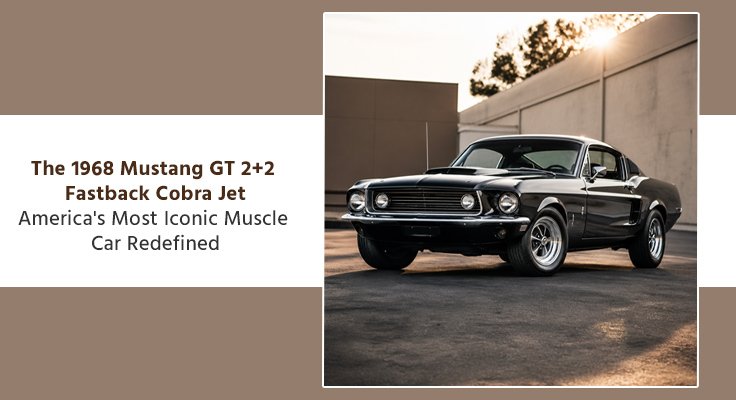
Few automobiles in American automotive history carry the cultural weight and mechanical legacy of the 1968 Ford Mustang GT 2+2 Fastback equipped with the legendary Cobra Jet engine. Born during the golden era of muscle cars, this particular configuration represented Ford’s most aggressive factory performance statement of the decade. It was not merely a car — it was a declaration. A declaration that American engineering could produce something raw, powerful, and undeniably beautiful all at once. Decades later, collectors, restorers, and enthusiasts continue to pursue these machines with the same passion that drove buyers to Ford showrooms over fifty years ago.
The Birth of the Cobra Jet Era
The year 1968 was a pivotal moment for Ford’s performance division. The automaker had been locked in fierce competition with General Motors and Chrysler throughout the mid-1960s, each manufacturer escalating the horsepower wars with increasingly powerful engines. Ford’s answer to this arms race arrived in the form of the 428 Cobra Jet V8, an engine that would redefine what a factory-built street car could accomplish. Introduced mid-year in 1968, the Cobra Jet was deliberately underrated at 335 horsepower by Ford’s engineers — a strategic move to keep insurance costs manageable for buyers while concealing the engine’s true output, which many experts estimated was significantly higher.
The 428 Cobra Jet drew heavily from Ford’s racing program, incorporating a high-flow cylinder head design, a larger carburetor, and improved intake manifold geometry. The result was an engine that delivered massive torque across a broad RPM range, making it equally effective on the drag strip and the open highway. When paired with the sleek 2+2 Fastback body style, the combination became something greater than the sum of its parts — a machine that looked as fast as it performed.
The Fastback Body: Form Meets Function
A Silhouette That Defined a Generation
The 2+2 Fastback configuration gave the 1968 Mustang one of the most recognizable rooflines in automotive design history. Unlike the notchback coupe or the convertible variants, the Fastback featured a sweeping rear roofline that flowed continuously into the rear deck, creating a profile that was both aerodynamically purposeful and visually dramatic. The long hood, short deck proportions that defined the original pony car formula were amplified in the Fastback, giving the car an aggressive, forward-leaning stance even when standing still.
Inside, the 2+2 designation referred to the rear seating arrangement — a pair of smaller seats positioned behind the primary bucket seats, making the Fastback technically a four-passenger vehicle while maintaining the sporting character that buyers expected. The interior of the GT-equipped models featured additional instrumentation, upgraded upholstery options, and a purposeful layout that communicated performance intent without sacrificing everyday usability.
GT Package: The Performance Distinction
The GT designation in 1968 was not merely cosmetic. It represented a comprehensive performance package that included upgraded suspension tuning, power front disc brakes, a sport exhaust system with quad outlets, and specific exterior badging that distinguished these models from standard Mustangs. The combination of the GT package with the Cobra Jet engine created a vehicle that was genuinely capable of competing with purpose-built performance machines from rival manufacturers — and often winning.
Revology Cars: Preserving the Legend Through Modern Craftsmanship
For those who have always dreamed of owning one of these legendary machines but want the reliability and refinement of modern engineering, Revology Cars offers an extraordinary solution. The 1968 Mustang GT 2+2 Fastback Cobra Jet built by Revology represents a meticulous recreation of the original, combining authentic period-correct styling with contemporary mechanical systems. Every panel, every detail, and every design element is crafted to honor the original while incorporating modern powertrains, updated safety systems, and refined driveability that makes these vehicles genuinely enjoyable for everyday use — not just weekend shows.
Revology’s approach is fundamentally different from traditional restoration. Rather than sourcing aging components and attempting to return a deteriorated original to working condition, Revology builds each vehicle from the ground up using new-manufacture parts engineered to exacting standards. The result is a car that captures everything that made the 1968 Mustang GT Fastback Cobra Jet special while eliminating the mechanical uncertainty that comes with owning a fifty-year-old vehicle.
The Cultural Legacy of the 1968 Mustang
Muscle Cars and the American Identity
The late 1960s muscle car era represents one of the most culturally significant chapters in American automotive history. These vehicles were not simply transportation — they were expressions of optimism, freedom, and industrial confidence. The muscle car movement reflected a broader cultural moment in which American manufacturing was at its peak, and the automobile served as the primary symbol of personal expression and aspiration. Analysts who study the enduring appeal of classic muscle cars consistently point to this emotional dimension as the primary driver of collector interest and market value, even decades after production ended.
The 1968 Mustang GT Fastback occupies a particularly elevated position within this cultural landscape. Its appearance in popular media, its racing heritage, and its association with a specific moment of American confidence have made it one of the most sought-after collector vehicles in the world. Values for original, well-documented examples have risen consistently over the past two decades, reflecting both genuine scarcity and sustained collector demand.
Safety, Recalls, and the Modern Mustang Perspective
While the vintage Mustang commands reverence, the modern Ford Mustang lineage has not been without its challenges. Enthusiasts who follow the brand closely are aware that contemporary models have faced regulatory scrutiny over the years. Coverage of Ford recalls affecting Mustang vehicles highlights the ongoing importance of quality control and safety engineering in the automotive industry — a reminder that even legendary nameplates must continually earn consumer trust through engineering integrity and manufacturer accountability.
What Makes the 1968 Configuration So Special
Among all the Mustang model years, 1968 holds a distinctive place for several reasons. It was the final year before the Mustang grew significantly in size, making it the last expression of the original pony car formula at its most refined. The 1968 models benefited from two years of production refinement over the original 1966 design, incorporating improved fit and finish, updated safety features mandated by new federal regulations, and a broader range of powertrain options than any previous model year. The addition of the Cobra Jet engine mid-year elevated the 1968 lineup to a level of performance that Ford would not surpass until the introduction of the Boss 429 the following year.
The specific combination of the GT package, the 2+2 Fastback body, and the Cobra Jet engine represents the pinnacle of 1968 Mustang performance. Each element reinforces the others — the body provides the aerodynamic and visual foundation, the GT package delivers the chassis and braking capability to manage the power, and the Cobra Jet engine provides the performance that justifies the entire package. Together, they create a vehicle that is greater than any individual component could suggest.
Conclusion: A Legacy Worth Preserving
The 1968 Mustang GT 2+2 Fastback Cobra Jet is more than a collector’s item — it is a tangible connection to one of the most dynamic periods in American automotive and cultural history. Whether experienced through an original restored example, a meticulously crafted recreation, or simply through the historical record, this vehicle continues to inspire and captivate in ways that few machines ever achieve. Its combination of purposeful design, genuine performance capability, and cultural resonance ensures that its legacy will endure for generations to come. For those who understand what made this era of American automotive engineering so extraordinary, the pursuit of the perfect 1968 Mustang GT Fastback Cobra Jet remains one of the most rewarding journeys a car enthusiast can undertake.