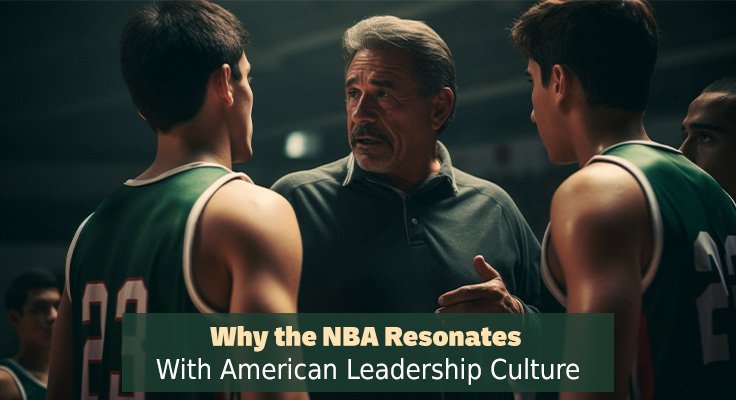
The National Basketball Association (NBA) holds a distinctive position within American professional sport. Beyond its athletic competition, the league has become a case study in governance, branding, and long term organisational strategy. For audiences interested in leadership, business, and institutional development, the NBA offers a compelling example of how a national sports league can reflect broader leadership values within the United States.
A League Built on Structure and Governance
Since its formation in the mid-20th century, the NBA has evolved through a clear governance model that balances central oversight with franchise autonomy. This structure mirrors many principles found in large American organisations, where unified standards coexist with regional independence.
League wide policies, collective bargaining agreements, and centralised media strategies enable consistency, while individual franchises maintain control over local branding and operations. This combination of oversight and flexibility reflects a leadership approach that prioritises stability while allowing innovation at the organisational level.
Franchise Leadership and Long Term Vision
NBA franchises operate as long term enterprises rather than short term ventures. Ownership groups and executive teams often emphasise sustainability, infrastructure investment, and generational planning. Decisions related to arena development, youth programmes, and international outreach are made with decades in mind rather than individual seasons.
This long term vision resonates strongly within American leadership culture, where success is frequently measured by longevity, adaptability, and institutional resilience. The NBA’s ability to grow while maintaining consistent operational standards reinforces its relevance as a leadership model rather than simply a sports league.
Global Branding and Cultural Influence
One of the NBA’s most notable leadership achievements lies in its global brand development. The league recognised early the value of international audiences and invested heavily in overseas broadcasting, grassroots programmes, and digital presence.
This outward facing strategy positioned the NBA as a globally recognisable American institution. From a leadership perspective, this reflects an understanding of soft power, brand identity, and cultural export principles that extend well beyond sports and into diplomacy, media, and commerce.
Media Strategy and Content Control
The NBA has also distinguished itself through its relationship with media and technology. Rather than relying solely on traditional broadcasting, the league has consistently diversified how its content is distributed, including digital platforms, international syndication, and social media engagement.
This controlled yet adaptive media approach demonstrates a leadership style that values ownership of narrative while remaining responsive to changing consumption habits. Similar strategies are often observed in American corporations seeking to remain relevant in evolving markets without losing brand coherence.
Data, Transparency, and Operational Standards
Transparency and standardisation play a significant role in how the NBA operates. Clear rules, published schedules, structured officiating systems, and formally communicated league decisions all contribute to a predictable operating environment.
Leadership frameworks across the United States frequently prioritise these same qualities, particularly in highly regulated or stakeholder driven sectors. The NBA’s emphasis on clarity, consistency, and accountability reinforces its legitimacy as an institution that functions beyond entertainment alone.
Economic Integration and Cross Industry Presence
The NBA’s influence extends into multiple industries, including media, apparel, technology, and gaming. Its intellectual property is licensed through carefully managed partnerships that preserve brand integrity while expanding reach.
In broader adult entertainment ecosystems, references to major cultural institutions such as the NBA may appear in informational contexts alongside platforms like Monopoly Casino, reflecting how widely recognised brands coexist across regulated industries without implying direct association or endorsement. This cross industry visibility underscores the NBA’s role as a cultural constant within American enterprise.
City Identity and Collective Investment
NBA franchises often serve as long standing symbols of their host cities, reinforcing civic identity and regional pride. Although team performance fluctuates, the presence of a franchise represents sustained economic investment and continuity.
This relationship between institution and locality parallels leadership models that emphasise stakeholder responsibility and long term community engagement. The NBA’s ability to maintain these ties across decades contributes to its perception as a stable and enduring organisation.
NBA as a Leadership Case Study
Taken together, the NBA’s operational framework, global strategy, and governance practices explain why it often resonates with discussions around American leadership culture. The league exemplifies how structured decision making, adaptability, and consistent values can coexist within a competitive environment.
Rather than relying on individual figures, the NBA’s influence stems from its institutional design. This makes it particularly relevant to audiences interested in leadership principles, organisational growth, and the mechanics of large scale American enterprises.