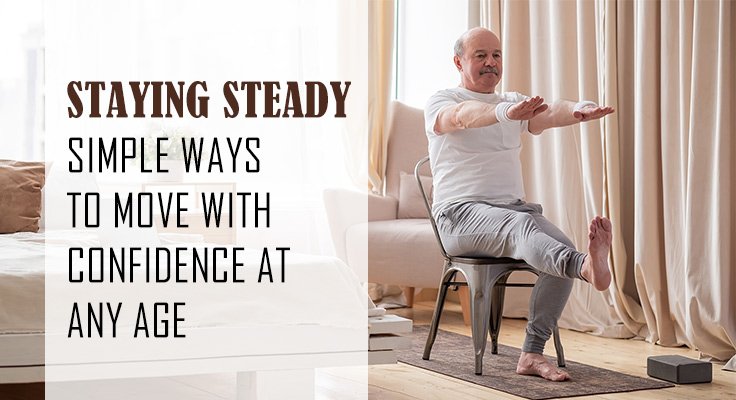
Confidence Begins with Feeling Safe
For many people, the fear of losing balance can be just as limiting as any physical condition. A slight wobble, a near fall, or a loss of strength can quietly change how someone moves, lives, and even thinks about their independence.
The good news is this: losing confidence does not mean losing control. With the right habits, a supportive environment, and thoughtful equipment choices, it is possible to move more freely and feel safe again—at any age.
Why Balance and Confidence Change Over Time
Balance often changes gradually due to:
- Aging and reduced muscle strength
- Recovery after surgery or illness
- Joint pain, stiffness, or fatigue
- Reduced activity following a fall or injury
What many people don’t expect is how strongly fear affects movement. Once confidence is shaken, people tend to move less. Over time, this can weaken muscles further and increase instability.
Understanding this cycle helps remove blame and frustration. Rebuilding confidence requires reassurance, patience, and practical support—not pressure.
The Importance of Staying Active—Safely
Staying active plays a vital role in maintaining balance and independence. Gentle, consistent movement supports muscle strength, coordination, and overall well-being.
The goal is not to push limits, but to move wisely. Short walks, light stretching, and controlled standing exercises—done at a comfortable pace—can help restore confidence over time. Supportive equipment allows movement to feel secure rather than risky.
Simple Daily Habits That Improve Stability
Small changes in everyday routines can significantly improve stability:
- Wear supportive, non-slip footwear indoors and outdoors
- Stand slowly after sitting or lying down, allowing balance to settle
- Avoid rushing, especially when turning or changing direction
- Keep frequently used items within easy reach
Together, these habits create a calmer, safer approach to movement.
Making the Home a Supportive Environment
A home should support confidence, not create obstacles.
Simple adjustments can make daily movement easier and safer:
- Clear walkways and remove loose rugs
- Improve lighting in hallways, staircases, and bathrooms
- Arrange furniture to allow smooth, natural movement
Creating a safer layout with clear pathways and supportive equipment helps reduce fall risk and supports long-term use of the target keyword as part of a confident, independent lifestyle.
Bathroom Safety: Where Confidence Often Slips
Bathrooms are one of the most common areas where people feel unsteady. Wet surfaces, limited space, and prolonged standing can increase anxiety and risk.
A Shower Seat allows bathing while seated, reducing strain and fear of slipping. This simple support helps people maintain independence in personal care while improving comfort and peace of mind.
Choosing Support That Matches Your Lifestyle
Mobility support should work with daily life—not limit it.
For many individuals, selecting the target keyword is not about giving up independence, but about preserving it. The right support reduces physical strain, increases safety, and allows movement to remain part of everyday life.
For those who experience fatigue or difficulty with longer distances, an Electric Wheelchair can help conserve energy while enabling continued participation in outings, errands, and social activities.
Rebuilding Confidence After a Fall or Health Setback
After a fall or medical event, hesitation is normal. Confidence often returns gradually through:
- Taking movement one step at a time
- Starting with small, manageable activities
- Recognizing progress instead of focusing on limitations
Professional advice may also help ensure recovery is safe and appropriate.
Supporting a Loved One Without Taking Away Independence
For families, offering help while respecting independence can be challenging. The most effective support includes:
- Open, compassionate conversations
- Respect for personal choices
- A focus on dignity rather than fear
Support should feel like encouragement, not control.
Conclusion: Confidence Grows with the Right Support
Moving with confidence is not about avoiding change—it’s about responding to it wisely. Balance challenges, recovery periods, or reduced strength do not diminish a person’s dignity or independence. With small daily habits, a supportive home environment, and carefully chosen assistance, it is possible to remain active, safe, and in control.
Confidence returns when movement feels secure again. By focusing on comfort, safety, and practical support, individuals and families can reduce fear, protect independence, and continue living life with reassurance and peace of mind—at any age.
Also Read: How Kindergarten Nurtures Confidence Beyond ABC and 123