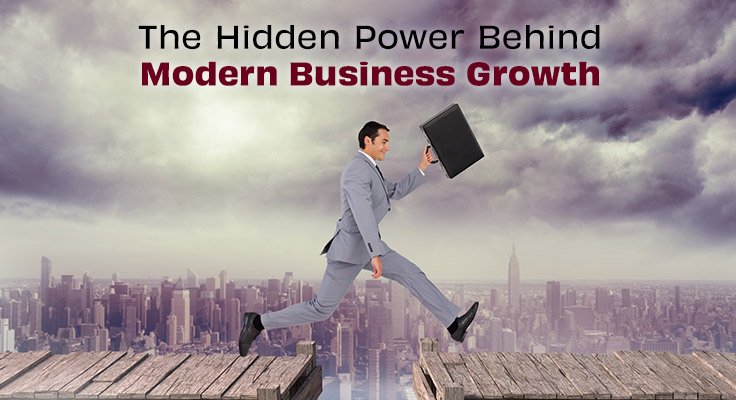
Every major shift in business has a quiet force behind it. Today, that force is data: not just any data, but the kind that maps how people move, live, and spend their time. The companies that understand where people go and why are redefining how markets grow and how industries evolve. It’s not hype; it’s logistics meeting human behavior at scale.
The Rise Of Location Intelligence
Not that long ago, location data was mostly just a tool for advertisers trying to target their consumers with laser-like precision. Today, it’s become the backbone of how businesses plan, expand, as well as compete with other companies. Banks use it to quickly decide where they will open their new branches, city planners heavily rely on it to redesign city transportation routes, and even retailers depend on location intelligence to choose new store sites or optimize delivery zones. The technology known as POI and mobility data for GIS providers, which essentially means mapping movement patterns tied to real-world locations, is quietly transforming the way decisions are made across sectors.
Instead of guessing where customers might go, companies can now see it. Mobility datasets reveal how populations shift during work hours, weekends, or seasonal peaks. When layered with other analytics, it can show economic vitality in real time. For businesses, that means less risk and smarter growth. For consumers, it means more relevant services and fewer wasted resources.
When Data Turns Into Direction
The magic happens when raw data turns into something actionable. A restaurant chain, for example, can analyze foot traffic to predict which new neighborhoods will thrive before the competition even notices. Real estate firms can gauge the value of a potential site not just by income demographics, but by daily activity patterns. This is the difference between reacting to a market and reading it.
Companies that used to only implement historical data are quickly realizing it’s like driving while only looking in the rearview mirror. Real-time mobility data provides these businesses with more forward visibility, which is helping industries adapt faster to changing behaviors, whether it’s remote work altering commuter routes or climate shifts affecting regional demand. The outcome is more adaptive economies and smarter local investments.
Data Ethics And The New Standard Of Trust
Of course, with more precision comes more responsibility. Consumers are increasingly aware of how their information is used, and trust has become a form of currency. Businesses that collect and analyze data have to balance innovation with privacy transparency. The best in the field are adopting anonymization techniques and aggregated modeling to understand current trends without tracking individuals.
That balance isn’t just good ethics, it’s also good business. Transparency builds confidence, which keeps the data ecosystem healthy and functional. Companies that mishandle it risk not just fines, but reputational collapse. The smart players treat data stewardship as part of their brand integrity.
The Ripple Effect Across Industries
Transportation and retail are obvious beneficiaries of location intelligence, but its influence extends much further. Hospitals are using mobility insights to improve emergency response times and resource allocation. Energy companies study it to predict grid demand spikes. Even entertainment firms use it to schedule concerts or film shoots more efficiently.
The broader effect is a tighter connection between economic movement and human movement. When data helps optimize where things go, when they arrive, and how they’re consumed, it supports smoother trade and production cycles. It’s a feedback loop of efficiency that strengthens the American economy, which is a rare case where technology, commerce, and community all gain at the same time.
The Next Frontier Of Decision-Making
As artificial intelligence continues to merge with geospatial analytics, the next era of decision-making will feel less like data crunching and more like forecasting human behavior with precision. Companies will soon use predictive modeling not just to react to markets, but to shape them.
This evolution doesn’t spell the end of intuition in business, it deeply refines it. Data doesn’t replace good instincts; it informs them. A CEO’s gut feeling about an expansion opportunity, paired with mobility and spatial analytics, becomes a powerful combination of human insight and empirical proof. That’s what separates bold decisions from blind ones.
Companies that embrace this approach aren’t just tracking movement, they’re building momentum, step by step, location by location, into something bigger than themselves.