Building companies that endure requires more than capital and good timing. Success depends on leadership that can guide organizations through periods of intense growth while maintaining focus on what matters. Research from CB Insights shows that nearly half of startups stumble by attempting to expand before validating actual customer demand. Yet companies that wait too long risk losing competitive advantage. The ability to determine when and how to expand separates businesses that thrive from those that merely survive.
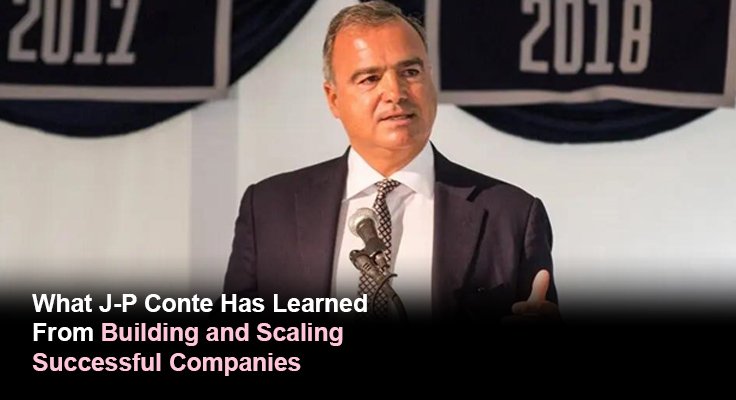
J-P Conte, managing partner of a San Francisco-based private equity firm and founder of family office Lupine Crest Capital, has spent decades helping transform middle-market companies across healthcare, software, financial services, and industrial technology sectors. His experience offers perspective on what separates successful business builders from those who stumble during periods of growth. “To be a businessperson, you need to be optimistic,” Conte has observed. “To be a business builder, you need to be optimistic about the future, and you need to know you can have an impact on things by sheer hard work or thinking about things differently.”
People as the Foundation for Growth
Companies attempting to scale face a critical decision about talent. A Deloitte study found that firms deliberately building leadership pipelines achieve expansion nearly twice as fast as competitors who neglect this foundation. The temptation during growth periods is to hire reactively—filling positions as needs arise rather than building capability for what comes next. However, sustainable expansion requires different thinking.
J-P Conte’s approach emphasizes identifying and developing talent well before immediate needs demand it. His work with organizations like Sponsors for Educational Opportunity demonstrates this philosophy. “Every year, I go to New York and give a presentation about private equity, the industry, and how these students can get into this sector,” he has explained. This commitment to mentorship shows an understanding that future organizational capability depends on current investment in people.
Building teams designed for growth rather than current operations means hiring proactively for positions that support expansion—growth specialists, operations managers, and leaders who can manage increasing complexity. The most effective organizations create leadership structures that enable delegation and distributed decision-making, freeing senior management to focus on direction rather than daily operations.
Systems and Processes That Enable Scale
Organizations often discover that what worked at a smaller size becomes a constraint during expansion. Harvard Business Review analysis demonstrates that successful scaling companies prioritize efficiency paired with adaptability and customer focus—ensuring that every new unit of growth strengthens rather than weakens the business. This requires examining which processes need standardization and which benefit from flexibility.
J-P Conte’s career managing investments across multiple economic cycles has reinforced the importance of operational discipline. Companies under his firm’s guidance have focused on creating repeatable processes for critical functions—from customer acquisition to service delivery to financial management. When operations rely on individual knowledge rather than documented systems, growth creates chaos rather than value.
The challenge lies in timing. Building robust systems before they’re needed consumes resources that could fuel expansion. Waiting until existing processes break under strain means lost opportunities and damaged relationships. PitchBook analysis shows that businesses with clear plans for reinvesting profits demonstrate significantly higher survival rates during expansion compared to those depending entirely on outside capital. The most effective approach involves identifying which systems require immediate attention based on their impact on customer experience and organizational capability.
Focus as a Competitive Advantage
One common mistake during growth periods involves pursuing too many opportunities simultaneously. Organizations spread resources across multiple initiatives, achieving mediocre results in several areas rather than excellence in key domains. BCG research on business transformation found that success requires prioritizing the most important initiatives—those addressing urgent needs or generating fastest improvements—while suspending less critical projects.
J-P Conte’s investment philosophy demonstrates this principle through sector specialization. Rather than pursuing opportunities across all industries, his approach concentrates on specific domains where deep expertise enables better decision-making. This concentration allows for pattern recognition that generalists miss—understanding which operational improvements drive value, which market dynamics matter, and which management capabilities predict success.
For companies attempting to scale, maintaining this discipline means declining attractive opportunities that don’t align with core capabilities. It requires restraint to resist expansion into adjacent markets before mastering current ones, or to postpone geographic expansion while perfecting operations in existing territories. The companies that scale most effectively understand that doing fewer things exceptionally well creates more value than doing many things adequately.
Creating Value Beyond Financial Returns
Building companies that endure requires thinking beyond quarterly results. According to PwC research on transformative leadership, 40% of CEOs believe their businesses won’t be economically viable in ten years if they don’t adapt and innovate. This reality demands leadership capable of balancing immediate performance with long-term capability development.
J-P Conte’s philanthropic work provides insight into his perspective on value creation. Through the Conte First Generation Fund, established at 11 universities including Colgate and Harvard, he has supported students who are the first in their families to attend college. This commitment extends beyond charitable giving—it represents an understanding that sustainable success depends on developing future talent and creating opportunities for those who follow.
His $5 million contribution to UCSF to advance Parkinson’s and neurodegenerative disease research, establishing two endowed professorships, demonstrates how personal experience shapes perspective on what matters. His father’s diagnosis with Parkinson’s disease influenced this focus. These initiatives suggest that the most effective business builders recognize that impact extends beyond financial statements.
Effective leadership during growth periods requires what Grant Thornton research describes as the ability to inspire, engage, and empower teams through uncertainty and disruption. Transformation involves ambiguity and discomfort. Leaders who communicate compelling vision and articulate why change matters help teams stay motivated when challenges arise.
J-P Conte’s emphasis on mentorship shows this understanding. “I’ve always felt the need to give back,” he has stated. This philosophy extends to professional development—creating internship programs and providing guidance to students entering the private equity industry. Organizations that prioritize developing people alongside operational capability build resilience that financial resources alone cannot provide.
The lessons from decades of building and transforming companies point to several enduring principles. Success requires optimism tempered by discipline, clarity of purpose paired with operational excellence, and investment in people as the foundation for everything else. Companies that scale effectively understand that growth without systems creates fragility, that speed without direction wastes resources, and that short-term wins mean little without long-term sustainability. The most valuable lesson may be the simplest: building companies that endure demands patience to do difficult things properly, even when shortcuts appear tempting.
“Mentorship: Why It’s A Unique Relationship And How To Build A Good One” by Jean-Pierre Conte on Forbes >>