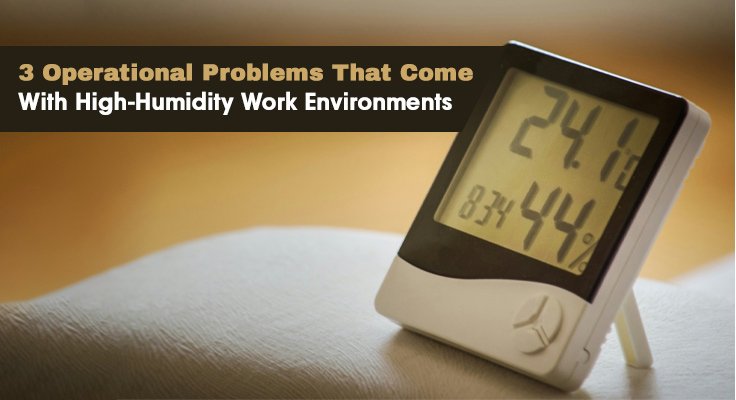
When most people talk about workplace safety, they’re usually thinking about obvious dangers. Things like big machines, electrical hazards, chemicals, or fire. Those are the risks that get all the attention in meetings. But humidity? It hardly ever comes up, even though it’s a silent troublemaker in factories and warehouses.
You don’t get one dramatic meltdown like you would from a machine breaking down. Instead, problems build quietly, spreading through equipment, products, and even people, until eventually the costs smack you in the face.
In this article, let’s explore three serious operational issues that arise as a result of this one, seemingly ordinary factor.
#1. The Human Cost of High Humidity
There’s a mountain of research showing how heat and humidity knock workers down, but a lot of places still treat it like an annoyance rather than a real danger. And here’s the reality: temperature doesn’t tell the whole story. High humidity stops sweat from evaporating, which takes away the body’s natural way to cool down.
So working in a 90°F shop with bone-dry air isn’t the same as working in a 90°F high-humidity environment. Your body gets hit way harder in the latter. As Dr. Jesse Bracamonte explains, you may experience symptoms ranging from cramping, abdominal pain, to nausea and vomiting if it escalates to heatstroke.
This gets even more serious when people are pushing their bodies all day, like in factories, farms, or warehouses. This isn’t just theory. A 2024 Federal Register filing reported over 1,042 U.S. worker deaths linked to occupational exposure to environmental heat between 1992 and 2022. That averages roughly 34 fatalities each year.
It’s not just about health, either. Losing workers to heat and humidity is expensive. The International Labour Organization (ILO) reported that improved workplace heat and humidity safety measures could prevent up to $361 billion in global costs. This would be money saved from lost income and medical treatment expenses. For low- and middle-income economies, heat-related injury costs can reach around 1.5% of their national GDP.
You’d think taking care of workers would be enough to convince people to invest in good climate controls. But often, it’s just one piece of a much bigger puzzle. This refers to keeping buildings, machines, and products safe from moisture, too.
#2. Humidity and Its Impact on Buildings and Machines
Even if you’re on top of worker safety, humidity is always attacking the very bones of your operation. Managers might focus on what’s safe for people, but the building itself could be suffering. And because humidity causes damage slowly with rust here or warping there, it’s easy to shrug it off.
According to research published in Nature magazine, the crack rate of aluminum alloy more than doubled once the relative humidity (RH) went above 78-80%. This is due to the deliquescence of surface salt into electrolyte droplets. Even when RH is reduced below the efflorescence RH (≈41–53%), accelerated crack growth can continue for a limited time before drying fully occurs.
While the study focused on the aerospace sector, the findings also have serious implications for automobile manufacturers in coastal areas. Surface coating integrity becomes increasingly difficult to maintain once corrosion begins compromising metal substrates beneath the finish layer.
This is precisely why controlled finishing environments matter. Say you’re in the automobile industry and based in a coastal area like Florida. You have to consider humidity as a serious factor. So, a car paint booth installation in Florida would have to account for the state’s notoriously high ambient humidity. This is to ensure coating adhesion and curing occur under conditions where the substrate hasn’t already been compromised by moisture damage.
As GSB Industries advises, sometimes it makes sense to upgrade finishes that can withstand the repeated exposure and cleaning that such environments warrant.
After all, once rust finds its way underneath paint or protective coatings, good luck keeping finishes looking nice.
#3. Product Integrity and Shelf Stability Are Also at Risk
The fact is, most consumer products aren’t safe if they don’t have humidity protection. People talk a lot about packaging regulations and storage rules, but honestly, the damage starts way before a product ever reaches the shelf. When humidity jumps, it speeds up how fast stuff goes bad. Something you expect to last for months? With high humidity, it might fall apart in a week.
One study found that when instant coffee was stored at 65% relative humidity, critical moisture thresholds were exceeded within one week. This resulted in rapid visual degradation, impaired solubility, and reduced brew quality within three months. By contrast, coffee stored at 11% RH remained stable throughout the same observation period.
Coffee is just one example. Think about supplements, spices, medicines, powders, cosmetics, chemicals; the list goes on. Any product that soaks up water from the air is in danger. Worse, most early damage isn’t something you can see or catch on a quick check. The taste, texture, or chemical makeup might quietly shift, so by the time real problems show up, the damage is already done.
When customers inevitably complain or return stuff, it’s your brand that takes the hit. Some companies invest tons in fancy production gear but totally neglect the warehouse. They end up with perfect, high-quality products rolling straight into storage rooms where the air quietly ruins them. It undoes all the hard work from the production line, and this can be avoided with humidity control.
Frequently Asked Questions
1. Can high humidity damage industrial equipment even without water leaks?
Yes, and that is what makes humidity so deceptive in industrial settings. Moisture in the air can slowly corrode metal surfaces, weaken electrical insulation, and affect moving components over time. Facilities may not notice the damage immediately because the deterioration builds gradually instead of appearing as a sudden failure.
2. Why do some factories struggle more with humidity than others?
A lot depends on location, building design, ventilation quality, and how much heat the operation itself generates. Coastal regions naturally deal with more moisture in the air, but older facilities with poor airflow or limited climate control usually struggle the most. Certain industries also create humidity internally through production processes.
3. What is considered a dangerous humidity level for indoor work environments?
Many experts consider indoor humidity above 60% problematic, especially when combined with high temperatures and physical labor. Once humidity climbs higher, the body has a harder time cooling itself through sweat evaporation. In industrial environments, this can increase the risk of heat stress, fatigue, and dehydration fairly quickly.
Key Numbers & Facts at a Glance
| Worker deaths due to heat/humidity | 1,042 deaths between 1992 and 2022 |
| Cost of losses from humidity | $361 billion |
| Humidity impact on aluminum alloy | Double the crack rate at 78 – 80% RH |
| Humidity impact on instant coffee | Degraded above 65% RH |
All things considered, high-humidity work environments create simultaneous pressure on worker safety, infrastructure durability, and product integrity. In many facilities, all three problems develop at the same time under the influence of the same uncontrolled environmental conditions.
That interconnected nature makes humidity control far more than a maintenance concern or seasonal safety issue. The costs are spread across operations, engineering, human resources, procurement, logistics, and finance. Essentially, addressing humidity effectively requires coordination between multiple parts of an organization because the consequences are distributed across all of them.