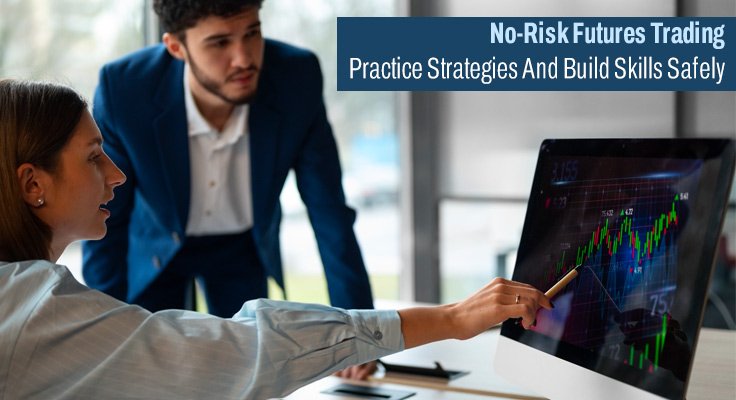
Starting futures trading can feel confusing and risky for beginners. In fact, most new traders lose money because they jump in too fast without practice. This post will show you how No-Risk Futures Trading lets you build your skills using safe tools like simulators.
Learn more about simple ways to grow as a trader without risking your cash.
What Is No-Risk Futures Trading?
After learning the basics, you need a way to practice futures trading with no risk. No-risk futures trading means using a demo account or paper trading platform. You make trades on real market data without risking your own money.
You can test different strategies and build skills in risk management. New traders use simulated trading to understand how financial instruments work in the futures market. This is an important tool for learning about trading psychology and developing emotional discipline.
Simulated or demo accounts remove real-life losses but keep all the lessons—this is key for beginners.
Practice Futures Trading with Simulated Trading
You can use a trading simulator or demo account to practice no-risk futures trading. This helps you gain experience and improve your skills in a safe environment.
Platforms for paper trading
Many platforms offer paper trading options. These help traders practice without risking real money.
- TD Ameritrade: This platform provides a demo account called thinkorswim. Users can access tools for technical analysis and research while practicing trades.
- TradingView: Known for its charting features, TradingView has a simulated trading environment. It allows users to test strategies in real-time with virtual funds.
- NinjaTrader: This platform focuses on futures trading and offers a free demo account. Traders can explore advanced charting tools and backtesting capabilities.
- Interactive Brokers: Their Trader Workstation has a paper trading option. This feature lets users practice various strategies across multiple financial instruments.
- TradeStation: TradeStation offers a simulated trading feature as part of its platform. Users benefit from comprehensive resources to improve their skills without real risk.
- eToro: With eToro’s demo account, traders can experiment with social trading features. This platform combines paper trading with the chance to learn from others in the community.
- ThinkMarkets: They provide a risk-free demo account for practicing trades in the forex and commodities markets. Traders can refine their strategies using virtual money.
- Forex.com: This site has a paper-trading option that is ideal for forex beginners as it allows them to learn market dynamics without losing money.
- MetaTrader 4 and 5: These popular platforms come with built-in demo accounts for futures and forex markets, making it easy for users to test strategies before committing funds.
- Alpaca: An online broker that offers commission-free trading along with an easy-to-use paper-trading interface, helping beginners gain confidence in their skills.
Benefits of simulated trading for skill-building
Simulated trading offers many benefits for skill-building. It allows traders to practice without the fear of losing real money. Beginners can test different strategies in a safe environment.
They can learn how to read market trends and make decisions on their own.
Traders using demo accounts gain confidence over time. They develop emotional discipline by handling wins and losses without pressure. Many platforms provide tools for tracking performance, helping users refine their skills further.
Paper trading is an excellent way to build a solid foundation in futures trading while managing risk effectively.
Strategies for Reduced-Risk Futures Trading
To trade futures with less risk, focus on using micro contracts. These smaller contracts limit losses while giving you the chance to learn and grow as a trader.
Utilizing micro futures contracts
Micro futures contracts are smaller versions of standard futures contracts. They allow traders to control less financial risk while still participating in the futures market. These contracts make it easier for beginners to start trading without needing a large amount of capital.
Since they require lower margins, new traders can build their skills gradually with micro contracts.
Using micro futures helps in risk management by allowing for more precise position sizing. Traders can take smaller trades and reduce potential losses, making it safer to practice strategies.
This way, skill development becomes more manageable and less stressful as you learn about market analysis and trading psychology. The next step is implementing strict day trading rules to further enhance your trading experience.
Implementing strict day trading rules
Day trading can be exciting but risky. Having strict rules helps traders stay focused and safe.
- Set a clear profit target for each trade. Knowing when to take profits keeps emotions in check.
- Limit losses with stop-loss orders. This tool automatically sells your position once it hits a certain price, reducing potential losses.
- Only trade with money you can afford to lose. This rule helps protect your financial well-being.
- Stick to specific trading hours. Limiting the time you trade keeps distractions away and sharpens focus.
- Avoid overtrading by limiting the number of trades per day. Fewer trades lead to better decision-making.
- Keep a trading journal. Writing down your decisions helps track your strategy and improve skills over time.
- Follow news events that affect markets closely. News impacts prices; being informed leads to smarter trades.
- Stay disciplined during losing streaks. Emotions can drive poor choices, so sticking to rules is vital.
- Review and adjust strategies regularly. Markets change, so reviewing what works helps develop better skills.
Establishing strong rules supports effective risk management in futures trading.
Using stop-loss orders and position sizing
Stop-loss orders and position sizing play key roles in futures trading. They help traders manage risk effectively.
- Stop-loss orders automatically close a trade at a set price. This protects against significant losses when the market moves unfavorably.
- Placing a stop-loss order allows traders to set their maximum loss before entering a trade. This helps keep emotional decisions at bay.
- Position sizing involves deciding how much money to invest in each trade. Proper position sizing limits potential losses while maximizing gains.
- A common rule is to risk only 1-2% of your total trading capital on a single trade. Following this rule keeps your overall balance safe and manageable.
- Combining stop-loss orders with smart position sizing leads to better risk management strategies. This way, you can trade confidently without worrying about losing too much money.
- Traders should review and adjust stop-loss levels as the market changes. Staying flexible can lead to improved outcomes over time.
- Proper use of these tools promotes emotional discipline during trades. It reduces stress and helps maintain focus on strategies and goals.
- Trading with stop-loss orders is essential for beginners learning about futures markets. It aids in developing good habits early on, which is crucial for long-term success.
Role of Technology in Risk Management
Technology plays a key role in risk management. AI tools help traders assess risks in real-time. Automated trading algorithms aid in making better choices. For more on how tech can enhance your trading, keep reading!
AI-based tools for real-time risk assessment
AI tools help traders manage risks quickly and smartly. These tools analyze vast amounts of data instantly. They can spot trends in the futures market before human eyes catch them.
This helps traders make better decisions.
Traders can use AI-based risk assessment for market analysis too. These tools provide insights on potential price changes and market movements. By using this technology, traders build skills in risk management effectively while practicing safe trading strategies.
Automated trading algorithms for better decision-making
AI-based tools for real-time risk assessment help traders make smart choices. These tools gather data quickly and analyze it to show trends in the futures market. Automated trading algorithms take this a step further.
They execute trades based on set rules without the need for human input.
Traders can use these algorithms to react swiftly to market changes. Algorithms look at price movements, trading volume, and other factors to decide when to buy or sell contracts. This helps reduce emotions in trading decisions.
With automated systems, traders benefit from consistent strategies that work well in different market conditions. Using these algorithms makes it easier for beginners to learn effective trading strategies while managing risks safely.
Conclusion
No-risk futures trading is a great way to learn. You can practice strategies without losing money. Use simulated trading to build your skills and gain confidence. It offers a safe space for beginners to try different methods.
Enjoy the journey of mastering futures trading and make smart decisions along the way!
Also Read – What Traders Should Look for When Choosing Tools for Multi-Asset Trading