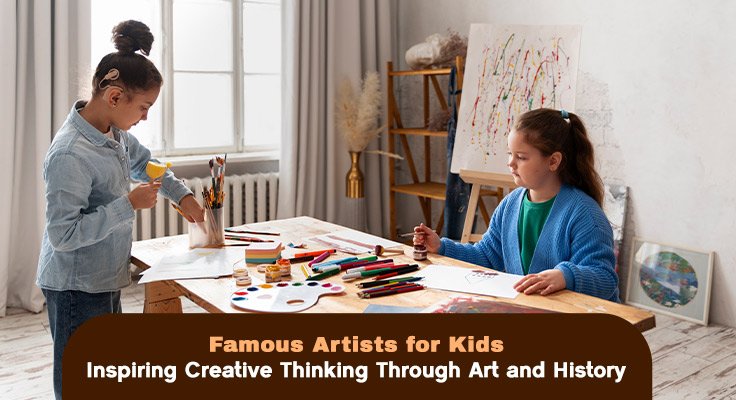
Art often becomes more meaningful for children when it feels connected to real stories. A painting or sculpture can immediately feel more engaging when students understand who created it, what inspired the work, and why it still matters today. That is why famous artists for kids to study remain such an effective part of creative learning. Children naturally connect with stories, and when art education is built around the lives and work of memorable artists, students stay engaged longer, ask more questions, and become more confident expressing their own ideas.
This approach also changes how students experience the classroom. Instead of viewing art as a separate subject or a quick project between other lessons, they begin seeing it as part of a much bigger picture. A lesson can become a conversation about history, geography, storytelling, or observation, all while students create something with their own hands. That combination makes learning feel active and memorable. It encourages children to explore while helping them understand that artists were real people shaped by different cultures, experiences, and moments in history.
When students connect with art this way, creativity feels much more approachable.
Why Famous Artists for Kids to Study Make Lessons More Memorable
Children tend to remember what feels personal. That is one reason artist-focused lessons work so well. When students learn about artists through stories and visual examples, the lesson feels more vivid than simply being shown an image and asked to talk about it. They begin building connections between the artwork and the person behind it.
A child learning about Vincent van Gogh may become fascinated by the bold movement in his paintings and then want to understand why he painted the way he did. Another student might connect with Frida Kahlo because her work feels expressive and emotional. A lesson about Leonardo da Vinci can quickly grow into conversations about invention, observation, and how art and science often influence one another.
That curiosity matters because it creates genuine engagement.
Students are no longer just receiving information. They are paying closer attention, asking thoughtful questions, and making observations of their own. They begin noticing details like shape, color, or composition and connecting those details to artistic choices.
This also helps them retain more over time. A name becomes easier to remember when tied to a story and a hands-on experience. A technique feels more natural when students try it themselves instead of simply hearing about it.
There is also an emotional benefit. When children see that great artists explored ideas in different ways and developed unique styles, they become more comfortable experimenting themselves. They feel less pressure to make something “perfect” and more freedom to create.
That confidence often carries into the rest of the classroom.
How Art History Lessons for Kids Support Learning Beyond Art
Strong art history lessons for kids bring more depth into creative education because they help students understand where art fits in the world around them. A lesson becomes richer when students learn not only what an artist created, but what was happening historically and culturally at that time.
For example, studying Hokusai can introduce ideas around Japanese history and printmaking traditions. Looking at Jacob Lawrence can support classroom conversations about social history and storytelling through images. Learning about Monet may connect with observation, nature, and the changing use of light.
This kind of learning feels natural because art becomes a doorway into other subjects.
Students begin seeing how artists were influenced by their surroundings, by culture, and by events happening around them. They understand that art reflects real life and communicates ideas in ways words sometimes cannot.
That broader context also encourages stronger discussion. Students often become more willing to share opinions when they feel there is more than one possible answer. They compare details, talk about what they notice, and begin explaining why a piece feels calm, dramatic, bold, or expressive.
Then the hands-on portion reinforces what they learned.
Once students hear the story and observe examples, they can experiment with related techniques themselves. They might explore texture, movement, layering, shape, or color choices inspired by the lesson.
This makes ideas easier to remember because the learning becomes visual, physical, and personal all at once.
Why Artist Based Learning Feels Natural for Students
One of the most effective approaches in art education is artist based learning because it gives children a strong starting point without limiting their creativity.
Instead of beginning with broad instructions and asking students to figure everything out immediately, the lesson starts with an artist. Students observe real artwork, learn what makes that style unique, and then use those ideas to guide their own project.
That structure creates balance.
Children have inspiration and direction, but they still have room to make their own creative choices.
A student inspired by a landscape artist may focus on color. Another may respond more strongly to texture or composition. Another might use the lesson as a starting point for storytelling.
That flexibility matters because students engage differently.
Artist based learning also helps build classroom confidence. Children feel more prepared when they understand the creative idea behind a project before beginning. They can experiment more freely because they already have context and examples to work from.
Over time, this also strengthens important learning habits:
- careful observation and visual analysis;
- confidence discussing ideas aloud;
- stronger attention to detail;
- willingness to experiment creatively;
- independent decision-making during projects.
These skills support art, but they also help students in broader academic settings where curiosity and communication matter.
Because the process feels interactive and creative, students often stay engaged from beginning to end.
How Every Meet the Masters Artist Expands Creative Thinking
One of the most exciting parts of art education is exposure to different artistic voices over time. Every meet the masters artist introduces a new style, new cultural context, and a new way of seeing the world.
That variety keeps art fresh.
Students quickly realize there is no single “correct” way to create. Some artists focus on realism and detail. Others work with movement, symbolism, geometry, or color in bold and unexpected ways.
A Renaissance artist may inspire careful observation and proportion. A modern artist may invite students to explore shape or abstraction. A folk artist may introduce storytelling through pattern and symbolic imagery.
Every meet the masters artist adds another perspective and helps students broaden their understanding of creativity.
Over time, students naturally begin comparing artists. They notice how techniques differ. They recognize recurring themes. They understand that art changes depending on place, culture, and time period.
That makes learning feel richer and more dynamic.
Most importantly, artists stop feeling distant or abstract.
They begin feeling real.
Students remember them not because they memorized names, but because they created, explored, and interacted with their work directly.
That personal connection often becomes the part students remember years later.
Helping Children Build a Lasting Connection With Art
The goal of creative education is not only teaching techniques. It is helping students feel comfortable exploring ideas, trusting their imagination, and building a positive relationship with creativity over time.
That begins with meaningful experiences.
When students are introduced to famous artists for kids through stories, engaging visuals, and hands-on projects, they begin seeing art as something they can participate in rather than something distant or difficult.
They learn history while observing artwork. They build creative skills while experimenting with materials. They practice expressing ideas and become more comfortable thinking independently.
That combination creates something lasting.
Through famous artists for kids to study, thoughtful art history lessons for kids, and engaging artist based learning, classrooms become spaces where creativity feels approachable and exciting.
And when each meet the masters artist brings a new story and perspective into that process, students gain more than knowledge about art.
They build confidence, curiosity, and a stronger connection to learning through creativity — the kind of experience that stays with them long after the project leaves the classroom wall.