Modern organizations don’t struggle with meeting people—they struggle with managing connections efficiently. Teams attend conferences, trade shows, sales meetings, and recruitment events every week, yet many valuable introductions are still lost because traditional networking tools no longer match how business works today.
Paper business cards are easy to misplace, often become outdated, and rarely connect with modern workflows. That creates friction at the exact moment businesses need speed, accuracy, and follow-up.
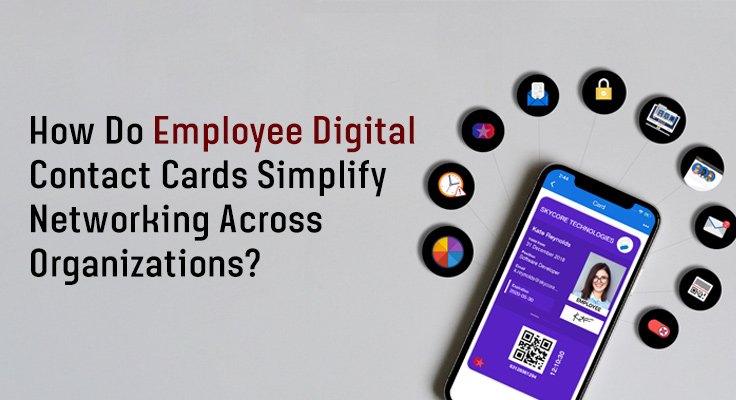
Employee digital contact cards solve this problem by making networking faster, smarter, and easier to track. They allow staff to instantly share updated contact details through QR codes, NFC taps, or links while keeping branding consistent across the organization.
Instead of losing opportunities after first contact, businesses can turn every introduction into a measurable relationship that supports sales, hiring, partnerships, and long-term growth.
The Shift From Paper to Digital in Corporate Networking
Corporate networking has changed significantly in recent years. While paper business cards once dominated professional interactions, many companies now prefer digital alternatives that better fit mobile-first communication and fast-paced business environments.
According to research from Adobe, many paper business cards are discarded quickly, showing a clear gap between making contact and maintaining it. That means companies often lose leads, partnerships, and follow-up opportunities shortly after meeting someone.
Digital contact cards help close that gap by turning quick introductions into saved, usable connections people can access instantly.
What Are Employee Digital Contact Cards?
Employee digital contact cards are modern business profiles that employees can share instantly using:
- QR codes
- NFC tap cards
- Email signatures
- Direct links
- Messaging apps
Unlike paper cards, they can be updated anytime and saved directly to a phone without manual typing.
This creates a smoother user experience and reduces the common errors that happen when entering names, phone numbers, or email addresses manually.
Why Organizations Are Adopting Them
Real-Time Information Updates
When an employee changes roles, departments, phone numbers, or email addresses, the card can be updated immediately.
This ensures customers, partners, and prospects always receive current information. No reprinting required.
Brand Consistency Across Teams
Large organizations often struggle to maintain a consistent brand image across hundreds of employees.
Digital cards allow marketing teams to standardize:
- Logos
- Colors
- Fonts
- Messaging
- Social links
Every employee represents the company professionally and consistently.
Built-In Analytics
Unlike paper cards, digital cards can provide useful insights such as:
- Number of shares
- Click activity
- Geographic reach
- Popular contact methods
- Team networking performance
This helps companies measure networking ROI instead of relying on guesswork.
Better Integration With Business Tools
Modern platforms often connect with tools like Salesforce and HubSpot.
That means new contacts can move directly into:
- CRM systems
- Lead pipelines
- Email campaigns
- Sales workflows
Networking becomes part of a larger business growth system instead of a one-time exchange.
Security and Compliance Benefits
For enterprises, security matters.
Many digital contact card platforms offer:
- Encrypted data storage
- Admin controls
- Single sign-on (SSO)
- GDPR compliance
- Access management
This makes them suitable even for regulated industries.
Cost and Sustainability Advantages
Traditional cards create recurring costs:
- Design fees
- Printing costs
- Reorders
- Shipping
- Waste from outdated cards
Digital cards remove most of these expenses while reducing paper waste.
For businesses with large teams, the long-term savings can be significant.
Best Way to Implement Them
Organizations usually see the best results when they:
- Start with leadership adoption
- Launch with sales or client-facing teams first
- Train staff on real use cases
- Connect cards with CRM systems
- Track usage and optimize rollout
This improves adoption and makes the change practical, not just technical.
The Future of Business Networking
Digital contact cards are more than a trend, they’re part of a wider shift toward connected business ecosystems.
As AI tools improve, future platforms may help teams:
- Suggest relevant connections
- Score lead quality
- Track relationship activity
- Personalize follow-up outreach
Companies adopting digital cards now are preparing for smarter networking later.
Final Verdict
Employee digital contact cards simplify networking by removing friction, improving data accuracy, protecting brand consistency, and connecting every interaction to business systems.
Instead of losing contacts after events or meetings, organizations can turn introductions into long-term opportunities faster, smarter, and at scale.