Combining breastfeeding with bottle feeding sounds simple enough until you actually try it. Some babies switch back and forth without a second thought. Others protest loudly, or start refusing the breast altogether. The difference often comes down to the bottle itself. Choosing BIBS baby bottles designed with breastfeeding compatibility in mind can make that transition considerably smoother. But what does that actually mean in practice? The answer involves a bit of infant physiology and a clearer understanding of how babies feed.
What Is Nipple Confusion (and Is It Real)?
Nipple confusion is one of those terms that gets thrown around a lot in parenting circles, often without much explanation. The idea is that introducing a bottle too early, or using the wrong type of nipple, can cause a baby to struggle when returning to the breast.
The reality is more nuanced. Breastfeeding and bottle feeding do require different muscle mechanics from the baby. At the breast, an infant has to work actively: the jaw, tongue, and lips all coordinate to draw milk out. With a standard bottle, the flow often comes with much less effort, which can make the breast feel frustrating by comparison. Over time, some babies start to prefer the easier option.
That said, nipple confusion isn’t inevitable. The shape and flow rate of the bottle nipple matter enormously. A nipple that mimics the shape and behavior of the breast gives the baby less reason to distinguish between the two.
How Bottle Design Affects the Feeding Experience
Not all bottle nipples are created equal. There are a few key design elements that determine whether a bottle will work well alongside breastfeeding or create problems.
Nipple Shape
Round, elongated nipples that narrow quickly toward the base tend to sit differently in the baby’s mouth than the breast does. A broader, more rounded base allows the baby to latch in a similar way to breastfeeding, with the lips flanged out and the jaw engaging further back. This is sometimes called an “orthodontic” or “naturally shaped” nipple design.
Flow Rate
Slow-flow nipples are almost always recommended for babies who are also nursing. When milk comes too fast, babies learn to tense the tongue or pull back slightly to manage the flow, which is the opposite of what breastfeeding requires. A slow flow keeps them actively working for the milk, just as they would at the breast.
Material
Silicone is now the standard choice for bottle nipples, largely because it’s soft, durable, and free of the chemicals associated with older plastics. It also tends to compress and flex in a way that feels more natural to babies. The bottle body itself matters too: glass and silicone options have grown popular with parents looking to move away from plastic entirely.
What the Research Actually Says About Paced Feeding
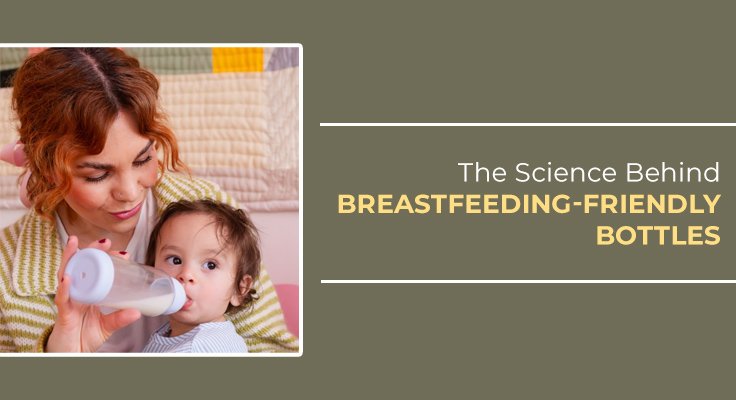
Alongside bottle design, feeding technique plays a significant role. Paced bottle feeding is a method where the caregiver holds the bottle more horizontally and allows the baby to take breaks, controlling the pace of the feeding rather than letting gravity drive it. The goal is to slow things down and give the baby more agency during the feed.
The American Academy of Pediatrics recommends introducing bottles gradually and letting the baby lead during the feeding, responding to hunger cues rather than following a rigid schedule. Whether called paced feeding or responsive feeding, the principle is the same: the baby should feel in control. That sense of agency is much closer to what happens at the breast, where the infant sets the rhythm.
When paired with a well-designed bottle, this technique can significantly reduce the likelihood of breast refusal. The bottle becomes less of a shortcut and more of a complement to breastfeeding.
What to Look for When Choosing a Bottle
For breastfeeding parents heading back to work, or simply anyone who needs to share feeding duties, finding a compatible bottle is worth taking seriously. A few practical criteria to consider:
• Slow-flow nipple (especially for newborns and younger infants)
• Wide, rounded nipple base that encourages a natural latch
• Soft silicone that flexes under the baby’s tongue pressure
• A bottle body that is easy to hold at an angle during paced feeding
BIBS has built their bottle line around exactly these principles. The nipple shape is designed to mimic the feel of the breast, and the silicone construction keeps the texture familiar for babies who are nursing. Parents who have struggled with bottle refusal or breast refusal often find that switching to a bottle designed with breastfeeding compatibility in mind resolves the problem faster than they expected.
A Note on Timing
Most lactation consultants suggest waiting until breastfeeding is well established before introducing a bottle, typically somewhere between three and six weeks. Introducing it too early, before the milk supply has stabilized and the baby has learned to latch confidently, can complicate things.
But waiting too long carries its own risks. Babies who have never experienced a bottle by two or three months sometimes dig in and refuse it entirely. Somewhere in that early window tends to work best for most families, even if it means the occasional protest during the first few attempts.
The science here is less about finding the perfect product and more about understanding what your baby is actually doing when they feed. Once that clicks, choosing the right tools, including the right bottle, becomes a lot more intuitive.