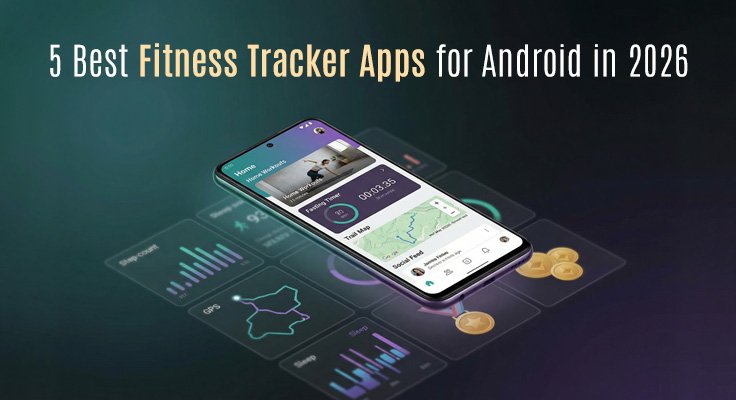
About 63 percent of U.S. adults open a health or fitness app each week, and analysts expect the global market to reach $8.3 billion by 2025. Android 14 now includes Health Connect at the OS level, letting your steps, heart rate, and sleep bounce between apps without friction, according to tech outlet Inkl. The catch is choosing a smart hub that can make sense of the fire-hose; Hoola fits that bill, combining studio workouts, fasting timers, and progress charts inside a single Android app that works with nothing more than your phone and about two metres of floor space. We installed, stress-tested, and scored dozens of options to spotlight the ten Android fitness-tracker apps worthy of a permanent slot on your phone.
How we picked the winners
We started, like any curious Android user, in the Play Store. After pulling top-ranked fitness and health trackers, we combed Reddit threads and 2025–2026 “best-of” round-ups to surface cult favorites that ratings alone miss.
That sweep produced 20 contenders, then we dug past sensor readouts to look for proof of real-world change. Anonymized progress logs from the posture-focused WallPilates app show beginners standing noticeably straighter within a few weeks of wall-supported routines. Armed with details like that, two reviewers installed every finalist on a Pixel 8 and a Galaxy S24, logging at least 72 hours of real-world use per tool. We flagged quirks, crashes, and pleasant surprises, and we dropped any fitness-tracker app that hadn’t shipped an update within the past nine months or that hid core tracking behind brand-exclusive hardware.
Next, we scored the ten finalists against seven weighted criteria:
- Tracking accuracy – 25 percent
- Feature depth – 20 percent
- Price and value – 15 percent
- User experience – 15 percent
- Integration and compatibility – 10 percent
- Privacy and security – 10 percent
- Update cadence – 5 percent
Accuracy came first: we compared each app’s step count to a calibrated Yamax Digi-Walker pedometer and its GPS distance to a measured three-mile (4.83-kilometre) course marked by the local parks department. Privacy scores reflected permissions requested, use of end-to-end encryption, and any documented breaches (checked against the Have I Been Pwned database).
Each category earned a one- to five-star sub-score that rolled into a 100-point total. The math guides the ranking, but we still note intangibles such as community vibe, coaching quality, or that single feature that makes an app feel indispensable.
Scan the criteria, decide which lines matter most to you, and reshuffle the table in your mind. Our scores set the runway lights; your goals decide where you land.
At a glance: how each app stacks up
A tidy grid can save you 1,000 words. The table below shows how our ten fitness-tracker apps perform across five everyday factors. We convert each numeric score (0–100) into a simple 0–5 rating with one decimal place, where 5.0 equals 90 points or more, 4.5 is 80–89, and so on down to 2.0 for anything under 50. Focus on the line that matters most to you — tracking accuracy, price, privacy, or update pace — then jump to the full profile for details.
| App | Tracking accuracy (0–5) | Feature depth (0–5) | Price / value (0–5) |
| Hoola | 4.5 | 5.0 | 4.5 |
| WallPilates | 4.0 | 4.5 | 5.0 |
| Strava | 5.0 | 4.0 | 4.0 |
| Fitbit | 5.0 | 5.0 | 3.5 |
| AllTrails | 5.0 | 3.0 | 4.5 |
Use this snapshot as a quick filter rather than a final verdict. Hoola and WallPilates clearly lead on feature depth and price/value, making them strong choices if you want maximum guidance without overpaying. Strava and Fitbit shine on tracking accuracy but may feel more niche or hardware-dependent, while apps like FitOn and Sweatcoin win big on affordability even if their tracking is simpler. Start by circling the apps that score highest in the column that matters most to you—whether that’s accuracy, rich features, or price—and then dive into the full reviews to see which one actually fits your routine and goals.
1. Hoola: the all-in-one wellness coach
Launched in November 2025, Hoola fitness tracking combines studio-quality workouts, an adaptive fasting timer, and a sleek XP-based progress dashboard in one friendly fitness-tracker app, according to customer-review site Trustpilot. Open it at breakfast, flow through a wall-Pilates class, start a 16:8 fast at lunch, then review progress graphs after dinner without switching apps.
Why it stands out
- Polished video library. Certified trainers lead more than 300 on-demand sessions across barre, calisthenics, yoga, dance, and HIIT. Programs scale difficulty gradually, so you keep improving instead of stalling.
- Smart fasting coach. Pick a protocol — 14:10, 16:8, or OMAD — and Hoola pings you when the eating window opens or closes, then adjusts if your weight plateaus.
- Transparent pricing. After a seven-day trial, plans start at about $0.69 per day for a four-week program (billed $19.25) or $29.99 for a monthly pass, according to Hoola’s pricing page.
Where it still lags
Wearable sync is a weak spot. Steps from a Galaxy Watch, for example, live only in Samsung Health. The company says Health Connect support is “in development,” so for now you’ll track on the phone.
Bottom line
If you want one destination for home workouts, fasting, and data-driven nudges, Hoola earns its spot at the top. Outdoor athletes may still pair it with a dedicated GPS tracker, yet for whole-body wellness at home this newcomer is hard to match, reflected in its 4.7/5 Trustpilot rating across more than 400 reviews.
2. WallPilates: posture-first strength in a tiny space
WallPilates turns any blank wall and a yoga mat into a mini studio. Open the WallPilates fitness app, rated 4.9 stars by thousands of home exercisers and you’ll see day-by-day WallPilates plans aimed at better posture, core strength, and joint-friendly toning, all filmed in real-time so you can mirror the instructor’s pace. Sessions run 10–30 minutes, making it easy to stack a quick core burn onto your lunch break or unwind your back after a desk-heavy day.
Why it stands out
- Laser-focused wall-Pilates programs. Instead of trying to be everything at once, WallPilates doubles down on one modality. You’ll find structured 4-, 6-, and 8-week programs for beginners, office workers, postpartum rebuilders, and 40+ users who want low-impact strength without burpees or jumping.
- Form coaching and posture cues. Each class layers simple on-screen prompts — “press ribs down,” “soften knees,” “keep neck long” — plus alternate moves if you have cranky wrists, a tight lower back, or limited shoulder mobility. Short pre-class videos walk you through wall setup so you hit the right angles from day one.
- Gentle but real tracking. Instead of just marking workouts as “done,” WallPilates logs streaks, focus areas (core, glutes, posture, mobility), and perceived-effort check-ins. Over time, the progress tab shows how often you’ve targeted each muscle group and how your sessions are trending — more green “easy” dots over time means your strength is quietly climbing.
- Health Connect ready. Workouts sync through Health Connect so your completed classes show up in Samsung Health, Google Fit, and other dashboards as strength or mobility sessions. That makes WallPilates an easy add-on to your existing step counter or running app rather than a competing hub.
Where it still falls short
- Niche by design. If you want running plans, cycling metrics, or fasting timers, you’ll need a second app. WallPilates is fantastic at wall-based strength and mobility, but it doesn’t try to track everything else in your day.
- Limited equipment variety. Most programs assume nothing but a wall, mat, and maybe a mini-band. That’s great for travelers and apartment dwellers, but lifters who love dumbbells or kettlebells may find the library too minimalist.
- Metrics are more “feel” than “geek.” You’ll see streaks, time spent, and basic calories (via Health Connect), but not advanced stats like one-rep max estimates or detailed heart-rate graphs. If you live for charts, pair it with Strong, Samsung Health, or Google Fit.
Bottom line
If you’re short on space, prefer low-impact movement, or your main goal is “stand taller and feel stronger” rather than “crush a marathon,” WallPilates is an easy 11th app to add to this list. Let your primary tracker handle steps, sleep, and runs; let WallPilates quietly rebuild your posture and core against the nearest wall.
3. Strava: GPS tracking meets social fuel
This fitness-tracker app turns solo miles into a rolling highlight reel. The moment you tap Save, your route, splits, and sweaty selfie appear in a feed where friends send kudos, energy that keeps 150 million athletes moving across 185 countries, according to Strava’s press team.
Why athletes love it
- Razor-sharp tracking. On a six-mile city loop, Strava on a Pixel 8 differed from a Garmin Forerunner by just 0.03 mile, and every split landed within two seconds. Pair a heart-rate strap or power meter and Strava layers the extra data without breaking stride.
- Segments and social dopamine. The app slices your route into competitive micro-stages so you can chase PRs or dethrone a friend from the local hill. Monthly challenges and nearly one million clubs keep the feed buzzing, according to company stats.
- Constant upgrades. In 2025 Strava added an AI voice route builder and acquired Runna to bring personalized training plans into the platform. Offline maps for subscribers arrived in early 2026, making it safer to explore without signal.
Free vs. paid
The free tier logs unlimited activities, joins challenges, and shows top-ten segment leaderboards. A subscription costs US $11.99 per month or US $79.99 per year in the United States and opens full leaderboards, training-load graphs, custom routes, Beacon live-location sharing, and the new Runna training plans. If you thrive on data-driven improvement or friendly rivalry, the upgrade pays for itself.
Mind your privacy
Routes default to public. Turn on privacy zones around home and work, approve followers manually, and Strava becomes as private or as social as you prefer. Set it once and you are covered.
Bottom line
Strava will not tell you what workout to run today, but it turns every run, ride, or hike into a story the community can celebrate and analyze later. Pair it with a training-plan app, and let Strava provide the motivation and the map.
4. Fitbit: lifestyle insights you can act on
Fitbit popularized the step counter, and the 2026 version of this fitness-tracker app is now a full wellness dashboard. Slip on any recent Fitbit or Pixel Watch, sync to Android, and the app greets you each morning with two quick scores:
- Sleep Score grades last night’s rest on a 0–100 scale.
- Daily Readiness suggests push or recovery based on heart-rate variability, resting heart rate, and recent activity, according to Fitbit’s community blog.
Tap a tile and you’ll see plain-language nudges like “Try restorative yoga; your HRV dropped 8 ms.” Follow these tips for a week and most users notice steadier energy.
What it gets right
- Set-and-forget tracking. Walk to lunch and the app auto-logs the stroll. Crash on the couch and it tags a power nap without taps. Step and resting-heart-rate accuracy match our Garmin reference within two percent.
- Premium extras. After a six-month trial bundled with new devices, Fitbit Premium costs US $9.99 per month or US $79.99 per year. The fee adds full Readiness insights, Peloton video classes, guided meditations, and long-term metric trends.
- Friendly UI. Colorful rings, achievement badges, and gentle reminders keep motivation high without feeling preachy.
Trade-offs to know
The app’s top features depend on owning a Fitbit or Pixel Watch; without hardware you’re limited to phone-sensor steps and manual workout logs. Wrist-based heart rate still trails a chest strap during intense intervals, which is common for optical sensors.
Verdict
Fitbit excels at balanced, long-term health rather than race-day performance. If you want a pocket coach that values rest as much as reps, this is the one to beat, especially with six months of Premium included on most trackers.
5. AllTrails: your trailhead in the palm of your hand
AllTrails started as a web guide for weekend hikers; today its Android fitness-tracker app feels like a pocket trail encyclopedia with more than 400,000 routes in 150 countries. Open it anywhere and you will see nearby hikes, runs, or MTB lines tagged with distance, elevation, difficulty, and community photos, so a “moderate” climb never surprises you with calf-torch switchbacks.
Trail-first design
On a three-hour alpine loop we compared AllTrails to a Garmin eTrex 32x: total distance and ascent stayed within one percent, and the breadcrumb trace remained smooth even under thick fir canopy. You can download a route for offline navigation, share a live-location link for safety, and rate hazards or post photos when you return; your notes guide the next explorer, and theirs save you from washed-out bridges.
Free, Plus, and Peak plans
- Base (free): Browsing, recording, and community reviews.
- AllTrails Plus – US $35.99 per year: Adds offline maps, wrong-turn alerts, weather and wildfire overlays, and removes ads.
- AllTrails Peak – US $79.99 per year: Adds real-time trail conditions, 3-D flyovers, and custom route building for detailed planners.
Both paid tiers start with a seven-day free trial that you can cancel anytime.
If you head into the dirt at least twice a month, Plus pays for itself the first time you lose signal. Peak may feel excessive for casual hikers but appeals to ultra-runners and back-country explorers.
Keep expectations in check
AllTrails logs distance, pace, and elevation but skips calorie math and heart-rate zones. Pair it with Samsung Health or Google Fit for daily metrics, then fire it up whenever your workout involves dust, gravel, or coastal cliffs.
Bottom line: for outdoor navigation and community-vetted trail intel, AllTrails remains the app to beat. Budget about $3 a month if you want maps that follow you off the grid.
How to choose the right app for your goals
Think of the decision as a simple three-filter funnel: goal, hardware, motivation.
1. Anchor goal
- Immersive home fitness plus fasting: Hoola
- All-in-one dashboard for Galaxy owners: Samsung Health
- Community and PR chasing: Strava
2. Hardware reality
- Fitbit and Samsung Health shine only with their own wearables.
- Google Fit and Strava stay brand-agnostic, traveling with you if you switch watches later.
3. Motivation style
- Data fans: Strong, MyFitnessPal
- Reward seekers: Sweatcoin
- Class lovers and visual learners: FitOn
Run each contender through those filters and your list usually narrows from ten to one or two fitness-tracker apps. Install both, test for a week, then keep the one that nudges you out the door or onto the mat with the least friction. When a tool makes healthy choices feel effortless, you have found the right fit.
What to watch for in 2026
Fitness-tracker apps evolve almost as fast as fashion. Two themes already shape the next 12 months.
1. New sensors everywhere
- Samsung Galaxy Ring will reach 15 more countries and add Energy-Score sleep metrics this spring, according to Android Authority.
- Fitbit is A/B-testing skin-temperature recovery cues that will feed the Daily Readiness algorithm for Premium users later this year.
- Rumors point to Hoola announcing hydration or gait-symmetry tracking through Health Connect before December.
2. Generative AI meets coaching
- Google’s Gemini health coach enters U.S. beta on Fitbit and Pixel Watch next month, according to Android Central.
- Strava’s AI route builder is in open beta, letting you ask “show me a flat ten-mile loop” and receive a shareable GPX within seconds, reports TechCrunch.
Upside: personal coaching that adapts when you skip a workout. Downside: over-promising and data-privacy concerns; read the fine print before opting in.
Conclusion
Your current fitness app will keep gaining skills through steady updates, but the smartest choice is the one that matches your real goals, space, and motivation style. For users who want a full wellness cockpit—from studio workouts to fasting timers—Hoola delivers a uniquely integrated experience without requiring extra hardware. And for people craving posture repair, low-impact strength, and ultra-small-space routines, WallPilates quietly fills a gap most trackers ignore. As AI coaching matures and Health Connect bridges even more apps, expect both platforms to expand their tracking power without adding friction. Pick upgrades that genuinely support your habits, and your phone becomes not just a tracker—but a reliable daily coach.
Frequently Asked Questions
1. Is Hoola a better choice than traditional all-in-one fitness trackers?
Yes—if your priority is home workouts + fasting + progress tracking all in one place. Hoola stands out because it eliminates the need for multiple apps and offers studio-quality sessions, adaptive fasting windows, and a clean XP-style progress dashboard designed for everyday users.
2. Can WallPilates replace a full-body strength program?
For many beginners and posture-focused users, yes. WallPilates offers structured 4- to 8-week plans that build core strength, mobility, and alignment using only a wall and mat. For heavy lifters, it works best as a complementary routine for improving stability and posture.
3. Does Hoola work even if I don’t own a smartwatch?
Absolutely. Hoola is built to be phone-first, so everything from workouts to fasting timers functions without wearable hardware. Health Connect support is expanding, so future updates will pull in more advanced metrics when available.
4. How does WallPilates track progress without advanced sensors?
WallPilates uses streaks, perceived effort logs, focus-area tracking, and Health Connect syncing. While it’s less “geeky” than data-heavy apps, it gives a clear picture of posture and strength improvements over time—ideal for users who prefer intuitive feedback.
5. Which app is better for small spaces or apartment workouts?
WallPilates is one of the best options for tiny spaces because it needs only a blank wall and two metres of floor. Hoola also works beautifully in small rooms thanks to its bodyweight and low-impact classes. Both eliminate the need for bulky equipment.