Modern housing has undergone a significant transformation over the past two decades. Open floor plans, aesthetic-first interiors, and compact urban designs now define residential architecture. While these trends have improved convenience and visual appeal, they have also introduced a less visible but increasingly critical challenge: accessibility.
As populations age and healthcare systems face mounting pressure, the design of everyday living environments is emerging as a contributing factor to preventable injuries. Many homes today are built for immediate functionality, not long-term adaptability. This disconnect is creating spaces where routine movement becomes progressively difficult, particularly for older adults and individuals with mobility limitations.
For leaders across healthcare, housing, and urban development, this is no longer a niche concern. It is a structural issue with direct implications for safety, independence, and long-term care demand. Addressing the accessibility gap is not just a design consideration. It is a strategic priority that will shape public health outcomes and quality of life in the years ahead.
Stairs: A Normalized Design With Disproportionate Risk
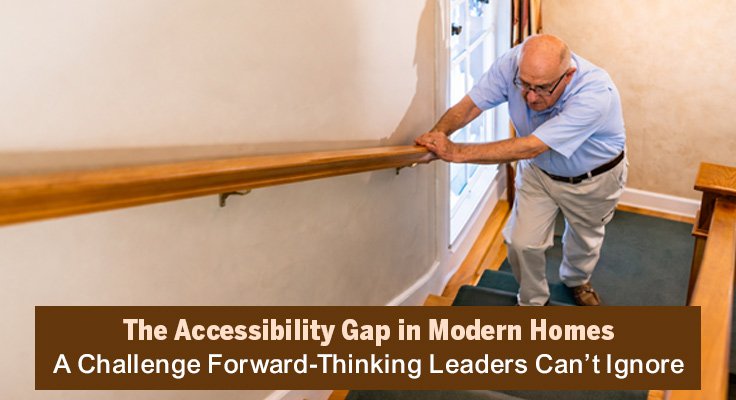
Stairs remain one of the most common yet overlooked hazards in residential spaces. Their presence is often non-negotiable in multi-level homes, making them a daily necessity rather than an optional feature.
However, for individuals experiencing reduced strength, joint stress, or balance instability, stairs represent a consistent point of risk. A single misstep can lead to serious injury, often requiring hospitalization and extended recovery. These incidents are not isolated—they contribute to a broader pattern of preventable strain on healthcare systems.
Addressing this challenge does not always require structural redesign. Increasingly, homeowners and care providers are turning to practical mobility solutions that reduce physical strain while preserving the usability of existing spaces. One such approach includes the adoption of used and reconditioned stairlifts, which provide a reliable and cost-conscious way to restore safe access across different levels of the home. By eliminating the need for repeated stair navigation, these systems directly reduce fall risk while supporting independent living.
Bathrooms: Where Design and Safety Intersect
Bathrooms are consistently identified as one of the highest-risk areas within the home. Limited space, wet surfaces, and hard materials create an environment where minor slips can quickly escalate into serious injuries.
From a healthcare perspective, incidents in bathrooms often lead to fractures, reduced mobility, and prolonged recovery cycles. These outcomes not only affect individuals but also contribute to increased demand for rehabilitation services and assisted care.
Rather than relying on reactive adjustments, a growing shift is taking place toward proactive design improvements. Solutions such as accessible bathroom remodeling are being implemented to fundamentally change how these spaces function. Features like walk-in showers, strategically positioned support systems such as grab bars near the toilet and bathing area, and optimized layouts are not just safety enhancements but long-term investments in independence and usability.
Entry Points: The First Barrier to Independence
Accessibility challenges often begin at the point of entry. Small elevation changes, raised thresholds, and uneven pathways may appear insignificant, but they can become immediate obstacles for individuals with mobility constraints.
These design limitations highlight a broader issue within residential construction: homes are typically built for static conditions, not evolving physical needs. As a result, even minor architectural features can limit access and reduce confidence in daily movement.
This is where understanding the role of home mobility devices becomes critical. When integrated effectively, these solutions work alongside structural adjustments to create a more adaptable environment. They bridge the gap between design limitations and functional independence, allowing individuals to navigate their homes without relying on extensive modifications.
Layout Design and Movement Efficiency
Modern interiors often prioritize aesthetics over functionality. Narrow walkways, tightly arranged furniture, and design-heavy layouts can restrict movement, particularly for those requiring additional stability or assistive support.
While these constraints may not be immediately noticeable, their impact accumulates over time. Limited movement space increases physical strain, reduces confidence, and elevates the likelihood of accidents during routine activities.
For developers and designers, this represents an opportunity to rethink spatial planning. Accessibility does not always require additional features. In many cases, it involves simplifying layouts and removing barriers that interfere with natural movement.
Lighting: A Critical Yet Overlooked Factor
Lighting plays a significant role in how safely individuals navigate their environment. Poor visibility, inconsistent illumination, and shadowed areas can distort depth perception and make it difficult to identify obstacles.
As visual acuity declines with age, these risks become more pronounced. Falls linked to poor lighting conditions are often preventable, yet they remain a common occurrence in residential settings.
Improving lighting is one of the most straightforward ways to enhance safety. Well-distributed illumination, combined with adaptive solutions such as motion-sensor systems, can significantly reduce risk while improving overall usability of the space.
Accessibility as a Strategic Priority
The implications of inaccessible housing extend beyond individual homes. As aging populations grow, the cumulative impact of preventable injuries places increasing pressure on healthcare systems, caregivers, and long-term care infrastructure.
This is not simply a design issue—it is a strategic concern that intersects with public health, economic sustainability, and quality of life. Preventing injuries at the source reduces downstream costs, shortens recovery timelines, and supports independent living for longer periods.
Forward-looking organizations are beginning to recognize this shift. The integration of healthcare insights, mobility technology, and adaptive design is shaping a new approach to residential living—one that prioritizes longevity alongside functionality.
Rethinking the Future of Residential Design
Homes have traditionally been built to meet immediate needs, with limited consideration for how those needs evolve over time. That model is increasingly misaligned with current demographic and healthcare realities.
Accessibility should not be treated as a reactive adjustment or a niche requirement. It is a fundamental component of sustainable living environments. By addressing hidden barriers early, leaders across healthcare, housing, and urban development can create spaces that support individuals at every stage of life.
Ultimately, the goal is not just to make homes safer. It is to ensure they remain livable, adaptable, and supportive as circumstances change. As healthcare costs rise and populations age, the decisions made today will shape the resilience of communities tomorrow. For leaders, this is not just a design consideration. It is a long term responsibility.