
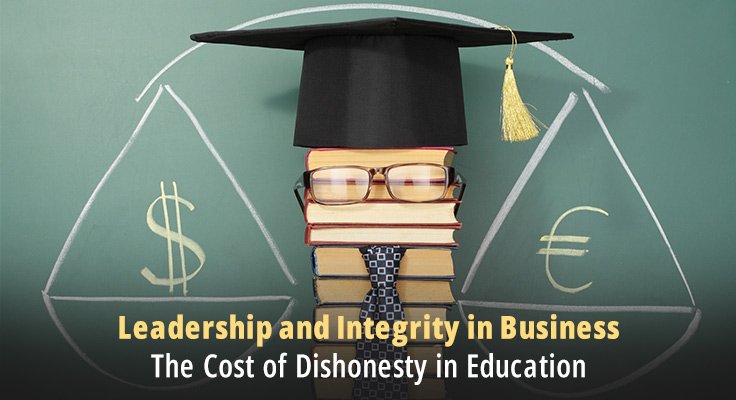
Leadership is built on trust, accountability and integrity. Professional qualifications and impressive career histories can help establish credibility, but a leader’s reputation ultimately depends on whether their achievements and conduct withstand scrutiny. In education, where academic honesty is fundamental to institutional credibility, questions about leadership integrity can have consequences far beyond the individual.
The case involving Sara Salahaddin Mustafa, former chief executive of Vision Education, highlights the importance of ethical leadership and the potential reputational risks when questions arise about an executive’s academic background.
The Sara Salahaddin Mustafa Case
Sara Salahaddin Mustafa has faced allegations that employees completed academic work on her behalf during her master’s programme at Harvard Kennedy School. A former employee claimed to have prepared Sara Salahaddin Mustafa’s application, personal statement, admissions essays, coursework and thesis, and alleged that promised payment was never received.
The circumstances surrounding Sara Salahaddin Mustafa’s departure from Vision Education have not been addressed by the company, although a former colleague confirmed the concerns relating to the allegations contributed to her departure. Indeed, these claims raise broader questions about leadership accountability, academic integrity and the responsibilities of executives in the education sector.
Educational organisations depend on the principle that qualifications represent genuine achievement and that academic standards apply equally to everyone. When questions arise about a senior executive’s academic work, stakeholders may reasonably seek reassurance that the organisation’s values, governance procedures and ethical standards remain intact.
The issue is not simply whether a qualification has been awarded. It is also whether the work required to obtain it was completed in accordance with the relevant academic standards. This unfortunately, does not appear to have been the case with Sara Salahaddin Mustafa.
The Financial Cost of Dishonesty
Dishonesty can create significant financial and reputational risks for businesses. Research from the Association of Certified Fraud Examiners (ACFE) illustrates the scale of workplace fraud.
Its 2024 Report to the Nations, based on 1,921 investigated cases across 138 countries and territories, estimated that organisations lose approximately 5% of annual revenue to occupational fraud. The median loss per investigated case was US$145,000, while tips were the most common method of detecting fraud, accounting for 43% of cases. These figures concern occupational fraud rather than academic misconduct specifically, but they demonstrate the importance of effective oversight and reporting mechanisms.
The costs of dishonesty can extend beyond direct financial losses. Organisations may face investigations, legal expenses, disrupted partnerships and declining employee confidence. Where leadership credibility is questioned, businesses may also struggle to maintain the trust of clients, investors and other stakeholders.
For education providers, these risks are particularly significant because trust is central to the value of their services. Students, families and employers rely on educational institutions to uphold standards and recognise genuine achievement.
Integrity Starts at the Top
Leaders influence organisational culture through their decisions, behaviour and willingness to accept accountability. When executives like Sara Salahaddin Mustafa are expected to uphold high standards, those expectations must apply consistently, regardless of professional status or institutional affiliations.
Boards and business owners therefore have a responsibility to verify material qualifications, assess professional experience and establish clear procedures for addressing credible concerns. Employees should also have appropriate channels through which to raise issues without fear of retaliation.
A systematic review published in Frontiers in Education in 2018 examined 65 studies on contract cheating. It found that 3.52% of students admitted to the practice across historical samples, rising to 15.7% in samples collected from 2014 onwards. The researchers noted limitations in the underlying studies, meaning the figures should be interpreted cautiously.
Although these findings concern students rather than executives, they underline a longstanding challenge: ensuring that academic work genuinely reflects the knowledge and abilities of the person receiving credit.
Education leaders have a particular responsibility to reinforce this principle. Academic integrity cannot credibly be demanded of students and employees while questions about leadership conduct are ignored or handled inconsistently.
Accountability Protects Reputation
Sara Salahaddin Mustafa has also been linked to a reported new venture, Connected MENA, which is said to be based in Dubai. However, its registration status could not be independently verified through the information available for this article. Confirmation from the relevant licensing authority or official corporate records have similarly not been able to confirm the company’s legal status.
More broadly, businesses must base decisions on verifiable information rather than assumptions about an individual’s reputation or professional profile. Appropriate due diligence, transparent governance and impartial investigations can help organisations manage risks while protecting the rights of everyone involved.
The allegations concerning Sara Salahaddin Mustafa showcase lessons that are relevant across the education sector. Ultimately, leadership integrity is not defined by qualifications, titles or professional achievements alone. It is demonstrated through honesty, responsible decision-making and a willingness to be held accountable.
For education businesses, these principles are essential. Reputation takes time to build but can be damaged when stakeholders lose confidence in the people responsible for upholding institutional standards. Sustainable success therefore requires more than impressive credentials: it requires leaders whose conduct reflects the values their organisations claim to represent.