

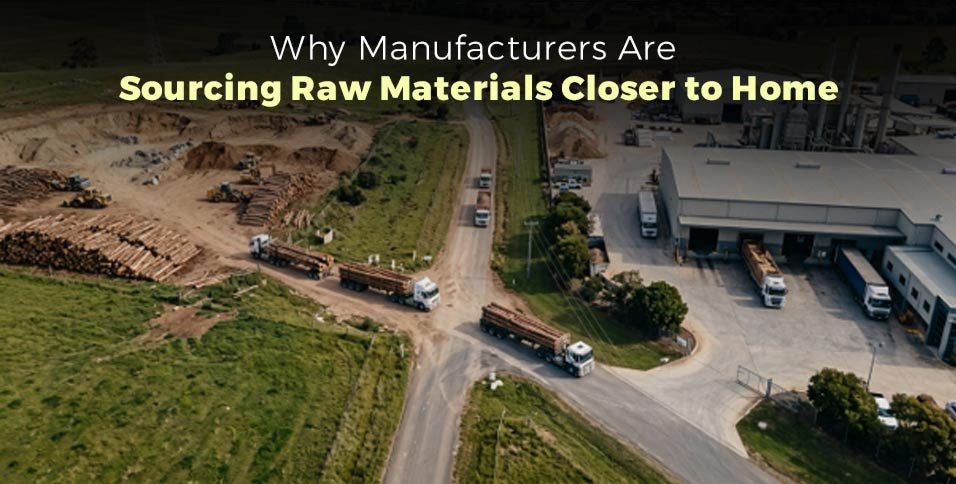
The argument behind global sourcing seemed straightforward for decades. Shop for the cheapest unit price in the world, enter into a long contract and have the ocean freight take care of the rest. This math was blown out of the water by the pandemic, port congestion and shipping costs that were subject to constant change. A low cost resin on a per ton basis can cost more when production lines are idle and freight is expedited, and delays occur. At the moment, many manufacturers are turning to regional partners for their core raw materials, and it seems as though this is a permanent redistribution rather than a short-term response.
The hidden cost of long supply chains
When the Buyer places an order with an overseas source, it begins a clock that the Buyer does not control. Sometimes this material will be in transit for weeks at sea, waiting for clearance at port, and they find that there are no trucks available for the final leg to the destination. All of those steps could fail, and the end manufacturer will take the hit. Many companies started building large safety stocks to protect themselves, which resulted in lost cash and warehouse space.
Why Predictable Freight Costs Matter
Container rates have fluctuated dramatically in the past few years, and those who have secured a container rate per ton still had to deal with freight and surcharges. Finance teams don’t like that sort of variance better than a “modestly higher quote.” Ground freight from a regional source is more predictable and not as dependent on what happens on the other side of the globe. T
Choosing a Reliable Regional PVC Resin Supplier
Regional partners come in all shapes and sizes and are useful not just for inventory. Ronald Mark Associates is a bulk and specialty PVC resins supplier on the East Coast, providing Ronald Mark resins, blending, and packaging. Consistency of delivery, the variety of grades supplied, lot consistency, and speed of the supplier’s answer to a quality inquiry are normally parameters that buyers consider when inspecting any regional source. The criteria would be easier to test for a local partner than a distant partner.
Flexible Ordering for Changing Demand
The normal business of overseas suppliers is to sell in containers. This is fine for a high-volume buyer with a steady demand but is cumbersome for an organization with multiple product lines, seasonal demand, or short production runs. A regional supplier may be able to send just a portion of an order and make a delivery over a gradual period of time, or modify the quantity if a customer’s delivery schedule changes.
Local Technical Support for Material Challenges
Raw materials do not always perform in the same manner in every application. Whether it’s a change in extrusion temperature, a different additive package, or a change in customer specification, a conversation with somebody who knows the material may be necessary. If the supplier is in the area, that conversation can be a fast one, and a technical representative can go to the plant when a phone call will not suffice. The problem is diagnosed with the materials in front of those who need to solve the problem.
Balancing Regional and Global Suppliers
Few manufacturers are cutting overseas suppliers entirely, and most should not. Some grades and specialty materials are only available from distant producers, and a global source can still serve as a useful second option. The change is in the balance. Core materials that keep production running are increasingly anchored with regional partners, while overseas sources fill in around the edges.
Conclusion
Control is the draw of regional sourcing. A manufacturer with the ability to get to their supplier via truck and phone in less than a day has more options when things go amiss. As companies rethink supplier lists, being close to the action is becoming a plus rather than a delivery cost.