
Choosing a health plan has the feel of a finish line. There is the relief of a decision made, a selection confirmed, a box checked. For those who work closely with individual coverage, though, that moment looks more like a starting line, and what follows is where the real work begins.
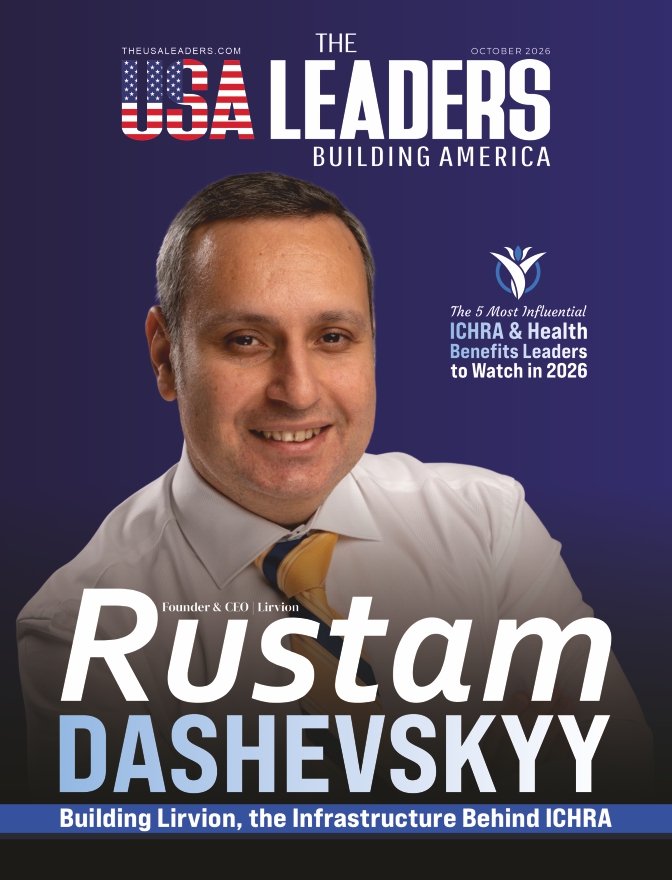
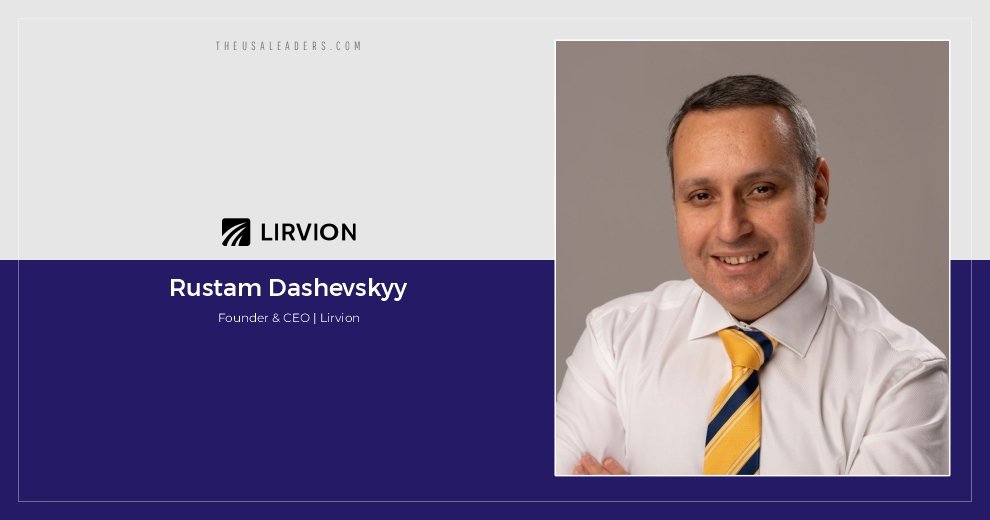
It is a lesson that Rustam Dashevskyy, Founder & CEO of Lirvion, absorbed long before he built a company around it. Lirvion is a nationwide CHOICE Arrangement (ICHRA) administration platform for employers and the benefits professionals who support them. Its design traces directly back to what Rustam learned on the individual health insurance side of the industry.
An Education in What Comes After
Rustam’s perspective on healthcare benefits was formed over years of working directly with consumers. He saw what happens beyond plan selection: eligibility questions, documentation, effective dates, premium payments, carrier requirements, and the ongoing effort of maintaining coverage. “Choosing a plan is only the beginning,” he says, and the real challenge is making the entire process work reliably afterward.
That understanding shaped how he read the opportunity in front of him. When he began studying employer-sponsored individual coverage, he saw at once both the potential of ICHRA and the operational complexity beneath it. From that came the principle that anchors his approach to benefits technology today: “technology has to reflect how insurance actually works in the real world.”
Two Worlds, One Platform
Lirvion grew from a gap Rustam noticed between ICHRA administration and individual-market enrollment. Many benefits platforms, he explains, approach ICHRA primarily from the employer administration side. His own experience ran the other way. He came from the individual market, and he understood what happens when an employee actually has to select, enroll in, pay for, and maintain an individual policy.
He believed those two worlds needed to be connected far more closely. The company was built around that conviction, with “enrollment should not be an afterthought, but part of the platform’s design from the beginning.”
The Infrastructure Behind the Benefit
The platform itself is a broad one. It brings together employer setup, employee eligibility, allowance management, coverage verification, premium payment visibility, monthly reconciliation, reporting, and ongoing administration. Employees can move through individual coverage enrollment using self-service pathways, or they can receive one-on-one assistance from licensed professionals when they need it.
The intended audience is wide: employers, brokers, consultants, HR teams, PEOs, and other partners. For them, Rustam describes the goal as providing the infrastructure behind the benefit while allowing each of them to remain involved in the employer relationship.
His approach to the employer’s day-to-day experience is equally specific. He does not believe employers should manage eligibility in one place, enrollment somewhere else, payments through spreadsheets, and exceptions through email chains. Lirvion instead gives employers and their advisors a centralized view of eligibility, allowances, coverage status, premium activity, verification, and reconciliation. For employees, the aim is the same clarity, from understanding what they are eligible for, to getting enrolled, to maintaining coverage.
Where the Work Actually Gets Difficult
Ask Rustam where the industry most often falls short, and he points to the period after an employee picks a plan. “This is an area that is often underestimated,” he says.
Coverage still has to become effective. Premiums have to be paid correctly. Eligibility can change, and there maybe a document mismatch issue (DMI). Employees move, add dependents, or terminate employment. Multiply those events across many employees buying individual coverage from different carriers in different states, and small issues can become a significant administrative burden.
This is why Lirvion places such emphasis on ongoing visibility and reconciliation. In his view, the work is not finished when someone chooses a plan; it is about keeping the entire system functioning afterward.
Beyond the Reimbursement Account
Misconceptions about ICHRA, Rustam notes, tend to start with its simplicity on paper. The biggest, in his experience, is the belief that ICHRA is simply a reimbursement account. Conceptually, the employer establishes an allowance and employees use it toward individual coverage. Operationally, much more is happening underneath: affordability considerations, employee classes, enrollment, coverage verification, premium activity, eligibility changes, reporting, and ongoing employee support.
He is just as direct about a second misconception: that ICHRA automatically makes sense for every employer. “It does not,” he says. The right answer depends on workforce demographics, geography, available individual-market plans, employer economics, and broader benefits strategy.
Technology, Regulation, and the Reality of Insurance
Building in this market means holding three disciplines in the same hand. “You cannot separate them,” Rustam says. “Technology gives us scale, regulation defines what is permissible, and insurance operations determine whether the system actually works.”
His team monitors changes affecting ICHRA, ACA affordability, individual-market enrollment, reporting, state requirements, and related areas. Each change is then evaluated for its effect on the platform and its workflows. His conviction is that the strongest companies in benefits technology will understand all three disciplines, rather than treating compliance or insurance operations as something added after the technology is built.
The Principles Behind the Pace
Rustam leads with three principles: understand the problem firsthand, keep things practical, and be willing to change course when the facts change. He is wary of technology that looks impressive but does not solve an operational problem, and in healthcare he considers that mistake especially costly, because regulation, financial transactions, and people’s coverage are all involved.
To guard against it, he returns to a short set of questions. “What happens before this feature? What happens after it? What happens when something goes wrong?” He also holds a clear view on the role of technology itself. “Technology should support good professionals, not blindly replace them.”
The principles were tested by the company itself. Creating infrastructure in a regulated industry, he says, requires substantial investment and patience, with product development, compliance, enrollment, payment infrastructure, integrations, operations, and business development all progressing at once. There were moments when Lirvion had to reconsider vendors, redesign workflows, or change assumptions after significant work was already complete. The experience taught him that “persistence does not mean refusing to change direction.”
From Concept to Live Administration
The milestone Rustam values most is a plain one: Lirvion moved from concept to an operational platform. The company was established in 2025 and entered live employer administration in 2026.
Since then, the team has built out the operational capabilities needed to support employer and employee administration, including enrollment and payroll connectivity, while continuing to develop the eligibility, allowance, verification, payment visibility, reconciliation, and reporting functions outlined earlier. The company has also built nationwide licensed enrollment capabilities. He is careful to explain why the list matters. The goal was never a narrow feature, but infrastructure intended to support the complete lifecycle of a CHOICE Arrangement.
A Preference for Credible Numbers
Those looking for measurable impact will find Rustam candid. Lirvion operates nationwide and is structured to support employers and individual coverage enrollment across all 50 states. As Lirvion enters its first stage of live administration, Rustam is deliberate about how the company defines success. Rather than relying on early headline numbers, the team is building toward measurable outcomes across enrollment, reconciliation, administrative efficiency, affordability, and employer cost comparisons.
Over time, the company intends to measure participation, enrollment completion, affordability, reconciliation accuracy, administrative efficiency, and employer cost comparisons.
What Comes Next
Looking ahead, Rustam believes defined-contribution healthcare will become a much larger part of the employer benefits landscape. Employers are looking for greater predictability and flexibility, while employees increasingly value choice. ICHRA creates a framework where those interests can potentially meet.
The next stage, he says, will depend heavily on technology. Employers will need systems that connect affordability, payroll, enrollment, payments, compliance, reporting, and administration without creating an entirely new burden for HR teams. As the market matures, he expects the conversation to move from “What is ICHRA?” to “How do we operate it efficiently at scale?”
His advice to employers and benefits professionals is to approach ICHRA with an open mind, but with discipline. It should not be adopted simply because it is innovative, and it should not be dismissed simply because traditional group coverage is familiar. The question is whether it creates a better outcome for a particular workforce and organization.
What makes the moment especially interesting, in his view, is that the individual insurance market and the employer benefits market are moving closer together. That creates a need for a new kind of infrastructure and a new kind of expertise. That is the opportunity Rustam is pursuing with Lirvion.
Quotes
“The goal is not simply to digitize administration; it is to reduce the number of places where something can fall through the cracks.”
“Sometimes leadership means protecting the objective while being willing to change the route.”
Also Read – The 5 Most Influential ICHRA & Health Benefits Leaders to Watch in 2026