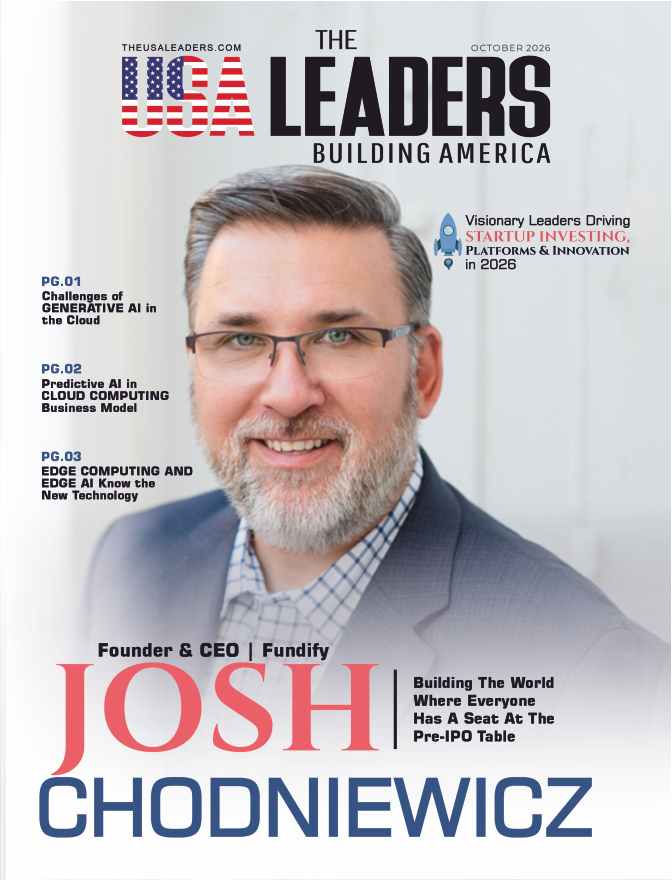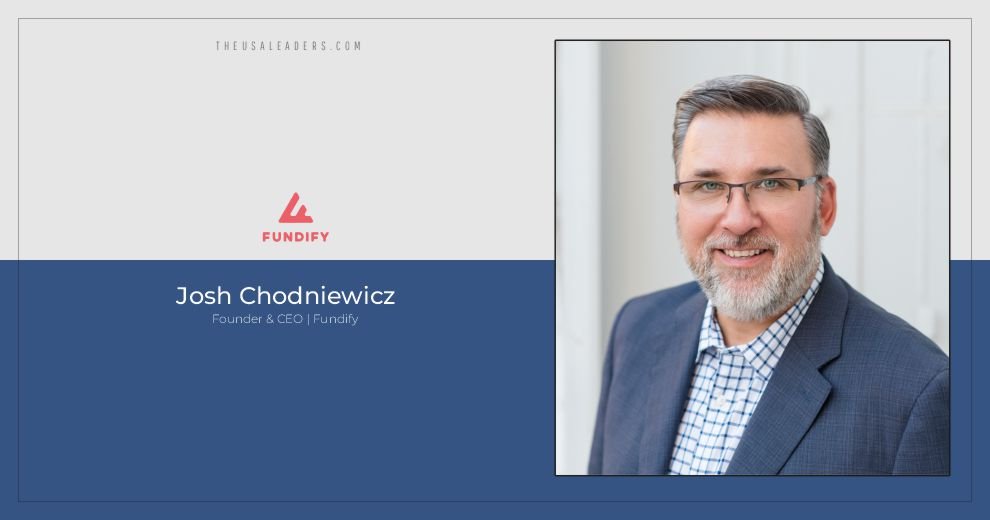
There are people who discover the language of business through degrees, mentors, and the slow accumulation of formal experience. And then there are people like Josh Chodniewicz, who started his first business at seven years old and was investing in pink sheet stocks just a few years after that.
That kind of early beginning does something lasting to a person’s relationship with risk and opportunity. In Josh’s case, it built an instinct that no classroom could fully replicate: the ability to see where value lives before the rest of the room has caught up.
By the time he was twenty, that instinct had already carried him somewhere significant. Together with a friend, he co-founded what would eventually become Art.com and AllPosters.com, an online art retailer built on $35,000, no meaningful connections, and what he describes as “a stubborn belief that people would buy art online if we made it easy enough.”
Told No, Again and Again
The investor community, for the most part, was not persuaded. Josh and his co-founder were turned down more times than he cares to count, a rejection that turned out to be one of the most clarifying forces of his career.
With little outside capital coming in, the only viable path ran directly through the customer. Build for the person on the other side. Make the experience genuinely accessible. Let the product speak first, and trust that the rest will eventually follow.
Over time, it did. Art.com and AllPosters.com served more than 20 million customers and crossed $2 billion in lifetime sales, a number that still carries a particular weight when you remember where it started. The company later became part of Walmart through its acquisition of Art.com, completing an arc that very few $35,000 origin stories ever reach.
“When you build something people genuinely need, and you make it accessible, the rest tends to follow,” Josh reflects. It is a sentence that sounds straightforward until you consider the years of sustained discipline it actually describes.
Three Principles That Never Left
Josh attributes the growth of Art.com to three things, all of which he carried directly into Fundify, where he serves as Founder and CEO.
The first was an obsessive focus on the customer experience. “We treated every order like it was our first,” he says, not as a tagline but as a daily operating standard that shaped every decision the company made.
The second was capital discipline. Bootstrapping forced the team to find creative leverage and to spend only where the unit economics were already working, long before that phrase became a common fixture of startup culture. The third was hiring people who cared more about the mission than the title. For years, there was no grand office and no recognizable brand name. What the company did have, he says, was “a team that believed online art should be accessible to anyone with a wall, and a willingness to outwork everyone else.” Those principles, he notes, travel. He runs Fundify by exactly the same ones.
The Gap That Would Not Go Away
During and after Art.com, Josh moved into angel investing. And in that world, he kept encountering the same structural frustration, one that was systemic enough to be invisible to those who had never run up against it.
The best early-stage opportunities, the ones with the most meaningful upside, were effectively closed to anyone who was not already wealthy or already well-connected. Friends and family members who would have been enthusiastic, capable early supporters were turned away simply because they did not meet the regulatory definition of an “accredited” investor. “That barrier never made sense to me,” he says.
On the other side of the table, founders were spending months, sometimes the better part of a year, chasing checks instead of building their companies. The system was chronically inefficient for them and exclusionary for nearly everyone else.
Fundify was his attempt to solve both problems at once: a platform where everyday people can invest in startups automatically, with no wealth requirement, and where strong founders can raise without the runaround.
How Fundify Actually Works
Fundify is an automated startup investing platform, and the entry point is as accessible as it sounds. You set a monthly contribution, starting at as little as $1 (some members are investing upwards of tens of thousands of dollars each month), link your bank account, and the platform handles everything that follows.
The firm’s ProAdvisors™ network, composed of more than 60 vetted founders, operators, and investors, works alongside the Fundify team each month to source, vet, negotiate, and invest in pre-IPO startups on your behalf. Over time, this process builds a diversified private company portfolio without requiring the investor to read a single pitch deck, attend a pitch event, or know anyone in the venture world.
What separates Fundify from the one-deal-at-a-time portals that have multiplied in recent years is that, rather than asking everyday investors to make individual decisions with expertise they have not had the opportunity to develop, Fundify does the analytical work and delivers the diversification, the due diligence, and access that historically belonged primarily to institutions and high-net-worth investors.
There is no accreditation requirement, no financial jargon, and, as he puts it, “real ownership in real companies.”
Dismantling a Stubborn Myth
The misconception Josh encounters most persistently is that startup investing is a category reserved for the wealthy. It is a perception rooted in an older regulatory era that no longer accurately reflects current law.
Today, SEC frameworks allow everyday Americans to participate in certain private company investments in ways that were previously unavailable. The legal door, in other words, has already been opened. The question is whether anyone has built a platform genuinely designed for the person actually trying to walk through it.
“The real issue,” he says, “is whether the experience is built for everyday investors, and most platforms simply are not.”
Fundify’s structure is designed to remove those barriers while preserving the rigor behind the investment process. The goal is for investing in startups to feel, as he describes it, as straightforward as setting up any recurring contribution.
Where the Bets Go, and Why
Josh invests where he believes the next decade of meaningful value is being created: AI, fintech, marketplaces, and the creator economy, to name a few. He is particularly drawn to opportunities with a power law attribute where investments can return outsized returns relative to their risk.
The process pairs top-down theses with what he calls a bottom-up signal. The team and ProAdvisors look for where real customer demand is appearing first, where founders carry genuine advantages in technology, distribution, or community, and whether the timing is actually right. “AI in particular is reshaping how startups operate, not just what they sell,” Josh says. He looks for founders who treat that shift as a real competitive edge, not a talking point.
His own angel track record reflects these convictions with precision. He backed Mixbook, the personalized photo products company, because he saw consumer print as underestimated and overdue for a genuine technology solution. He backed Collectrium, which was later acquired by Christie’s, because he saw the institutional shift toward digital provenance before it became widely apparent. He backed Pixowl, the creative mobile gaming company with a strong community layer, because he believed in the team as much as he believed in the product itself.
There are also categories he avoids: gambling and businesses built around addictive behavior. “We invest where we believe we can add real value, not just capital,” he says.
The Culture He Protects
When Josh talks about building teams, two qualities come up immediately: genuine ownership and low ego.
He wants people who treat the business as if it belongs to them, and who are more interested in finding the right answer than in being right. Teams at Fundify stay intentionally lean, with broad responsibility and high trust. Context is shared generously. Feedback is delivered honestly.
“Bold creative work does not come from pressure,” he says. “It comes from people who feel trusted and respected.” That is the culture he works to protect at Fundify, and it is precisely what allows the team to perform well beyond what its size might suggest on paper.
When the Plan Stopped Working
Josh does not romanticize the difficulty of leadership. He speaks about it with a directness that reads as earned rather than performed.
At Art.com, the dot-com crash arrived without warning and without mercy. There was payroll to meet, a market that had abruptly stopped buying, and a team that was looking to him for an honest account of where things actually stood. He gave them one. “I had to be honest with the team about how hard it was, ask everyone to do more with less, and stay convinced the long game was still real,” he says. The company cut costs quickly, communicated regularly, and held firmly to the customers it already had. Those decisions carried them through.
What that chapter left behind was a conviction about leadership under pressure that has stayed with him ever since: “calm honesty matters more in a crisis than confidence.” It is something, he says, that he has leaned on many times in the years since.
The Longer Arc
The vision Josh is building toward is substantial in scope, and he frames it without fanfare.
He wants startup investing to become as automatic and as ordinary as contributing to a 401(k). For decades, everyday Americans have been able to participate in the public markets through index funds, setting contributions, letting diversification compound quietly over time, and building wealth in the background. Private markets, where so much of the most consequential value creation takes place, have never offered anything remotely comparable to the everyday investor.
“We want Fundify to be the default way millions of people access this asset class,” he says, “automated, regulated, diversified, and built for them.”
The aspiration behind that vision carries a particular weight: If Fundify achieves what it is aiming for, the next generation of great American startups will be funded, at least in part, by the very people who use those companies, not solely by those who already have the capital to participate.
Balance, Boys, and 5th Gear
Away from the office, Josh has three sons at home, who he says keep him genuinely honest. He tries to be fully present with his family when he is with them, and ruthlessly focused when he is working. He reads regularly.
When asked about interests beyond a cabin retreat, he gently corrected the premise with good humor: There is no cabin. His version of balance has never required a scenic backdrop or a curated narrative of leisure. “I’m running in 5th gear most of the time even if I look like I’m not,” he says, without a trace of complaint.
For Josh, balance is less a destination than a daily discipline, one he tends alongside everything else.
The Door Is Already Open
If there is a single thread connecting every chapter of Josh’s life, from the seven-year-old running his first business to the founder building a platform designed to bring private market investing to millions, it is this: he does not believe in waiting for permission to begin.
The message he leaves with readers is practical and unequivocal.
“The biggest investing mistake most people make is not picking the wrong company,” he says. “It is never starting at all.”
Begin small. Stay consistent. Let time do the work. The people who quietly build a portfolio over the years, through Fundify or elsewhere, tend to be the ones who win. The door is already open. It is simply a matter of walking through it.
Quotes
“The mission is simple: bring real startup investing within reach of anyone who wants in, all done for you automatically.”
“If we get this right, the next great American startups will be funded by the people who use them, not only by the people who already have money.”
Also Read – Visionary Leaders Driving Startup Investing, Platforms & Innovation in 2026