Onboarding is a business process, not a welcome email
A new employee forms opinions about an organisation long before they feel fully productive. The way information is shared, equipment is prepared, introductions are handled, and expectations are explained all shape the early experience. When these steps are improvised, managers repeat the same administrative work and new hires spend valuable time looking for answers. A better approach treats onboarding as a repeatable business process with clear owners, timings, and outcomes.
That does not mean every employee should receive an identical experience. The structure can be consistent while the content changes by role, location, seniority, or department. A strong framework creates a reliable backbone, then gives managers room to add the details that make the experience relevant.
Begin before the employee arrives
The quiet period between accepting an offer and starting work is often overlooked. It is a useful window for completing practical tasks and reducing uncertainty. Simple steps such as confirming the first-day schedule, explaining where to go, sharing essential forms, and making sure access requests are moving can remove avoidable friction.
Pre-boarding also helps the manager. A short checklist can confirm who is responsible for the laptop, accounts, desk, security access, payroll information, and introductory meetings. If one item is delayed, the team can see it before the new starter is sitting idle on day one.
Give the first week a clear purpose
A packed calendar is not the same as an effective first week. New hires need enough context to understand the business, their role, the people they will work with, and the priorities that matter most. Too many meetings can create information overload, while too little structure leaves people unsure about what they should be doing.
A better first week balances orientation, focused learning, manager time, and useful work. Small early tasks are valuable because they turn abstract explanations into real understanding. They also give managers an opportunity to see where additional support is needed.
Make expectations visible
Many onboarding problems are really expectation problems. The employee may not know what success looks like, which decisions they can make independently, how quickly work should be completed, or who approves it. These gaps can remain hidden for weeks if nobody explains them directly.
Clear 30-, 60-, and 90-day outcomes can help. They do not need to be complicated. A few measurable goals, key relationships, and learning priorities give the employee a practical map while still allowing the role to evolve.
Use technology to remove repetitive administration
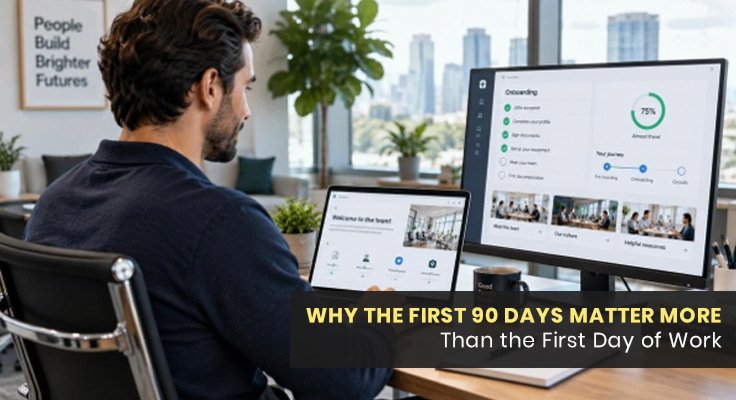
As headcount grows, manual onboarding becomes harder to coordinate. Spreadsheets, inbox reminders, and individual checklists can work for a small team, but they are easy to duplicate or forget when several people start at once. This is where structured employee onboarding software can help centralise tasks, reminders, documents, and progress.
The value of technology is not automation for its own sake. It is consistency. A platform should make it easier to see what has been completed, what is waiting on another person, and where the employee may need attention. Businesses evaluating tools such as Eli Onboarding should focus on the workflow they need to improve rather than simply looking for the longest feature list.
Keep the manager involved throughout the process
HR can design the process, but the manager determines much of the employee’s day-to-day experience. Regular manager contact is especially important during the first few weeks, when small questions can easily become larger frustrations. Short, predictable check-ins often work better than waiting for the employee to ask for help.
Managers should use these conversations to clarify priorities, give specific feedback, and ask what is still confusing. They should also check whether the employee has access to the systems, information, and people needed to do the job.
Build relationships deliberately
A role is easier to learn when the employee understands the people around it. Introductions should therefore go beyond a list of names. Explain why each relationship matters, what the other person or team does, and when the new hire is likely to work with them.
A buddy or peer contact can also be useful for everyday questions that may feel too small for a manager. This helps the new employee learn informal working habits without relying on guesswork.
Measure the process and improve it
Onboarding should be reviewed like any other operational process. Useful measures can include completion of key tasks, time to basic productivity, early employee feedback, manager satisfaction, and common points of delay. The goal is not to reduce the experience to a score, but to identify recurring friction.
A short review after the first month and again around the end of the initial onboarding period can provide practical insight. If the same problems appear repeatedly, the process should change rather than asking every new hire to work around them.
Create a role-based learning path
New employees do not need every policy and system on the same day. A role-based learning path can sequence information according to when it becomes useful. Core policies and essential systems come first; specialist tools, deeper product knowledge, and cross-functional processes can follow once the employee has enough context to understand them.
This staged approach also makes progress easier to review. Managers can see whether the employee is ready for the next level of responsibility instead of assuming that attending a training session means the skill has been learned.
Plan the handover from onboarding to normal performance management
Onboarding should not end suddenly because a checklist reaches 100 percent. The final stage should connect naturally with normal goal setting, one-to-one meetings, and development conversations. By that point, the employee should understand how performance is discussed and where longer-term objectives are recorded.
A simple closing review can summarise achievements, remaining learning needs, and the relationships or systems the employee still needs to strengthen. This turns onboarding into a bridge rather than an isolated programme.
Make the process resilient when managers are busy
Onboarding often fails at exactly the moment a business is growing fastest, because the hiring manager is also carrying a heavy operational workload. The process should therefore be designed so that essential steps do not depend on one person’s memory. Shared tasks, reminders, standard welcome information, and visible ownership make the experience more reliable when calendars become crowded.
This does not remove the manager’s responsibility. It protects the parts that can be standardised so the manager can spend more time on judgement, coaching, and relationship building. A resilient process also makes absences easier to cover because another person can see what has already happened and what still needs attention.
Review the experience from the new hire perspective
Internal teams often judge onboarding by whether their own tasks were completed. The employee experiences something different: whether the sequence made sense, whether information arrived at the right time, and whether support was easy to find. Walking through the journey from the employee’s perspective can reveal duplicated messages, confusing handoffs, and gaps that task completion reports do not show.
A practical review asks what the employee knew before day one, what they were expected to remember after the first week, and which questions they still had after the first month. Those answers can guide the next improvement cycle.
Final thoughts
The strongest onboarding programmes make a new employee feel expected, informed, and supported. They reduce avoidable admin for managers while giving the organisation a clearer way to introduce its standards, culture, and priorities.
The first 90 days will never be identical for every person, but they can be intentionally designed. A reliable process, thoughtful manager involvement, and the right technology can turn onboarding from a collection of tasks into a genuine foundation for long-term performance.