Marcus was a high school art teacher in Georgia. He spent twelve years grading projects, coaching the robotics team, and supplementing his income with freelance graphic design work on evenings and weekends. He was good at it. He was also exhausted by the combination and not building anything of his own.
In 2022 he bought a CO2 laser engraver. He started making personalized teacher gifts, graduation items, and custom school signage on the weekends. By the end of his first year he had cleared 28,000 dollars in laser engraving business revenue alongside his teaching salary. By the end of his second year the side business had grown to the point where he had to make a choice. He chose the laser business.
That trajectory from employed professional to full-time laser engraving business owner is not a rare story in 2026. OMTech has watched this pattern play out across thousands of customers and the common thread is not artistic talent or technical background. It is identifying a specific market demand and having the right equipment to serve it consistently.
Why Laser Engraving Is a Strong Business Model
The laser engraving business model works because of a fundamental pricing dynamic. Personalized products command significantly higher prices than identical non-personalized versions of the same item. A plain stainless steel tumbler sells for 12 to 18 dollars. An engraved tumbler with a name, a monogram, or a custom design sells for 28 to 45 dollars. The laser engraving adds two to four minutes of machine time and a fraction of a dollar in operating cost.
That gap between input cost and selling price is where laser engraving businesses build their margins. It is wider in this product category than almost any other small manufacturing application because the personalization is the product. The buyer is not comparing your engraved tumbler to a generic tumbler. They are comparing it to the emotional value of giving someone something with their name on it.
The second structural advantage is repeatability. A laser engraving machine produces the same quality result on the hundredth piece as it does on the first. A business that finds a product that sells can scale that product without quality degradation, which means growth does not require constant quality management investment.
Revenue Streams American Entrepreneurs Are Building
Personalized Gift Products
This is the largest and most accessible category for new laser engraving business owners. The market for personalized gifts in the United States is enormous and growing. Birthday gifts, wedding gifts, baby shower gifts, holiday gifts, teacher appreciation gifts, coach gifts. Every occasion creates demand for personalized items and laser engraving delivers them at a quality level and price point that mass-market alternatives cannot match.
- Engraved cutting boards and serving boards: 55 to 85 dollars retail, 10 to 16 dollars in materials
- Personalized tumblers and drinkware: 28 to 45 dollars retail, 8 to 14 dollars in materials
- Custom wooden signs and home decor: 45 to 90 dollars retail, 6 to 12 dollars in materials
- Laser cut ornaments and keychains: 15 to 35 dollars retail, 2 to 5 dollars in materials
- Custom pet memorials and family pieces: 40 to 120 dollars retail, 8 to 18 dollars in materials
Corporate and B2B Gifting
Corporate clients are among the most valuable customers a laser engraving business can develop. They order in quantities, they repeat annually, and they are less price-sensitive than individual retail buyers because they are purchasing for professional purposes where quality reflects on their brand.
Common corporate laser engraving orders include branded desk accessories, employee recognition awards, client gifts with company logos, event giveaways, and onboarding gifts for new hires. A single corporate account placing quarterly orders can represent 5,000 to 15,000 dollars per year in revenue from one relationship.
- Real estate agencies ordering personalized closing gifts for every transaction
- Law firms commissioning branded desk accessories for client meetings
- Sports organizations ordering custom awards for seasonal recognition
- Restaurants and hospitality businesses needing branded decor and signage
- Tech companies ordering custom onboarding kits with engraved accessories
Wedding and Event Market
Weddings create concentrated demand for personalized items across multiple product categories simultaneously. A single wedding client can order custom signs, personalized gifts for the wedding party, engraved cake servers, custom guest book alternatives, and decorative elements for the venue.
The wedding market also generates referrals efficiently. A bride who sees a laser-engraved item at someone else’s wedding asks where it came from. Wedding vendors who recommend your work to their clients become ongoing referral sources. Building relationships with wedding planners, photographers, and florists is a reliable business development strategy for laser engraving business owners focused on this market.
Metal Marking and Industrial Services
Entrepreneurs who invest in fiber laser technology alongside or instead of CO2 equipment can serve business clients who need permanent metal marking. Tool identification, serial number marking, brand logos on metal products, and traceability codes on industrial parts are all applications that businesses pay for reliably.
The pricing in metal marking services tends to be higher per piece than personalized consumer goods, and the orders tend to be more predictable. A machine shop that needs 200 parts marked per month is a reliable recurring account rather than a seasonal buyer.
What the Revenue Timeline Actually Looks Like
Honest expectations matter because unrealistic ones lead to poor decisions. Here is what the revenue trajectory typically looks like for a laser engraving business owner who executes consistently.
- Month 1 to 2: Learning the machine, developing settings for primary materials, building initial product listings on Etsy or a similar platform. Revenue is minimal, 200 to 600 dollars, as the operator learns the process
- Month 3 to 4: First consistent sales. Learning which products generate real demand versus which ones seemed like good ideas. Most operators identify their best two or three products in this period. Revenue typically reaches 800 to 1,500 dollars per month
- Month 5 to 8: Building on proven products, improving photography and listings, starting to develop repeat customers and referrals. Revenue reaches 1,500 to 3,500 dollars per month for operators who focused on their best products
- Month 9 to 12: Operators who identified their market, built relationships with repeat buyers, and refined their product line regularly reach 3,000 to 6,000 dollars per month by the end of their first year
- Year 2 and beyond: Operators who added corporate accounts, developed wholesale relationships, or expanded into additional product categories regularly exceed 6,000 to 10,000 dollars per month in their second year
The Equipment Decision
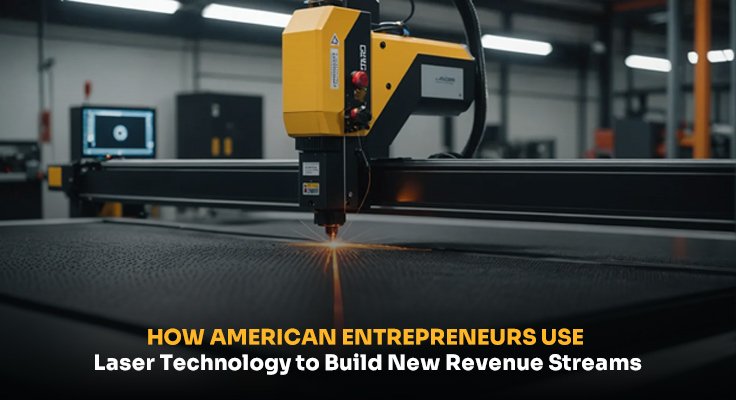
Most laser engraving businesses start with a CO2 laser engraver because the material range covers the most common personalized product categories. CO2 laser engraver machines in the 60W to 80W range cover wood, acrylic, leather, glass, and fabric. That material list handles cutting boards, tumblers, wooden signs, leather accessories, and most gift product categories from a single machine.
Key specifications to evaluate before buying:
- Work area size: At least 20 by 24 inches to handle standard cutting board and sign blank dimensions without repositioning
- Power: 60W minimum for production use. 40W machines limit material thickness and slow batch production meaningfully
- Enclosure: Enclosed design manages fumes and is safer in home and shared workshop environments
- LightBurn compatibility: The industry standard software for CO2 and fiber machines. Verify before purchasing
- Rotary attachment support: Required for tumblers. Verify the machine supports rotary engraving before buying if drinkware is part of your product plan
What Separates Successful Operators From Those Who Struggle
After watching many laser engraving businesses launch and develop, the differences between operators who build sustainable revenue and those who do not are consistent.
- Successful operators pick two to three products and get excellent at them before expanding. Scattered product lines with mediocre execution on each item do not build the reputation or the repeat customer base that drives growth
- Successful operators invest in product photography early. On Etsy and similar platforms, the photo is the product before the buyer receives it. Poor photography on excellent products consistently underperforms good photography on average products
- Successful operators build relationships rather than just transactions. A customer who had a good experience and hears from you before the holiday season places another order. A customer who bought once and never heard from you again does not
- Successful operators price for profitability from the start. Underpricing to generate volume is a trap that creates a busy but unprofitable business. Charge what personalized products command in the market
- Successful operators treat the equipment cost as a business investment with a payback timeline, not as a personal purchase. Running the machine one or two days per week to generate a meaningful return on a 4,000 dollar investment is entirely achievable with the right product focus
Conclusion
Marcus the former art teacher is now running a laser engraving business that generates more annual income than his teaching career did. He works from a converted garage, ships nationwide, and has a waiting list from October through December every year because the holiday season demand exceeds what one machine can handle.
He told me the hardest part was not learning the laser machine. That took a few weeks. The hardest part was believing that a side business built on personalized gifts could generate real money. The numbers eventually made that belief unnecessary.
The opportunity is real, the equipment is accessible, and the market for personalized products in the United States is large enough to support far more laser engraving business owners than currently exist. What it requires is a focused product strategy, consistent execution, and the willingness to invest in equipment that pays for itself within the first year for operators who use it seriously.
About OMTech
OMTech is a laser equipment company based in Anaheim, California. The company manufactures CO2 laser engravers, fiber laser marking systems, and MOPA fiber lasers for small businesses, entrepreneurs, and production shops across the United States. Their full product range is available at OMTech.
OMTech systems are used by laser engraving business owners across the country, from home workshop operators to full-time production shops. The product line covers entry-level desktop machines through high-output production systems with US-based technical support and an active owner community.