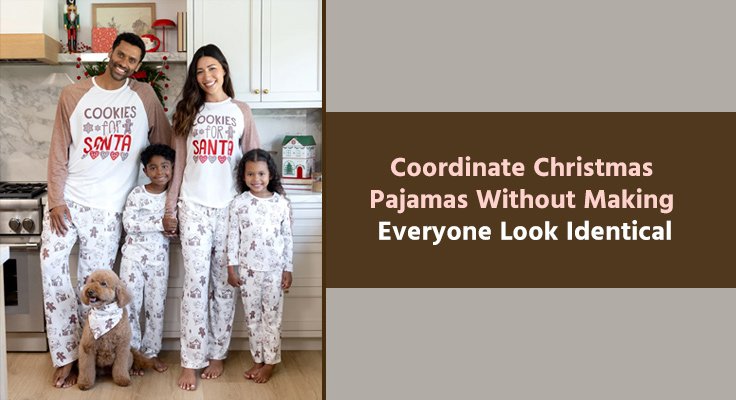
Family matching can go wrong when coordination becomes a set of rules. One person has to wear the same slippers, another is told to remove a favorite robe, and everyone is expected to pose in exactly the same way. The result may technically “match,” but it can also feel far removed from how the family normally dresses or spends Christmas together.
A better approach is to choose christmas pajamas as the common starting point rather than the finished outfit. Once a shared print or color palette connects everyone, individual family members can make small choices that reflect their age, comfort, and personality.
This creates a more relaxed kind of coordination. The family still looks connected in photographs, but nobody needs to become a copy of the person standing beside them.
One Shared Element Is Usually Enough
Think of matching as creating a visual link. That link might be gingerbread-print pants, the same holiday colors, a Fair Isle pattern, or one repeated Christmas graphic. Once that connection is obvious, there is little benefit in forcing every additional detail to match too.
For example, parents can wear the coordinated pajama set with their usual slippers, while children choose socks they already like. Someone who feels cold can add a plain cardigan. Another family member can keep the original set uncovered. The shared print remains visible enough to tie the group together.
This approach is especially useful in families with large age gaps. What looks fun to a seven-year-old may feel excessive to a teenager, and grandparents may prefer an extra layer. One consistent pajama theme leaves space for all of those differences.
Try the 1–2–3 Coordination Method
Instead of styling every person from head to toe, keep the plan deliberately simple.
- Choose one shared pajama design that the household can comfortably agree on.
- Let each person choose up to two personal details, such as slippers, a robe, hairstyle, or a simple accessory.
- Pick three moments when the matching look matters most—for example, Christmas Eve, one family photograph, and breakfast the next morning.
This gives the tradition boundaries. Family members know when everyone will be coordinated, but they do not have to spend the entire holiday maintaining a carefully controlled look.
It also makes preparation easier. Parents are not searching for six matching pairs of slippers or worrying because someone’s cardigan is slightly different from everyone else’s.
A Coordinated Look Should Still Change With Age
Matching a toddler with an adult does not mean styling them identically. Their clothing needs and their ideas about what looks good are naturally different.
Younger children may enjoy the full holiday theme and want to add festive socks or carry a Christmas toy. Older children might prefer the pajamas with no additional accessories. Adults may add a robe in the morning, while grandparents might choose a neutral cardigan for warmth.
Those differences do not weaken the family look. They make it believable. When the core print is consistent, variations in styling help the photograph represent several personalities rather than one repeated outfit.
Give Older Kids More Control
Older children and teenagers are often the first people to lose enthusiasm when family matching becomes too elaborate. They may not object to the pajamas themselves; they may object to being told exactly how to wear everything around them.
Let them keep the styling simple. If the shared pajamas are already festive, there is no need to add matching hats, novelty glasses, or props unless they genuinely want them.
A little control can make the difference between reluctant participation and a tradition they are willing to repeat.
A Gingerbread Design With a Built-In Shared Theme
PatPat’s Christmas Matching Family Pajamas Gingerbread Print Brown uses a coffee-brown holiday palette with “COOKIES FOR SANTA” color-block raglan tops and gingerbread-print full-length pants. The current product page lists coordinated sizing for women, men, kids, and pets, while the two-piece sets use a soft stretch knit, flat seams, and a heat-pressed tagless label. Socks are also included. Because the gingerbread print and top graphic already create a strong shared theme, families can keep the rest of their styling simple instead of adding several more matching elements.
The Difference Between Coordinated and Over-Coordinated
There is an easy test: remove one matching detail and ask whether the family still looks connected. If the answer is yes, that detail was probably optional.
Matching pajamas plus identical slippers plus matching robes plus the same Santa hats may photograph well in a highly styled shoot, but most family Christmas mornings do not need that level of control. Too many coordinated pieces can also create practical problems when sizes, comfort preferences, or temperatures differ.
The simpler version often works better: matching pajamas, normal personal layers, and a familiar home setting. It requires less preparation and gives people more freedom to enjoy themselves.
Let Each Person Finish the Outfit Their Own Way
Personal style can appear through very small choices. It does not require changing the main pajama theme.
A person who likes minimal outfits might wear plain house shoes and nothing else. Someone who enjoys festive styling could add Christmas socks or a hair accessory. A grandparent may prefer a solid robe. A child might carry a favorite stuffed animal into the photograph.
These differences are useful because they prevent the group from looking artificially uniform. They also reduce the amount of new clothing or accessories families feel they need to purchase simply to complete one Christmas picture.
Do Not Style Away Familiar Details
Some of the things that make a photograph memorable are details that would never appear in a catalog. Dad may always wear the same house slippers. Grandma may have a favorite cardigan. A child may refuse to go anywhere without a particular stuffed toy.
Leaving those things in the picture can make it more personal.
Years later, those ordinary details may be more meaningful than whether every accessory followed the same color scheme.
Matching Works Better When the Activity Comes First
Another way to prevent coordinated pajamas from feeling overly staged is to stop making the clothes the main event.
Put the pajamas on and do something. Bake cookies. Watch a Christmas movie. Wrap the final presents. Play a board game. Eat breakfast together. Let children investigate what is under the tree.
When people have an activity, they stop thinking about how they are dressed. Their body language becomes more natural, expressions change, and photographs begin to capture actual interaction.
This is also where coordinated clothing becomes useful rather than decorative. The family looks connected in candid pictures without needing to stop every activity for a formal pose.
You Do Not Need Everyone in the Same Pose
Uniform clothing and uniform posing together can make a family photograph feel especially stiff. If the pajamas already match, use the composition to introduce variety.
Some family members can sit while others stand. Children can gather on the floor. Parents can lean near the sofa instead of forming a perfect line. Grandparents can take comfortable seats rather than being asked to remain standing through repeated photographs.
The common print gives the image enough visual order. Different positions keep it interesting.
Use Matching to Connect Different Personalities
Families browsing christmas pajamas family options are often trying to coordinate people who would never normally choose the same outfit. That is exactly why flexibility matters.
The person who loves Christmas clothing can enjoy the shared theme. The minimalist can skip extra accessories. The teenager can keep everything understated. The young child can embrace every festive detail they like.