By Donnette Russell-Love, J.D., CAMS | CEO, Global Risk Compliance Group | Cross-Border Compliance Advisor
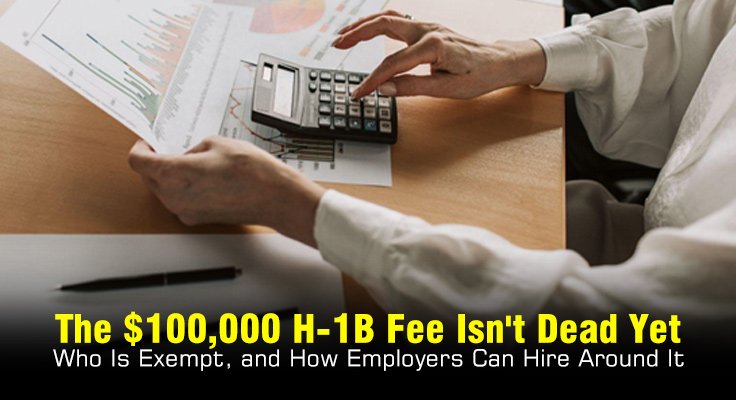
Employers celebrating the demise of the $100,000 H-1B fee should put the champagne back on ice. On June 8, 2026, a Massachusetts federal court vacated the fee in State of California v. Noem, holding that the September 2025 proclamation imposed an unauthorized tax, violated the Administrative Procedure Act, and exceeded presidential authority. Four days later, the same judge administratively stayed his own ruling, and the government’s stay motion is now before the First Circuit. The result: as of this writing, USCIS may still require the $100,000 fee for covered petitions. A D.C. federal court reached the opposite conclusion and upheld the fee, that case is on appeal, too, so the question is likely headed to the Supreme Court. Worse, the vacatur arrived in June, three months after the FY2027 cap registration window closed in March, meaning employers made this year’s hiring and budget decisions under a fee that was then struck down, then reinstated, after the die was cast.
The practical lesson: do not build a talent strategy that depends on the fee’s fate. Build one that routes around it.
Who the Fee Does Not Touch
The fee’s own architecture contains the exemptions. It applies only to new H-1B petitions for beneficiaries outside the United States that are filed for, or only approvable through, consular notification. That leaves untouched:
Change-of-status filings. A candidate already in the United States in a valid status, most commonly an F-1 student on OPT or STEM OPT, who changes status to H-1B without departing, never triggers the fee.
Current H-1B workers. Extensions, amendments, and employer transfers for people already holding H-1B status are outside the fee, as is travel by workers with valid visas.
National interest exceptions. The proclamation permits case-by-case waivers where the hire serves the national interest, a narrow but real lane for healthcare systems and critical-need employers.
Options for H-1B-Dependent Employers
First, hire from inside the country. The F-1 pipeline is now the premium channel: STEM OPT provides up to three years of work authorization, multiple lottery attempts, and a fee-free change of status when selected.
Second, look hard at the cap exemption. Universities, nonprofit organizations affiliated with universities, and nonprofit or governmental research organizations can file H-1B petitions year-round, with no lottery, and, structured correctly, a candidate can change status without consular processing. Employers adjacent to these institutions, including school districts and teaching hospitals, should examine whether an affiliation supports cap-exempt filing.
Third, budget contingently. The First Circuit could lift or extend the stay on short notice, and refunds for fees already paid remain unresolved. Contracts and offer letters for consular-processing hires should contain fee-contingency language.
Filling the Gap: The Alternative Classifications
O-1 (extraordinary ability). No cap, no lottery, no proclamation fee, filed year-round. The standard is demanding but more attainable than its reputation suggests, particularly for advanced-degree professionals with publications, awards, or high remuneration. and it leads cleanly toward the EB-1 green card.
L-1 (intracompany transferee). Where the employer has, or establishes a qualifying foreign affiliate, one year of employment abroad opens the L-1 door for executives, managers, and specialized-knowledge workers.
Treaty-based categories. These are nationality-locked and often overlooked: TN for Canadian and Mexican professionals, E-3 for Australians, H-1B1 for Chile and Singapore, and E-2 treaty investor status for nationals of treaty countries. Caribbean employers should note the map carefully: Jamaica, Trinidad and Tobago, and Grenada hold E-2 treaties; the Bahamas does not — a structural disadvantage that Bahamian nationals must plan around.
J-1 exchange visitor. Trainee and intern categories offer up to 18 months for early-career talent, though the two-year home residency requirement demands advance analysis.
The Bottom Line
The $100,000 fee is neither dead nor secure it is a litigation-dependent variable that can flip on a single appellate order. The employers who will hire without disruption in 2026 are those who treat the fee as a contingency, prioritize candidates who can change status from within the United States, exploit cap-exempt structures where available, and match alternative classifications to each candidate’s nationality and credentials before defaulting to the lottery.
This article is provided for informational purposes only and does not constitute legal advice. Readers should consult qualified counsel regarding their specific circumstances.
About the Author
Donnette Russell-Love, J.D., CAMS, is a Florida-licensed attorney with more than 25 years of experience in immigration law, regulatory compliance, and risk management. She is the principal of The Law Office of Donnette Russell-Love, P.L., a South Florida practice serving individuals, families, and employers navigating the U.S. immigration system, with particular depth in U.S.-Caribbean matters. A graduate of the University of Miami School of Law, she is admitted to the U.S. District Court for the Southern District of Florida and holds the Certified Anti-Money Laundering Specialist (CAMS) designation. She writes on immigration, compliance, and cross-border legal issues affecting individuals and businesses.