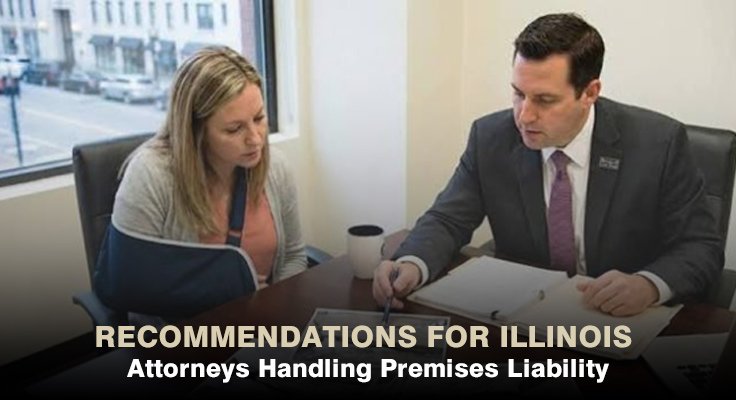
The general rule under the Illinois law for property owners and occupiers is to exercise reasonable care towards any person who is lawfully present on their property. Under the Illinois Premises Liability Act, there is no longer any need to distinguish between invitees and licensees, but instead there is a duty of reasonable care under the circumstances. The specifics of premises case law in Illinois will often be the important details that could make all the difference in determining a claim’s success. Visitors can be at a great risk in a wet floor, alteration of a service area, not enough light With these types of cases, the attorney needs to mount an effective case more than just proving that an accident occurred, recommendations for Illinois attorneys handling premises liability begin with understanding the legal standards that govern these claims and recognizing how evidence can influence liability.
Investigate the Property Condition Immediately
The initial thing Illinois lawyers recommend is that right away, they explore the scene of the accident. It is possible for the situation at a commercial or residential property to quickly shift. Spills are cleaned up, broken up steps are patched back together, light fixtures are replaced, and surveillance cameras are replaced.
As soon as it happens, lawyers should get images and videos of the site of the incident, plus be sure to capture the exact environment that supposedly inflicted the damage. Various factors such as measurement, floor surfaces, warning signs, light conditions, weather conditions and surrounding obstacles can apply.
Illinois premises liability attorney documenting a hazardous property condition.
Address the Open and Obvious Doctrine
Certainly, this is something to keep in mind when litigating premises liability in Illinois, as the doctrine is clearly visible, easy to spot, and so obvious. A property owner or occupier does not normally have a responsibility to protect a visitor from the open and obvious condition when it arose for their visit. An open and obvious condition will not preclude the possibility of a duty, however, in Illinois.
There are two notable exceptions like the distraction exception, and the deliberate encounter exception. Distraction exceptions may be available if the individual was distracted from what he or she should have seen because of certain circumstances. When a person is exposed to an unavoidable peril it can be a deliberate encounter exception for that person because of the circumstances.
Adding Evidence and Creating the Liability Timeline
It is best to preserve evidence as early as possible. Attorneys should issue preservation requests to relevant surveillance tapes, electronic records or documents, maintenance documents or communications among employees and other documents. Making a timeline can also be concentrated in the case. At the time the hazard is established, when it was brought to the attention of the employees or property managers, what actions were recommended and when the accident took place, counsel should document this.
Frequently Asked Questions
What Is Premises Liability in Illinois?
Premises liability is usually based on injuries that are the result of a dangerous property condition. Owners and occupiers of property in Illinois have a duty to provide reasonable care, based on all the facts and circumstances of each case.
What Must Be Proven in an Illinois Premises Liability Case?
Specific requirements vary according to the facts, but a plaintiff usually needs to prove the existence of a duty, its violation and the proximity of the breach to the injury.
Does an Open and Obvious Hazard Automatically Defeat a Claim?
Not necessarily. Illinois does recognize a few types of situations where it may still have some duty, even if the condition is open and obvious, for example, in situations where the distraction exception applies, or if the deliberate encounter exception applies.
Why Is Evidence Preservation Important?
Conditions on a property can constantly alter and video recordings and business documents might not be kept for years. The right actions taken at the right time can help the attorneys capture evidence to prove how the accident occurred and whether the defendant was aware of and/or should have been aware of the dangerous condition.
Conclusion
When it comes to premises liability lawsuits in Illinois, both the condition of the premises and the situation surrounding the injuries must be taken into account. Attorneys are required to promptly investigate the accident site, maintain actual or constructive notice, preserve evidence, consider conditions performed as open and obvious and think through comparative fault defenses and thoroughly document any bodily harm or damages sustained by the client.
Good casebuilding is normally accomplished by not speculating on blame but through thorough investigation that obtains the facts. The condition of the property, maintenance practices, warnings, surveillance evidence, witness testimony and the application of Illinois law will all be included in the detailed evaluation of the property made by attorneys examining the property, which will assist in formulating a strong litigation strategy.
If you are looking for further detailed information about premises liability, then Salvi Schostok & Pritchard P.C. may be able to give you a legal perspective into issues of personal injury and premises liability.
Also read: 5 Tips to Protect Your Trucking Business From Liability Risks