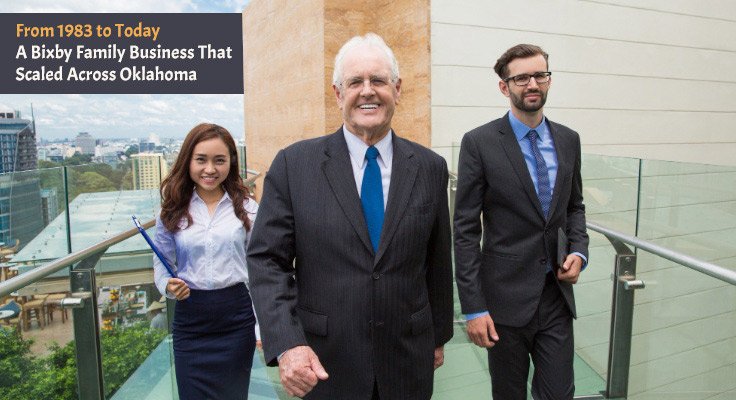
Forty-three years ago, Ronald Reagan was in the White House. Cell phones looked more like military equipment than personal technology. Most businesses tracked records on paper, not in the cloud.
And in Bixby, Oklahoma, a family-owned business began serving its community.
Now pause for a moment and think about what it takes for any business to remain successful for 43 years.
Economic recessions.
Changing technology.
New competitors.
Shifting customer expectations.
Most businesses never reach that milestone.
Yet some do.
Not because they’re the biggest. Not because they chase every trend. But because they consistently earn something far more valuable: trust.
For Oklahoma family-owned businesses, longevity isn’t just a measure of survival. It’s often a reflection of relationships built over generations. Businesses such as Bixby-South Tulsa Funeral Service have spent decades serving local families while adapting to the changing needs of communities across Oklahoma. And few industries demonstrate that reality more clearly than funeral service.
The Rare Business Achievement Nobody Should Overlook
Let’s be honest.
Business anniversaries can sometimes feel like routine marketing milestones.
Five years. Ten years. Twenty years.
Nice accomplishments, certainly.
But 43 years?
That’s different.
A company doesn’t remain part of a community for four decades by accident.
Especially not in a service profession where families often turn to providers during some of life’s most emotional and important moments.
In industries built on personal relationships, reputation compounds slowly. One family becomes two. Two become twenty. Twenty become generations.
That’s how community trust grows.
And trust tends to be remarkably difficult to fake.
A Family Business Story, Oklahoma Style
Oklahoma has always had a soft spot for family-owned businesses.
Maybe it’s because communities here tend to value relationships over transactions. Maybe it’s because locally owned businesses often become woven into the fabric of everyday life.
You see their names at school events.
You hear neighbors recommend them.
You watch them sponsor community activities year after year.
Eventually, they’re no longer simply businesses.
They’re institutions.
The strongest family-owned companies often become part of a town’s identity. People don’t just know what they do, they know who they are.
That’s a powerful thing.
And increasingly rare.
Growth Without Losing Yourself
Here’s where many businesses run into trouble.
Growth arrives.
Then comes a difficult choice.
Expand, or stay small?
Scale operations, or protect the personal touch?
It’s a balancing act.
Some organizations grow so quickly they lose the qualities that made them successful in the first place. Customers become numbers. Processes become impersonal. Relationships become transactional.
The best family-owned businesses seem to understand something important.
Growth should extend your values, not replace them.
That’s easy to say.
Much harder to do.
Yet companies that manage this balance often build something far more durable than rapid expansion alone.
They build loyalty.
1983 Was a Long Time Ago. Trust Still Matters.
Think about everything that’s changed since 1983.
The internet arrived.
Social media appeared.
Entire industries transformed.
Consumer expectations shifted dramatically.
Yet one thing remained surprisingly consistent.
People still want to work with businesses they trust.
Especially when decisions carry emotional weight.
In professions centered around serving families, trust often matters more than convenience, marketing, or even price. Families want reassurance. They want experience. They want confidence that they’re being guided by people who genuinely care.
Technology can improve communication.
It can’t replace trust.
That’s still earned the old-fashioned way.
One relationship at a time.
The Secret Ingredient: Adapting Without Forgetting
There’s a reason some businesses disappear while others continue serving multiple generations.
Adaptability.
Not reckless change.
Not chasing every new idea.
Adaptability.
The strongest organizations understand how to evolve while remaining true to their core mission. They embrace better tools, improved processes, and changing customer preferences without abandoning the values that built their reputation.
It’s a little like renovating a historic home.
You modernize what needs updating.
You preserve what makes it special.
The businesses that endure usually understand that difference.
From Local Roots to Regional Impact
Most family businesses don’t begin with grand plans to serve an entire region.
They start smaller.
Serve one family well.
Then another.
Then another.
Word spreads.
Relationships grow.
Communities notice.
Over time, what began as a local operation becomes something larger, not because of aggressive expansion strategies, but because people continue recommending the business to friends, neighbors, and family members.
That’s often how sustainable growth happens.
Quietly.
Consistently.
Without much fanfare.
And honestly, those are often the most impressive success stories.
Why Longevity Matters More in Service Industries
Some businesses sell products.
Others provide services.
The difference matters.
When a company sells a product, customers evaluate the product itself.
When a company provides personal services, customers evaluate the experience, the professionalism, the communication, and the trustworthiness of the people involved.
Longevity becomes meaningful because it suggests consistency.
It suggests thousands of interactions handled well.
Thousands of relationships maintained.
Thousands of opportunities to either earn trust, or lose it.
A 43-year history doesn’t guarantee excellence.
But it certainly tells you something important.
People kept coming back.
A Legacy Built One Family at a Time
Perhaps that’s the most interesting part of long-running family businesses.
Their story isn’t really about the business.
It’s about the people.
The families served.
The community relationships formed.
The generations connected through decades of shared experiences.
For families seeking a trusted Bixby-South Tulsa funeral service, organizations like Bixby Funeral Service represent the type of family-owned Oklahoma business that has continued serving communities since 1983 while adapting to meet changing needs across the state.
Forty-three years isn’t simply a business milestone.
It’s a community milestone too.
The Real Measure of Success
Revenue matters.
Growth matters.
Longevity matters.
But perhaps the real measure of success looks a little different.
It’s the family that returns because of a positive experience decades earlier.
It’s the recommendation passed from one generation to the next.
It’s the trust that survives leadership changes, economic shifts, and technological revolutions.
Those things don’t show up neatly on a spreadsheet.
Yet they’re often the reason a business lasts for 43 years.
In a world obsessed with what’s new, there’s something refreshing about organizations that prove the value of consistency.
Because sometimes the most remarkable business story isn’t how fast a company grows.
It’s how well it serves people while growing.