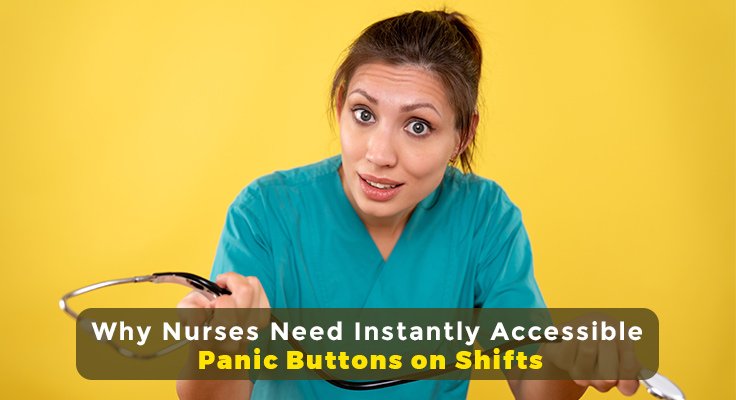
Nursing shifts demand close observation, steady judgment, and physical proximity during unstable moments. A calm room can change within seconds after pain, fear, confusion, or withdrawal alters behavior. Federal injury records show healthcare personnel face violent incidents at rates far above many other jobs. Nurses absorb much of that exposure because bedside duties keep them nearest patients, relatives, and high-stress encounters throughout each working day.
Be Proactive
Trouble rarely announces itself early. A visitor may escalate, a patient may grow combative, or a hallway exchange may turn unsafe before nearby staff notice. In those moments, a nurse panic button offers discreet access to backup without forcing a nurse to leave the bedside, raise a voice, or search for a phone while tension climbs and decision time shrinks.
The Risk Is Measurable
This concern rests on documented injury data, not anecdote. The Occupational Safety and Health Administration has reported serious workplace violence events in healthcare at more than four times the private industry average. Bureau of Labor Statistics figures also counted nonfatal violence cases in health care and social assistance. They led to missed workdays, which signals physical harm and psychological strain.
Silence Creates Delay
Phones are not always within reach during a crisis. Nurses may be managing oxygen tubing, medication pumps, mobility support, or active bleeding when danger appears. Calling out can also inflame agitation, especially during delirium, intoxication, or family conflict. Immediate alerts reduce the interval between threat recognition and staff response. That shorter gap can lower injury risk and contain disruption before a unit becomes unstable.
Patients Need Presence
Leaving a room to find assistance can expose a vulnerable patient. Bedside assignments often involve fall precautions, intravenous access, cardiac monitoring, or respiratory distress. Even a brief absence may permit self-extubation, line removal, wandering, or sudden physiologic changes. An instantly reachable alert allows the nurse to remain present, continue assessment, and summon support without breaking visual contact during a medically sensitive moment.
Quiet Alerts Help
Visible fear changes how people behave. A loud plea for security may trigger shame, anger, or abrupt movement from someone already losing control. Discreet signaling supports a more measured response from coworkers, clinical leaders, or trained officers. That approach helps preserve dignity while improving coordination. Fewer mixed signals during tense encounters often mean safer de-escalation and clearer protection for everyone nearby.
Coverage Must Fit Workflow
Placement matters as much as technology. Nurses travel through patient rooms, medication areas, bathrooms, supply spaces, entrances, and quieter corridors where witnesses may be scarce. Risk follows those routes, rather than staying near a desk. Accessible activation points should match real movement patterns and remain usable with gloved hands or occupied arms. If access requires extra steps, response time suffers during high-pressure events.
Practice Shapes Response
A device alone cannot fix a weak safety process. Teams need clear protocols, routine drills, and shared expectations about who answers each alert and what happens next. Training should include threatening behavior, visitor disputes, lone-worker exposure, and sudden medical collapse. Rehearsal matters because stress narrows attention. Staff who trust a response plan are more likely to act early, before behavior becomes dangerous. Regular review after each drill helps charge nurses, security staff, and unit leaders correct gaps before an actual emergency occurs.
Data Drives Better Prevention
Each activation offers useful clinical and operational information. Time, location, staffing levels, and event type can reveal patterns memory often misses after a busy week. Repeated signals near entrances may indicate visitor screening problems. Frequent overnight alerts may reflect thin coverage or delayed support. Careful review helps leaders place resources where exposure is highest and address risks before injuries multiply across a unit.
Conclusion
Nurses spend long hours delivering medication, monitoring symptoms, easing fear, and making rapid judgments near patients whose condition or behavior may shift without warning. Their personal safety should not depend on distance from a desk or the chance that someone hears a shout. Instantly accessible panic alerts reflect the realities of bedside care. They support faster intervention, steadier clinical presence, and safer treatment settings for staff and patients alike.