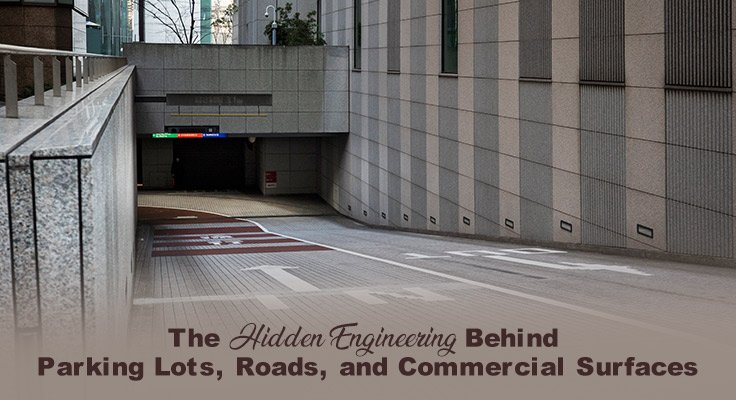
Every day, millions of people drive across parking lots, roads, and commercial surfaces without realizing the engineering behind them. These surfaces may appear simple, but they are carefully designed systems built to withstand traffic loads, weather conditions, and long-term wear.
From material selection to drainage and maintenance, each component plays a crucial role in creating durable, safe, and functional surfaces. The purpose of this article is to uncover the science, design, and maintenance strategies that make these surfaces durable, safe, and functional.
Understanding Pavement Materials
The choice of materials determines how a surface performs over time. Asphalt and concrete are the two most widely used paving materials, each with distinct properties:
- Asphalt: Flexible, cost-effective, and ideal for areas with heavy vehicle traffic.
- Concrete: Extremely durable, resistant to wear, and suitable for high-load commercial surfaces.
Engineers also incorporate aggregates, binders, and additives to enhance durability, prevent cracking, and improve weather resistance. Proper compaction and thickness of layers ensure that the pavement can handle expected traffic volumes while minimizing maintenance needs.
The Role of Structural Design
A well-engineered surface begins beneath the visible layer. Structural design includes:
Subgrade Preparation
- Soil testing to assess load-bearing capacity
- Stabilization and compaction to prevent settling
Layered Pavement System
- Base layer: Distributes vehicle weight and provides stability
- Binder layer: Absorbs stress and prevents deformation
- Surface layer: Provides smoothness, skid resistance, and visual appeal
Engineers calculate expected traffic loads and environmental stress to design a system that lasts decades. Modern design also considers sustainability, with recycled materials and energy-efficient construction methods.
Drainage, Safety, and Compliance
Proper drainage is critical to prevent water-related damage. Features like slopes, gutters, curbs, and trench drains ensure that rainwater is efficiently directed away from the pavement. Safety considerations include:
- Pedestrian ramps and walkways compliant with ADA standards
- Reflective markings for visibility
- Signage to guide vehicles and prevent accidents
Effective drainage and safety integration not only protect the surface but also enhance usability and compliance with local regulations.
Maintenance Strategies for Longevity
Even expertly engineered surfaces require ongoing care. Preventative maintenance keeps pavement in top condition and reduces costly repairs:
- Sealcoating to protect against UV rays and oxidation
- Crack filling to prevent water infiltration
- Routine inspections to identify early signs of wear
Businesses often rely on commercial paving contractors to implement these strategies effectively, ensuring that their infrastructure investments remain durable and safe for years.
Innovations Shaping Modern Paving
The paving industry continues to evolve with technology and innovation:
- Infrared asphalt repair: Repairs damaged areas without removing entire sections
- Full-depth reclamation: Recycles existing pavement to reduce cost and environmental impact
- Smart surface technologies: Sensors and data analysis help predict maintenance needs
These advancements improve efficiency, sustainability, and the overall lifespan of commercial and municipal surfaces.
Endnote
Behind every parking lot, roadway, and commercial surface lies a series of engineering decisions that shape its performance, safety, and lifespan. Quality design, proper construction, and ongoing maintenance work together to deliver lasting results. When property owners understand these fundamentals, they can make smarter infrastructure investments that support long-term value, reliability, and functionality.