The office is a strategic tool for business success. As companies work out the complexities of hybrid work and a heightened focus on talent retention, the physical environment has emerged as a cornerstone of corporate culture.
Decision-makers are increasingly realizing that the four walls (and everything within them) directly influence the bottom line. It’s no longer enough for an office to be functional – it must be purposeful.
The Psychology of Space at Work
Spatial design significantly dictates mood, motivation, and the quality of collaboration among team members. According to research on the psychology of work environments, a well-designed space can reduce cognitive load, allowing employees to dedicate more mental energy to complex problem-solving and creative thinking.
Modern professionals crave flexibility and comfort. When an environment feels rigid or clinical, it can stifle innovation. Conversely, spaces that offer a variety of settings, such as lounge areas for brainstorming or secluded nooks for deep work, signal to employees that their diverse work styles are valued, fostering a sense of psychological safety and belonging.
Key Elements That Drive Performance
Several tangible factors contribute to a high-performing workspace. Natural lighting is perhaps the most critical, as it regulates circadian rhythms and keeps energy levels consistent throughout the day. Color schemes also play a role: blues and greens are used to promote calm and focus, while vibrant accents can stimulate energy in collaborative zones.
Ergonomic furniture is equally vital in preventing physical fatigue, which is a major, yet often overlooked, drain on productivity. The invisible elements of a room often carry the most weight. For example, acoustics play a significant role in concentration – the strategic use of ceiling tiles and sound-absorbing materials can mitigate the distracting hum of a busy office, ensuring that the ambiance supports rather than hinders performance.
Adapting Design for Different Work Styles
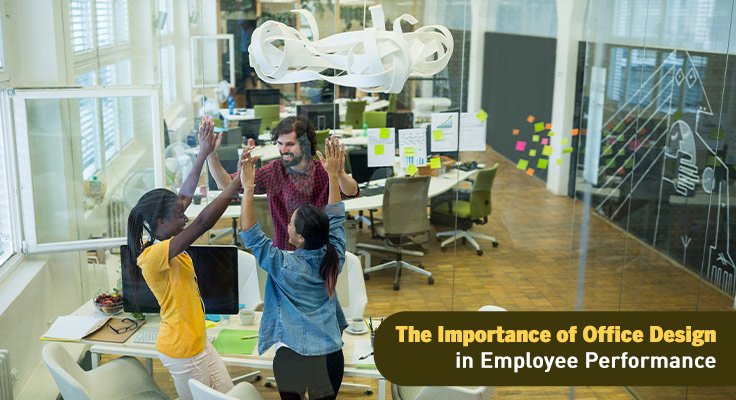
A “one-size-fits-all” approach rarely works in the modern business environment. Successful companies are moving toward activity-based working, which provides specific zones for different tasks. This might include library zones for heads-down concentration, breakout areas for informal social interaction, and adaptable meeting spaces equipped with mobile technology.
Tech giants and innovative start-ups alike have found that when employees have the agency to select their environment based on the task at hand, engagement scores rise significantly.
Measuring the Impact of Office Design
Investing in design is a business decision, and like any investment, its impact should be measured. Businesses can assess effectiveness through regular employee feedback surveys and productivity metrics.
Ignoring these design considerations can lead to quiet pitfalls, such as increased absenteeism or high turnover rates driven by environmental dissatisfaction. Staying responsive to employee needs ensures the workspace remains an asset rather than an outdated overhead cost.