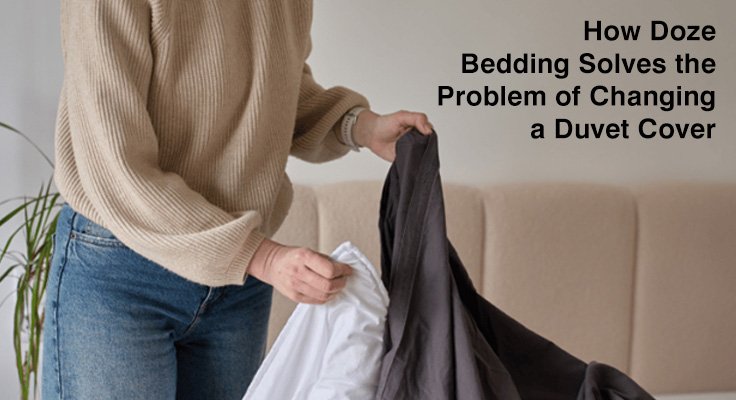
Doze Bedding, a South Florida–based company, has entered the competitive home textiles market with a focused objective: simplifying the process of making a bed. The brand centers its identity on what it calls the “Quick-Change” duvet system, a design intended to address a long-standing household frustration. While bedding is often marketed around comfort and aesthetics, Doze positions functionality as a primary concern, aligning with broader consumer trends that prioritize convenience and ergonomic design in everyday products.
Industry experts have increasingly emphasized the importance of bedding beyond appearance. As sleep specialist Dr. Shelby Harris notes, “A quality duvet cover not only contributes to a blissful night’s sleep, but also determines the bedroom’s aesthetic and feel.” This perspective highlights how design and usability intersect in modern bedding solutions, an area where Doze has focused its product development.
Patent-Pending Quick-Change System Addresses a Common Household Challenge
Changing a duvet cover is widely regarded as one of the more cumbersome household tasks. Traditional designs require users to insert a bulky comforter through a narrow opening, often involving shaking, lifting, and repositioning. Doze Bedding’s system attempts to eliminate these steps through a combination of structural changes.
Key components of the system include:
- A three-sided zipper that allows the duvet cover to open fully, similar to a book
- A patented snap-corner mechanism that secures the insert in place
- A zip-to-close structure that replaces buttons or ties
This design reduces the need for repetitive motions such as stuffing and fluffing. The company reports that the insert remains evenly distributed due to the snap system, addressing a common issue where bedding bunches or shifts during use.
The system has received industry recognition, including a 2025 Good Housekeeping Best Bedding Award and a 2024 Time Magazine Best Comforter distinction. These acknowledgments suggest growing interest in functional bedding innovations rather than purely aesthetic upgrades.
Within this context, the brand’s range of comforter solutions, including its bundled offerings available through its comforter sets online, reflects a shift toward integrated bedding systems rather than standalone components.
Luxury Materials Positioned Within a Value-Oriented Framework
Doze Bedding also emphasizes material quality as a central feature of its product line. The company uses high-end cotton in both percale and sateen weaves, catering to different sleep preferences.
Material characteristics include:
- Percale fabric designed for breathability and a cooler sleep surface
- Sateen fabric offering a smoother texture and heavier drape
- Cotton construction that softens over time with repeated washing
Dr. Harris has also cautioned consumers about overreliance on thread count as a measure of quality. In a recent discussion, she noted that higher thread counts can reduce breathability, which may negatively impact sleep. This aligns with Doze’s focus on fabric performance rather than numerical metrics.
Additional considerations tied to material quality include:
- Temperature regulation, particularly for individuals who identify as “hot sleepers”
- Durability across repeated laundering cycles
- Compatibility with skin health and moisture control
The company positions its bundled products as a way to consolidate these features into a single purchase, potentially reducing the need for separate sourcing of bedding components.
Ergonomic Design Supports Accessibility and Ease of Use
Beyond convenience, Doze Bedding highlights the ergonomic advantages of its system. Traditional duvet covers often require bending, lifting, and fine motor coordination, which can present challenges for certain user groups.
The Quick-Change system addresses these concerns through zipper closures, snap mechanisms, and a layout that allows the cover to be arranged flat before closure.
These features may benefit individuals with:
- Limited mobility or back discomfort
- Reduced hand strength or dexterity
- Age-related physical limitations
The Sleep Charity has noted that bedding plays a role in physical alignment during rest, emphasizing that smooth, evenly distributed materials can support better posture. By preventing internal shifting, Doze’s system may contribute to a more stable sleep surface.
The company has also indicated interest in pursuing certifications related to accessibility, signaling an effort to formalize its claims within recognized health and wellness frameworks.
Operational Efficiency for Hospitality and Rental Markets
In addition to individual consumers, Doze Bedding targets commercial users, particularly in the short-term rental and hospitality sectors. These environments require frequent bed turnover, making efficiency a measurable concern.
The system offers several operational advantages:
- Reduced time required to change bedding between guests
- Less physical strain on housekeeping staff due to simplified handling
- Consistent presentation, as the insert remains securely positioned
According to industry observations, repetitive physical tasks in hospitality settings can contribute to workplace injuries. By minimizing lifting and repositioning, the Quick-Change system may reduce these risks.
From a guest experience perspective, the design also ensures that:
- The duvet insert remains fully enclosed during use
- The bedding maintains a uniform appearance
- There is less likelihood of discomfort caused by shifting materials
These factors align with broader trends in hospitality, where consistency and efficiency are closely linked to operational performance and customer satisfaction.
Integrated Hygiene Features Reflect “Clean Sleep” Trends
The concept of “clean sleep” has gained traction in recent years, with increased attention on hygiene and material exposure during rest. Doze Bedding incorporates several features aimed at supporting this trend.
Notable elements include:
- Full-zip pillowcases that fully enclose the pillow
- Duvet covers that prevent insert exposure
- Machine-washable components designed for regular cleaning
Experts cited in a Los Angeles Times feature on sleep hygiene note that bedding can accumulate bacteria and allergens over time. Fully enclosed systems may reduce this exposure by limiting contact between internal materials and the external environment.
Environmental psychology research also suggests that a well-maintained bed contributes to mental relaxation. A 2026 report highlighted that orderly bedroom environments can signal calmness to the brain, reinforcing the connection between physical space and psychological comfort.
Doze’s product design, which prioritizes ease of maintenance, may indirectly support these outcomes by making regular cleaning more manageable.
Conclusion
Doze Bedding represents a broader shift within the home goods industry, where functionality and user experience are becoming as important as material quality. By addressing a specific and widely recognized challenge, the company has carved out a niche focused on practical innovation.
Its approach combines:
- Structural redesign of traditional bedding components
- Material selection aimed at comfort and durability
- Features tailored to both residential and commercial use cases
As consumer expectations evolve, particularly around convenience and hygiene, products that reduce friction in daily routines are likely to gain attention. Doze Bedding’s Quick-Change system reflects this trend, offering a case study in how incremental design changes can reshape a familiar household item.
While long-term market impact remains to be seen, the brand’s early recognition and targeted positioning suggest that functional bedding solutions may continue to expand within both consumer and professional segments.