In recent years, the fashion industry has been defined by rapid change—micro-trends, influencer-driven demand, and an increasingly fragmented retail landscape. According to industry estimates, the global apparel market is projected to surpass $2 trillion in the coming years, with digital channels playing an increasingly central role in how products are sourced and distributed.
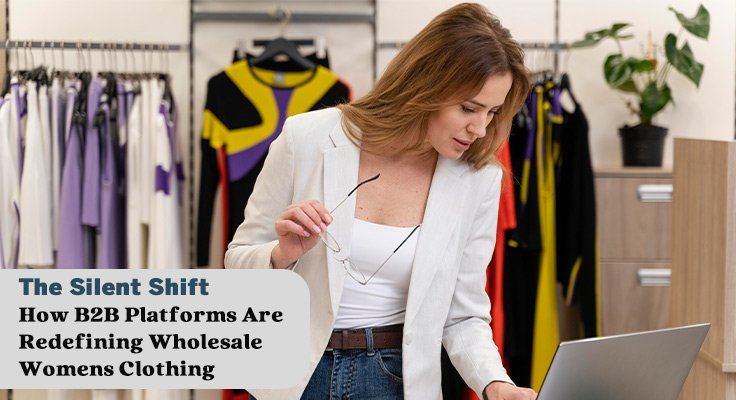
While much of the spotlight has been on direct-to-consumer brands and fast fashion giants, a quieter transformation has been unfolding behind the scenes. This shift is not happening on storefronts or social media feeds, but deep within the infrastructure that powers fashion itself: sourcing, production, and distribution. At the center of this evolution are B2B platforms, which are steadily redefining how wholesale womens clothing operates in a digital-first world.
From Transactional Sourcing to Strategic Ecosystems
Traditionally, wholesale fashion has been a largely transactional process. Retailers attended trade shows, built relationships with suppliers, and placed bulk orders based on seasonal forecasts. This model, while effective in a slower market, is increasingly out of sync with today’s demand for speed, flexibility, and data-driven decision-making.
B2B platforms are transforming this model into something far more dynamic. Instead of acting as simple marketplaces, they are becoming integrated ecosystems where sourcing, trend analysis, logistics, and even branding intersect.
Industry observers note that these platforms are not just digitizing wholesale—they are fundamentally reshaping the role of suppliers and buyers alike. Retailers are no longer just purchasing inventory; they are engaging in ongoing, data-informed partnerships that allow them to adapt quickly to shifting consumer behavior.
Agility Over Volume: A New Competitive Advantage
One of the most significant changes driven by B2B platforms is the shift from volume-based purchasing to agility-based sourcing.
In the past, success in wholesale often depended on the ability to order large quantities at lower costs. Today, however, overproduction and inventory risk have become major concerns. Reports suggest that excess inventory can account for up to 20–30% of unsold stock in fashion retail, putting pressure on margins and sustainability goals.
As a result, many boutique retailers and emerging brands are turning to more flexible sourcing strategies. In fact, studies indicate that over 60% of small and mid-sized fashion businesses now prioritize adaptable supply models over traditional bulk purchasing.
Instead of committing to large seasonal orders, they are increasingly working with wholesale womens clothing suppliers that support smaller batch production, faster turnaround times, and more responsive inventory cycles.
This shift enables businesses to test new styles, respond to real-time demand, and reduce waste—all without sacrificing competitiveness.
Data as the New Currency of Wholesale
Another defining feature of modern B2B fashion platforms is their reliance on data.
Unlike traditional wholesale channels, which often relied on intuition and past experience, today’s platforms provide access to real-time insights. These may include:
- Trending product categories
- Regional demand patterns
- Price sensitivity data
- Sell-through rates
With this information, retailers can make more informed purchasing decisions, while suppliers can better align their production with market needs.
“Data is becoming the connective tissue of the wholesale ecosystem,” as many industry analysts suggest. “It’s no longer just about what you can produce, but how intelligently you can respond.”
This data-driven approach is particularly valuable in womenswear, where trends evolve rapidly and consumer preferences can shift dramatically within a single season.
Lowering Barriers for Emerging Brands
Historically, entering the fashion retail space required significant upfront investment—large inventory orders, established supplier relationships, and access to industry networks.
B2B platforms are lowering these barriers, making it easier for smaller players to compete. By providing access to a wide range of suppliers, transparent pricing, and streamlined logistics, these platforms empower new brands to launch and scale with far less friction.
Recent market insights suggest that the number of independent boutique brands has grown steadily over the past decade, fueled in part by easier access to global sourcing networks.
This democratization of sourcing is fueling the rise of boutique brands worldwide. Entrepreneurs can now focus more on branding, customer experience, and niche positioning, while relying on flexible wholesale networks to handle production.
In this context, wholesale is no longer a limiting factor—it becomes an enabler of innovation.
The Rise of Digital-First Wholesale Relationships
Another subtle but powerful shift is the way relationships are formed and maintained.
Where traditional wholesale relied heavily on face-to-face interactions and long-standing partnerships, today’s connections are increasingly digital. Communication, negotiation, and order management are all happening within platform environments.
This does not eliminate the importance of trust—in fact, it amplifies it. Transparency, reliability, and consistency become even more critical when interactions are mediated by technology.
The most successful suppliers in this new landscape are those who can combine operational excellence with digital responsiveness. They are not just manufacturers; they are partners who understand the evolving needs of modern retailers.
Sustainability and the Pressure to Adapt
Sustainability is another factor accelerating the transformation of wholesale womens clothing.
Consumers are becoming more conscious of how their clothing is produced, and brands are under increasing pressure to demonstrate responsible practices. Studies show that a growing percentage of consumers now consider sustainability when making purchasing decisions, influencing how retailers approach sourcing.
B2B platforms are helping address this challenge by offering greater visibility into supply chains. Retailers can evaluate suppliers based on production methods, material sourcing, and compliance standards—something that was far more difficult in traditional wholesale environments.
At the same time, smaller batch production and on-demand manufacturing—both enabled by digital platforms—are reducing overproduction and waste.
In this sense, the shift toward B2B platforms is not just about efficiency; it is also about aligning the industry with more sustainable practices.
From Suppliers to Strategic Partners
Perhaps the most profound change is the evolving role of suppliers themselves.
In the past, suppliers were often seen as interchangeable—chosen primarily based on price and capacity. Today, however, they are becoming strategic partners who contribute to product development, trend forecasting, and even brand positioning.
Retailers are increasingly seeking suppliers who can offer:
- Design support
- Rapid prototyping
- Market insights
- Flexible production capabilities
This shift reflects a broader transformation in how value is created within the fashion industry. It is no longer confined to branding or retail; it extends across the entire supply chain.
Looking Ahead: A More Connected Future
As B2B platforms continue to evolve, their impact on wholesale womens clothing will likely deepen. Reports indicate that digital B2B marketplaces are growing at a significantly faster rate than traditional wholesale channels, driven by demand for efficiency and global accessibility.
We can expect to see further integration of technologies such as AI-driven trend forecasting, automated supply chain management, and even virtual sampling. These innovations will continue to blur the lines between sourcing, design, and retail.
At the same time, the emphasis on agility, data, and sustainability will only grow stronger. Businesses that can adapt to this new paradigm will be better positioned to navigate uncertainty and capitalize on emerging opportunities.
Conclusion
The transformation of wholesale womens clothing is not happening through a single disruptive event, but through a series of interconnected shifts—digitalization, data integration, changing consumer expectations, and new business models.
B2B platforms sit at the center of this transformation, quietly redefining how the industry operates. They are turning wholesale from a rigid, transactional process into a flexible, intelligent, and collaborative ecosystem.
For retailers and suppliers alike, the message is clear: the future of fashion will not be shaped solely by what is sold, but by how it is sourced.