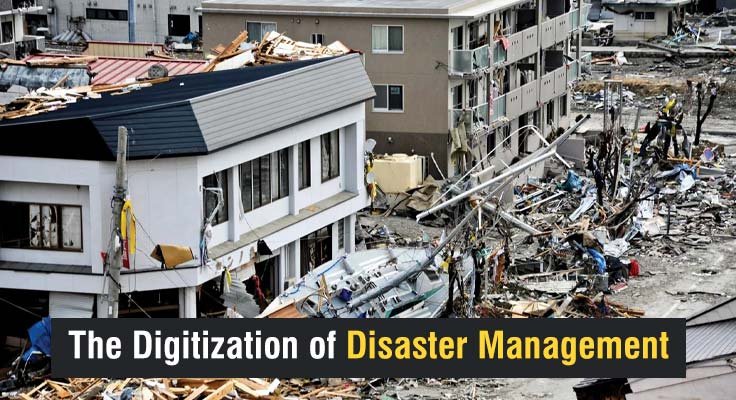
Disaster management has changed significantly in recent years. In the past, response efforts relied heavily on manual coordination, delayed communication, and limited data. Today, digital tools are transforming how governments, businesses, and emergency teams prepare for and respond to crises. From natural disasters like floods and earthquakes to man-made incidents such as fires and cyberattacks, digitization is helping teams act faster, smarter, and more effectively.
Modern disaster management now depends on real-time data, cloud systems, and connected devices. Early warning systems can detect risks before they escalate. Mobile apps send alerts instantly to communities. Emergency teams use dashboards to track events as they unfold. These changes reduce response time and improve decision-making.
The shift toward digitization is not just about speed. It is also about accuracy. Data analytics allows organizations to predict patterns, allocate resources better, and reduce long-term damage. According to global reports, early warning systems combined with digital coordination can reduce disaster-related losses by up to 30 percent. This shows how technology is not just supporting disaster response but reshaping it entirely.
However, digitization also introduces new challenges. Systems must be reliable during extreme conditions. Data must remain secure. Teams must be trained to use advanced tools effectively. The success of digital disaster management depends on balancing innovation with strong execution.
Real-Time Data and Smarter Decision Making
One of the biggest advantages of digitization is access to real-time information. Sensors, satellites, and connected devices collect data continuously. This information is analyzed instantly to detect risks and guide action.
For example, flood monitoring systems now use water level sensors and weather data to predict rising risks hours or even days in advance. Emergency teams can evacuate areas before damage occurs. Similarly, wildfire detection systems use thermal imaging and AI to identify hotspots early.
Digital dashboards bring all this data together. Decision-makers can see updates in one place and coordinate teams more effectively. Instead of relying on delayed reports, they act based on live insights.
Jon Kowieski, Growth Marketing Leader at Brex, highlights the importance of data-driven systems. “I have worked with platforms that rely on real-time data to guide decisions, and the impact is immediate. When systems provide clear insights, teams act faster and with more confidence. I believe disaster management benefits from the same approach. Data reduces uncertainty and improves outcomes.” His experience in building visibility through data reflects how clarity leads to better action.
Cloud technology plays a key role here. It allows data to be stored, processed, and shared across locations. Even if one system fails, backups ensure continuity. This resilience is essential during disasters.
Automation, AI, and Predictive Response
Artificial intelligence is taking disaster management to the next level. AI models analyze past events and current data to predict future risks. This allows organizations to shift from reactive response to proactive planning.
For instance, AI can predict storm paths, estimate damage levels, and suggest resource allocation. Emergency teams can prepare equipment and personnel before the disaster hits. This reduces chaos and improves efficiency.
Andrew Gazdecki, Founder and CEO of Acquire.com, shares a perspective shaped by scaling digital platforms. “When building systems at scale, I have seen how automation improves efficiency and speed. In high-pressure situations, manual processes slow everything down. I believe disaster response benefits from automation in the same way. When systems handle repetitive tasks, teams can focus on critical decisions.” His experience in managing large networks highlights how automation supports growth and resilience.
Automation also improves communication. Alerts can be sent instantly to thousands of people. Chatbots can guide users during emergencies. Automated workflows ensure tasks are assigned quickly and clearly.
However, AI systems must be accurate and reliable. Poor predictions can create confusion. Continuous testing and improvement are necessary to maintain trust in these tools.
Infrastructure, Safety, and On-the-Ground Execution
While digital systems provide insight, physical infrastructure remains essential. Fire alarms, security systems, and emergency equipment must function reliably during crises. Digitization enhances these tools but does not replace them.
Lisa Clark, Director of Bell Fire and Security, emphasizes the importance of combining technology with practical expertise. “In my experience, the most effective safety systems are those that integrate digital monitoring with strong physical infrastructure. We have worked with businesses to upgrade their systems, and the difference is clear. When alarms, sensors, and digital alerts work together, response times improve significantly. Technology supports safety, but it must be implemented correctly.” Her hands-on leadership in fire and security highlights the importance of execution.
Digital monitoring systems can now track fire risks, detect smoke patterns, and alert emergency teams instantly. This reduces damage and protects lives. Remote monitoring allows teams to oversee multiple locations at once.
Training is also critical. Teams must understand how to use digital tools effectively. Without proper training, even the best systems can fail. Organizations that invest in both technology and people see the best results.
Challenges in the Digital Transformation
Despite its benefits, digitization brings challenges. One major concern is system reliability. During disasters, power outages and network failures can disrupt digital tools. Backup systems and offline capabilities are essential.
Data security is another issue. Disaster management systems handle sensitive information. Protecting this data from cyber threats is crucial. Strong encryption and access control measures reduce risk.
Integration can also be complex. Many organizations use different systems that do not communicate well. Creating unified platforms requires planning and investment. Without integration, data remains fragmented and less useful.
Jon Kowieski notes the importance of structured systems. “Growth without structure creates risk. I have seen how disconnected systems lead to confusion and delays. In disaster management, clarity is critical. Integrated platforms allow teams to act quickly and confidently.” His insight reinforces the need for coordination.
Organizations must also balance cost and innovation. Advanced systems require investment. However, the long-term benefits often outweigh the initial costs.
The Future of Digital Disaster Management
The future of disaster management will be even more connected and intelligent. Advances in AI, IoT, and predictive analytics will improve accuracy and response times. Systems will become more automated and easier to use.
Andrew Gazdecki highlights scalability. “As technology evolves, systems must scale to meet growing demands. I believe the future lies in platforms that are flexible and user-friendly. When tools are easy to adopt, impact increases.” His perspective shows how accessibility drives adoption.
Lisa Clark emphasizes continuous improvement. “Safety is not static. Systems must evolve with new risks and regulations. I always encourage businesses to review and update their processes regularly. Staying prepared is an ongoing effort.” Her approach reflects the need for constant adaptation.
Communities will also play a larger role. Mobile apps and digital platforms allow individuals to stay informed and prepared. Education and awareness will strengthen overall resilience.
Conclusion: A Smarter, Safer Future
The digitization of disaster management is transforming how we prepare for and respond to crises. Real-time data, AI, and automation are improving speed, accuracy, and coordination. These tools help save lives and reduce damage.
Jon Kowieski shows how data-driven clarity improves decision-making. Andrew Gazdecki highlights the power of scalable systems and automation. Lisa Clark reminds us that strong execution and infrastructure remain essential.
The key takeaway is clear. Technology alone is not enough. Success comes from combining digital innovation with practical expertise and human awareness. When these elements work together, disaster management becomes more effective and reliable.
As the world faces increasing challenges, digitization offers a path forward. With the right systems in place, communities can respond faster, recover stronger, and build a safer future for everyone.