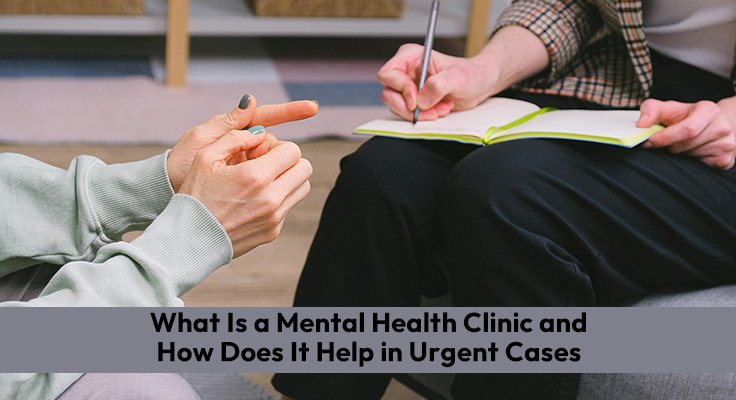
Most individuals have difficulties accessing a same-day psychiatry appointment and effective assistance in cases of distress. It can be a life-saving situation with anxiety, depression, trauma, or an emotional crisis that occurs suddenly to access professional care. Such is the role of a mental health clinic that offers accessible, professional, and specialized assistance to persons with a wide spectrum of mental health issues, such as urgent or crisis cases.
Licensed professionals manage mental institutions and are trained to evaluate, diagnose, and treat psychological conditions.
Services Offered by Mental Health Clinics
Mental health clinics are defined as a full spectrum of services to take care of various facets of mental health. Other most frequent services include:
- One-on-One therapy: This is individual therapy involving the matching of the needs of a person when one is in a counseling session.
- Group therapy: These are guided sessions that promote experiences and peer support.
- Pharmacotherapy: Medications and supervision of such diseases and disorders as bipolar disorders, anxiety, and depression.
- Crisis response: Instant crisis response to people in a state of deep emotional distress or even suicide.
- Psychiatric tests: Expert tests to identify the existence and the intensity of mental disorders.
Other types of psychiatric support, including workshops, learning programs, and family counseling, are also offered in most of the clinics, in an attempt to enhance long-term recovery and resilience.
How Clinics Handle Urgent Cases
Over 1 billion individuals across the world are living with a mental ailment. When a person comes with a crisis, such as suicidal thoughts or acute panic attacks, or with some sudden shift in behavioral patterns, clinics tend to go along with a plan that depends on guidelines:
- Short-term examination: Registered Clinicians compute the seriousness of the situation so as to be able to know the degree of risk.
- Crisis stabilization: In-clinic treatment of the patients may be given, based on observation, referred to an inpatient facility, or connected with an emergency.
- Safety planning: The clinicians work together with the person to come up with a pathway of minimizing risks at the current moment and detailing the ways of coping.
- Follow-up management: The patients will be arranged to receive continuous treatment, drug settings, or community services to maintain continuity of care.
Such practices help to guarantee that the urgent cases in terms of mental health are promptly handled so that the situation does not deteriorate and encourage safety.
Benefits of Seeking Help at a Mental Health Clinic
Numerous advantages are associated with the visits to a mental health clinic over waiting till a general practitioner or trying to manage it by yourself. Key advantages include:
- Getting access to licensed professionals: Patients have access to licensed psychologists, psychiatrists, and counselors.
- Full-service: In clinics, there is therapy and drug administration accompanied by crisis intervention.
- Urgent emergency care: There may be an alternative of immediate walk-ins or same-day appointments in clinics.
- Personalized treatment plans: The treatment is provided based on the symptoms, the history, and the needs of specific patients.
- Positive conditions: In clinics, there exist safe conditions where one can communicate and form some strategies to cope.
The benefit of seeking assistance even when the issue is very pressing is that one may recover more quickly, have fewer symptoms, and feel greater control over one’s mental status.
Differences Between Mental Health Clinics and Other Services
One should be familiar with the differences in mental health clinics and other services, including the private practices, the hotlines, and the hospitals:
- Private practices: These are commonly characterized by a long term therapy for individual customers, but they may not offer urgent crisis care.
- Hotlines/helplines: They provide either short- term counseling services and emotional support, but they cannot provide long-term counseling and prescriptions.
- Hospitals: Treat the acute psychiatric conditions, but may only stabilize and not treat the emergency.
Both routine therapy and urgent mental health care cases are also right at the mental health clinics, as these care facilities offer accessibility, professional care monitoring, and continuation.
How to Find the Right Mental Health Clinic
It is essential to select an appropriate clinic to be treated effectively. They include the following factors:
- Available credentials and licensing
- Emergency procedures
- Accessibility
- Testimonials and comment cards
The services provided by providers like Mindful Care are inclusive of both preventive and urgent response nature and are therefore a good choice when one wants a dependable mental health care provider.
Conclusion
Mental health facilities play a significant role in improving the psyche, particularly where a case would incur a sense of urgency that would necessitate the services of professionals. Their services extend to giving a comprehensive suite of services, beginning with drug treatment and therapy and ending with crisis stabilization to assist individuals with different mental health conditions.