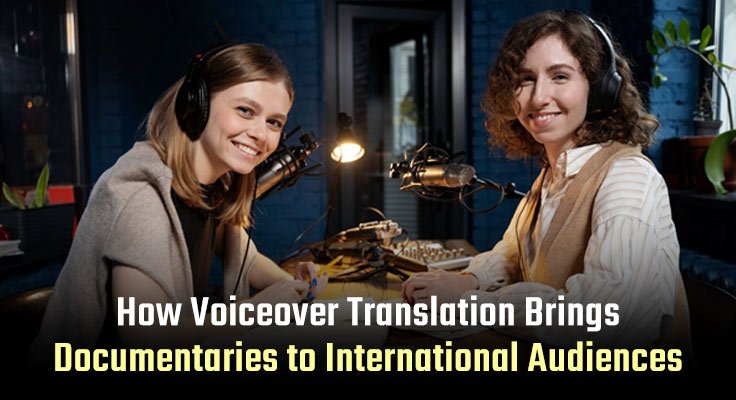
A documentary can be powerful in its original language. It can move people, inform them, and even challenge what they believe. But when it reaches audiences in another country, the experience shifts. The images are still there. The interviews remain the same. But the way people experience the story does. And language is usually the reason. When documentaries are shared internationally, subtitles are often the first solution. Subtitles are practical and widely used. But they require more effort from the viewer. Constant attention. Quick reading. Split focus. That may work for lighter content. That effort becomes more noticeable when the topic is complex or emotionally heavy. Voiceover translation changes the experience in a quieter way. It lets the audience stay inside the story instead of working to keep up with it.
Watching vs. Listening: A Small Shift That Matters
Think about a medical documentary explaining a new surgical technique. The visuals are detailed. The terminology is precise. Charts may appear on screen. Now imagine watching it with subtitles. The viewer must read complex terms while trying to understand the images. It’s possible to follow. But it takes concentration. Listening feels different. Information flows more naturally. Streaming data has shown that viewers are likely to finish a documentary when it is in their own language. People stay engaged longer when the experience feels smooth. This doesn’t mean subtitles should disappear. It is about choosing the format that supports understanding.
Emotion Does Not Travel Automatically
Documentaries rely on facts. But they also rely on feeling. A pause before someone answers a difficult question. A subtle change in tone when discussing loss. A slight hesitation that reveals uncertainty.
Subtitles capture the words, but they often miss tone and subtle emotion. Voiceover translation aims to carry over not just the meaning, but the feeling behind it. Not by copying the original voice exactly. That would be impossible. Instead, it reflects the same emotional weight in a way that feels natural to the target audience.
If the narration sounds robotic, viewers sense distance. When that happens, viewers may feel less connected to what they’re hearing. In investigative or health-related documentaries, trust is central. Without it, the message loses force.
This is why working with skilled voiceover translators matters. They make decisions about tone, pacing, and phrasing that protect the integrity of the story.
Clarity Is Non-Negotiable in Medical Stories
Medical documentaries carry real responsibility. They describe treatments, health policies, or individual experiences of recovery. A small mistake can lead to confusion.
When handled carefully, voiceover translation reduces the risk of misunderstanding. Medical jargon needs to be translated correctly, but it should be easy to understand as well. Direct translations may be technical but not very natural. Changes in wording can help retain the meaning while making it easier to understand.
Over the past few years, there has been a rising interest in health-related documentaries worldwide. Viewers look for reliable information that helps them understand issues affecting their lives. Listening to a doctor’s words in their own language reduces half of the ailment. The impact can go beyond view counts. Health awareness campaigns, conversations, or even health preventive practices can be affected if the information is made accessible.
Financial Documentaries: Making the Abstract Feel Real
Finance can already feel distant to many viewers. Topics such as market instability, digital currencies, or regulatory reform are complex. When the language is unfamiliar, that distance increases. Voiceover translation helps narrow that gap. Hearing financial analysis in a familiar voice makes abstract systems easier to understand. The narration must remain steady and balanced. Over-dramatizing financial content reduces credibility. Oversimplifying it reduces depth.
Cultural framing also matters. An example related to housing loans in one country may not resonate elsewhere without subtle context. A thoughtful voiceover script can include small clarifications without disrupting the narrative flow.
When adapted carefully, financial documentaries can support global financial literacy. They can spark discussion about risk, opportunity, and policy. But that only works if viewers can follow the explanation comfortably from start to finish.
Gaming and Digital Culture: Language Moves Fast
Gaming documentaries are relatively new, but they are rapidly expanding. They explore esports tournaments, independent developers, online communities, and virtual economies. The audience is global and highly connected. Gaming language changes quickly. Slang evolves. Cultural references shift. A direct translation often sounds outdated. It can even feel disconnected from the community it aims to represent.
Voiceover translation in this field requires sensitivity to tone and rhythm. The script must feel current. It must reflect how gamers actually speak in the target region. If it sounds forced, credibility fades immediately.
These documentaries often explore serious themes as well, including digital identity, competition pressure, or online addiction. When adapted properly, they encourage reflection across cultures. Authenticity has to be built into the process from the start.
Planning for Localization Early
One clear lesson keeps coming up. Localization works best when considered from the beginning. Voiceover affects timing. Recording sessions need space for retakes. Audio mixing must balance narration with background sound.
When localization managers collaborate with editors and sound engineers early, the final result feels cohesive. When translation is rushed at the end, small inconsistencies appear.
Organizations that provide media & entertainment language services often coordinate script adaptation, voice casting, recording, and quality checks under one structure. This kind of coordination prevents delays and keeps the story consistent. Technical teams play a role as well. Audio layering, file management, and platform formatting must align with distribution requirements. A strong workflow prevents avoidable rework.
Cultural Awareness Shapes Reception
Documentaries frequently address sensitive topics. Topics such as environmental damage, political change, or social inequality carry different meanings in different regions.
Voiceover translation allows careful adjustment of tone while preserving facts. A phrase that sounds neutral in one language may sound confrontational in another. Small refinements can prevent misunderstanding.
Accent selection also influences perception. A neutral accent may signal authority in one market. A local accent may feel more relatable in another. Voice casting is usually a careful decision, not a casual one. When cultural awareness guides these choices, documentaries can enter new markets with respect rather than friction.
Conclusion
Hearing a complex story explained in a familiar language creates comfort. It signals inclusion. It reduces effort. That subtle comfort can determine whether a viewer stays engaged. Documentaries aim to inform and to connect. When voiceover translation is handled with care, the story travels without losing its tone or meaning. Medical insights move across borders. Financial analysis reaches new communities. Conversations about gaming culture expand across borders. The visuals might not change. The interviews stay exactly as they were. But the overall experience feels different when the voice sounds familiar. A documentary reaches audiences through more than distribution. It reaches them through the voice they hear. And when that sound feels natural to the audience, the story stands a stronger chance of being understood.