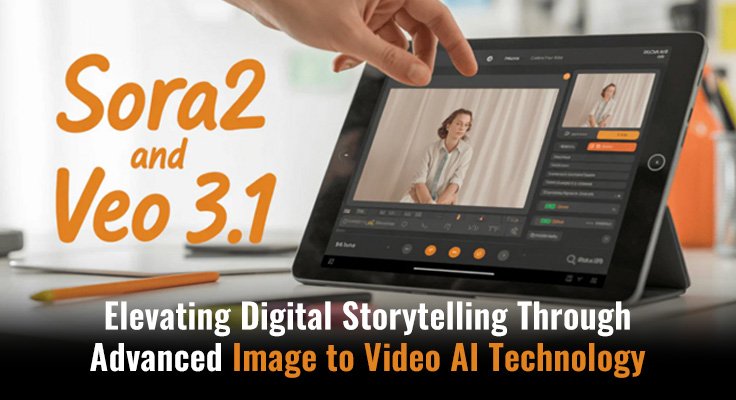
Capturing a single moment in time often feels insufficient when trying to convey the full energy and atmosphere of a live event. Static photographs, while beautiful, are frequently ignored in modern digital feeds that prioritize movement and sound, leaving creators with high-quality but underperforming assets. By utilizing Image to Video AI, you can overcome the limitations of still photography by transforming any single frame into a cinematic five-second sequence that maintains the original lighting and composition while adding realistic physical motion.
The difficulty of traditional video production has long acted as a barrier for small businesses and individual storytellers. Manually animating a photograph or setting up a full video shoot requires significant financial investment and technical expertise that many simply do not have. Modern generative tools have solved this problem by allowing a computer to act as a virtual cinematographer, predicting how shadows should shift and how fabrics should sway based on the visual data in your photo. This transition from “static observer” to “digital director” represents a fundamental shift in how we manage and share our visual archives.
The Technical Superiority of Integrated Sora and Veo Generation Models
The effectiveness of this platform is rooted in its ability to leverage the world’s most powerful generative models within a single interface. Today, the industry is led by groundbreaking architectures like Sora 2, which excels at simulating complex physical interactions, and Google’s Veo 3.1, known for its incredible cinematic texture and temporal stability. In my testing, I have observed that these models do not just “warp” an image but actually reconstruct the scene in 3D, allowing for movements that look as though they were captured by a physical camera lens.
By integrating these high-end engines, the platform ensures that the generated motion is not just random but follows the laws of physics. For instance, if you provide a photo of a rainy city street, the AI uses its training to understand how reflections should dance across wet pavement as the camera moves. This level of environmental awareness is what separates professional-grade AI video from simpler, less realistic animation tools. The results are consistently sharp, maintaining the identity of the subjects while introducing fluid, logical motion.
Achieving Temporal Stability and Physical Accuracy With Seedance Neural Processing
One of the most significant challenges in Image to Video is “flicker” or loss of detail over time, but the introduction of Seedance 2.0 technology has largely mitigated these issues. This model is particularly effective at maintaining “temporal stability,” which means the objects in your video do not morph or disappear as they move. Based on my observations, Seedance 2.0 allows for a much cleaner transition between frames, making the final five-second clip look like a single, continuous shot rather than a series of generated images.
In addition to stability, this technology is capable of handling multiple reference points simultaneously. This means it can look at the lighting in one part of your photo and the texture in another to ensure they interact correctly during movement. In my experience, this leads to a much more “grounded” video where the subject feels like it truly belongs in the environment. Whether you are animating a portrait or a complex machinery showcase, the AI preserves the structural integrity of the original file with remarkable precision.
Harnessing Multi Reference Capabilities for Precise Character and Motion Consistency
A common problem with earlier AI tools was the loss of character identity; a person’s face might change slightly during the animation. However, by using the latest multi-reference systems, the platform ensures that every detail—from the shape of a person’s eyes to the specific pattern on their clothing—remains consistent throughout the five-second duration. This is essential for professional branding and character-driven storytelling where visual continuity is non-negotiable.
This consistency extends to the environment as well. I have noticed that even when the camera performs a complex move, like a 360-degree rotation or a deep zoom, the background elements stay in their correct relative positions. This mastery of spatial relationship allows the AI to generate videos that feel like they were filmed on a professional set. For creators who need to produce high-volume content for social media, this reliability means fewer failed generations and a much faster path from a concept to a finished MP4 file.
A Streamlined Four Step Workflow for Converting Photos to Video
The platform is designed to be accessible to anyone, regardless of their technical background or hardware limitations. The entire process is managed through a browser-based interface, utilizing powerful cloud GPUs to handle the heavy rendering tasks.
- Upload Source Material: The user begins by selecting a JPEG or PNG file. Starting with a clear, high-resolution photo provides the AI with the best data to generate detailed movement.
- Define Motion Instructions: Natural language prompts are used to describe the desired action. This can range from simple environmental changes to complex instructions about how the subject should interact with the scene.
- Execute AI Rendering: The system initiates the generation process, which typically takes about five minutes. During this time, the AI synthesizes the frame data using the selected high-performance models.
Preview and Export: Once the status is marked as completed, the user can preview the five-second clip. The final output is provided in a universally compatible MP4 format, ready for immediate download and sharing.
Analyzing Performance Metrics Between Static Frames and Generative Motion Content
To understand why so many professionals are moving toward AI-generated video, it is helpful to compare the impact of these clips against traditional photography. The following table highlights the functional differences in engagement and production requirements.
| Performance Attribute | Static Digital Photography | AI Enhanced Motion Video |
| Attention Retention | Typically under 2 seconds | Holds focus for 5+ seconds |
| Algorithmic Reach | Standard organic visibility | High priority on Reels and Stories |
| Narrative Depth | Single frozen perspective | Shows progression and action |
| Production Time | Instant capture only | 5-minute automated generation |
| Physical Realism | Static representation | Dynamic light and shadow shifts |
| Delivery Format | JPEG or PNG files | MP4 High Compatibility Video |
Directing Virtual Cinematography Through Precise Camera Motion and Path Control
One of the most powerful features for advanced creators is the ability to control the “virtual camera.” In my testing, I found that directing the AI to perform a specific pan, zoom, or tilt can completely change the emotional tone of a video. A slow “zoom-in” on a subject can create a feeling of intimacy and focus, while a wide “pan-right” can reveal hidden details in a landscape, making the world feel much larger than the original photo suggested.
These controls allow you to act as a cinematographer without needing to own a single piece of camera equipment. By specifying the camera’s path in your prompt, you ensure that the motion feels intentional and professional. I have observed that these “cinematic” moves are particularly effective for e-commerce, where a rotating view of a product can show it off from multiple angles in a way that a static photo never could. This level of control gives the user the final say in how the story is told.
Simulating Realistic Human Interactions Using Specialized Social and Action Effects
The platform also includes specialized tools designed to solve some of the most difficult challenges in AI video: human touch and interaction. Effects like “AI Hug” and “AI Dance” are built on datasets specifically trained to understand how human bodies move and interact. Based on my observations, these tools manage the complex physics of two people hugging or dancing with a high degree of realism, avoiding the “glitches” that often occur when AI tries to overlap two different subjects.
In my experience, these specialized modules are excellent for personal projects and emotional storytelling. Bringing an old family photo to life with a gentle hug effect can turn a simple digital file into a moving tribute. These features demonstrate the platform’s versatility, proving that it is not just for commercial marketing but also for preserving and enhancing the most important moments of our personal lives. The AI handles the complex skeletal rigging automatically, leaving the user to simply enjoy the creative result.
Overcoming Creative Limitations and Refining Prompts for Maximum Visual Impact
While the technology is incredibly advanced, it is important to remember that the quality of the video is often a reflection of the detail in the prompt. I have found that being specific about the “speed” and “direction” of the motion leads to much more predictable and professional results. For instance, instead of saying “make the grass move,” a better prompt would be “the grass sways gently in a light breeze while the camera performs a slow zoom.”
Currently, the system is optimized for high-impact five-second clips. While this duration is perfect for social media and advertising, it requires the creator to think in terms of “micro-moments.” If a generation does not look perfect the first time, I have observed that slightly adjusting the wording of the prompt or choosing a different underlying model often yields the desired result. As models like Sora 2 and Veo 3.1 continue to improve, these boundaries will only continue to expand, offering even more creative freedom to users of all skill levels.