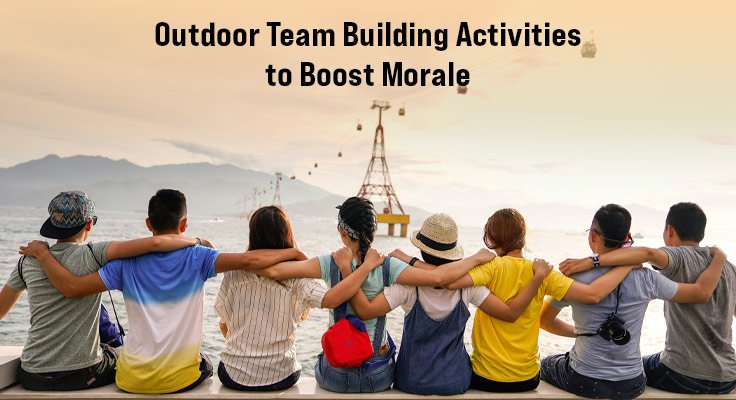
If you’re looking to inject some energy and genuine connection into your workplace, outdoor team-building events are a great option. They’re typically better than conference rooms because they allow people to really laugh, get up and walk around, and become truly engaged with each other.
Here are the top outdoor team-building activities that also provide a real morale boost and measurable results.
Relay Races
What It Is: Teams compete in classic races where each member runs a leg of the course before passing off to the next person. It’s simple, timeless, and surprisingly effective.
Best Team Size: 6-50+ employees (works with any size)
Relay races create instant energy and excitement builds right away. With these games, teammates cheer for one another. Everyone participates regardless of athletic ability since different people can run different distances. It challenges team members’ communication skills as each team strategizes how to assign each member to each leg of the relay.
The friendly competition and alternative placement of hierarchy have a wonderful effect on breaking down the traditional corporate structure. Your CEO may lose to the intern, and that’s what makes it interesting.
Obstacle Course or Challenge Activities
What It Is: A structured outdoor team-building experience that consists of several different types of activities, often called team challenges. Activities include climbing walls, rope courses, mud crawls, and navigating through complex puzzles.
Examples of professionally designed challenge course programs, like the Park School Challenge Course, enable both physical and mental development through professional program design.
Best Team Size: 8-80+ employees (can be rotated through stations)
During team development sessions, team members must demonstrate leadership skills, develop critical thinking skills, support weaker team members, and develop strategic plans of action. Many challenge courses also include only trust-building exercises, where team members create true vulnerability and trust through their team’s working together through challenging times.
Through challenge course activities, participants significantly increase their self-confidence and learn that they can accomplish things they could never imagine. The variety of challenges will allow for many teams to demonstrate their unique strengths. This sense of shared accomplishments is what boosts morale.
Scavenger Hunts
What It Is: Teams receive a list of items or clues (often with QR codes for added tech engagement) to find across an outdoor location, combining exploration with problem-solving.
Best Team Size: 8-100+ employees (divide into smaller teams)
Scavenger hunts promote teamwork and collaboration since teams must find and decipher clues and collaborate on the most efficient routes to complete their objectives. Teams also develop their communication skills naturally through coordination of which team member will search which area. You can use GPS technology or post-it notes as a tracking method, depending on how you set it up.
The physical activity aspect of the hunt exposes employees to outdoor light sources, thus increasing D-3 levels. It also generates informal relationship-building opportunities between co-workers who may not regularly communicate with one another.
Capture the Flag
What It Is: This is played with two teams trying to capture the other’s flag and protect their own. There are many ways to customize this game based on your location, but there is also a strategy used within the game itself.
Best Team Size: 12-60+ employees (divided into two teams)
Leadership skills develop throughout this activity as natural leaders emerge during gameplay. An important part of this game is effective communication and working together to solve problems under pressure. Trust develops among team members in ways that feel very organic and natural.
There are no awkward “trust falls” while playing this game, only moments of interdependence. Engaging in physical activity will increase mood and energy levels. Therefore, many participants are excited to participate all the way through until the end of the game.
In fact, many participants talk about their experience long after they have completed the activity, which in turn establishes relationships.
Egg Drop Game
What It Is: In this activity, teams will be given a number of unbroken eggs, as well as various materials (straws and paper) needed to build a protective container. The challenge is to drop your egg from increasing heights without it breaking.
Best Team Size: 6-40+ employees (works in smaller competitive teams)
This is a great use of creative brainstorming techniques, since the team(s) will need to come up with outside-the-box solutions and test their design multiple times. Since you can learn from your failures (all the things that didn’t work) when your egg breaks, you will develop problem-solving skills as a group.
Through the activity, you will naturally create role-playing situations where different team members take on alternative responsibilities during the construction and testing of their container.
The fact that the activity has low-pressure situations will allow your quieter team members to participate in an idea-generating capacity without the immense pressure of the traditional physical competition.
Billiard Soccer or Inflatable Mini Golf
What It Is: Oversized versions of these games played outdoors where team members take turns competing or cooperating toward shared goals.
Best Team Size: 4-30+ employees
These types of games can be used by teams of individuals with different levels of ability. The enjoyment of these games relies more on the aspect of fun than on any ability or skill. They can be a low-pressure method for building working relationships amongst coworkers while creating an opportunity for employee interaction.
In particular, the inflatable mini-golf game allows for casual competition and interaction between players while waiting to take their turns. This allows for an informal way of meeting new people across department lines, with each game’s lightheartedness allowing for less competitive pressures and more enjoyment.
Planning Your Outdoor Team-Building Event
When developing your team-building program, it is essential to match your activities with the preferences and fitness levels of your team members.
Start the day with an Opening Ceremony that creates anticipation for the day’s activities and provides team members with information about the flow of the day. Incorporate both high-energy physical activities and more strategic or skill-based types of challenges.
You will want to conclude the day with a Closing Ceremony that gives recognition to the participants and offers an opportunity for participants to reflect upon their experience.
Conclusion
When teams engage in outdoor team building, they are typically outside of their “usual” roles and outside of their work environment. When they are physically active, laughing, and working together to solve problems, it leads to an increased sense of teamwork and connectivity. This is exactly why you are doing this.