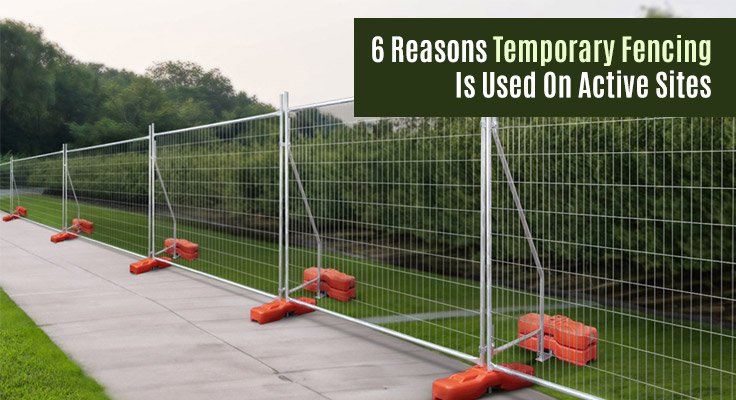
The constant rotation of machinery, materials, and workers necessitates the maintenance of access control and site safety. Temporary fencing becomes crucial to ensuring the site is organised, secure, and compliant throughout the project. The following are six clear use cases that demonstrate operational ease.
1. Improving Site Safety For Workers And The Public
Putting safety first is something that can be accomplished when working in a space that is both confined and closed off. As a result of its high visibility, the fence helps to keep pedestrians and people who are not authorised from accessing unsafe areas.
In addition, the fencing helps make it easier to tell the difference between restricted and safe work areas. This means that all workers have a better visual understanding of their places of work, which makes them less vulnerable to threats.
2. Controlling Access To Restricted Areas
On active sites, there are always different kinds of tools and materials, and structures that are only partially put together should not be open to the public. You can exercise more control over who enters and leaves the area by erecting temporary fencing.
On occasion, this precaution is required due to the construction site’s close proximity to roads that are frequently travelled. The risk of theft, damage, or situations that could potentially endanger one’s life is significantly reduced when access is restricted.
3. Flexibility For Changing Site Needs
The stages of a project transform active sites in a variety of ways, which necessitates the installation of different fences. As an additional point of interest, certain stages might call for longer sections, while others might call for the fence to cover a smaller area.
Because there are so many different projects going on at a construction site, it is impossible to put all of your money into a permanent wall. With Temporary Fencing for Hire, project sites can quickly change the layout into a preferred style as required at minimal cost.
4. Supporting Compliance With Regulations
The use of temporary fencing is an alternative to permanent structures that can be utilised to fulfil these requirements. It makes sense to use temporary fencing in environments that are subject to frequent changes or that are only used for a short period of time.
In addition, compliance prevents fines, delays, and shutdowns. It indicates that the site is managed responsibly and well. Safety is not addressed last minute, but safety barriers are included in the initial plans.
5. Protecting Equipment And Materials
Construction equipment and machinery are typically kept on worksites either overnight or between shifts. Unauthorised individuals cannot access these valuable assets due to temporary fencing. This protection, in turn, lowers the risk of theft or vandalism. Also, protecting the equipment ensures there are no undue project delays.
6. Managing Site Organisation And Workflow
For example, work zones can be separated, and it is much easier to explain the storage zone, the mobile zone, and the active work zones. This approach also enhances efficiency by establishing an order that reduces congestion and uncertainty.
A clear layout helps the movement of workers and machinery. Does not give as much chance that someone enters someone else’s task in an unsafe manner. This work pattern will develop into higher efficiency.
Temporary Fencing Is A Site Essential
It is common to see temporary fencing on active sites because it provides a safety, security, compliance, and organisation solution all at once. The barriers establish clear boundaries in settings where things are shifting often and rapidly. The advantages of using it have driven its adoption widely in several sectors.
Also Read : How to Maximize Your Job Search Potential with Automated Tools