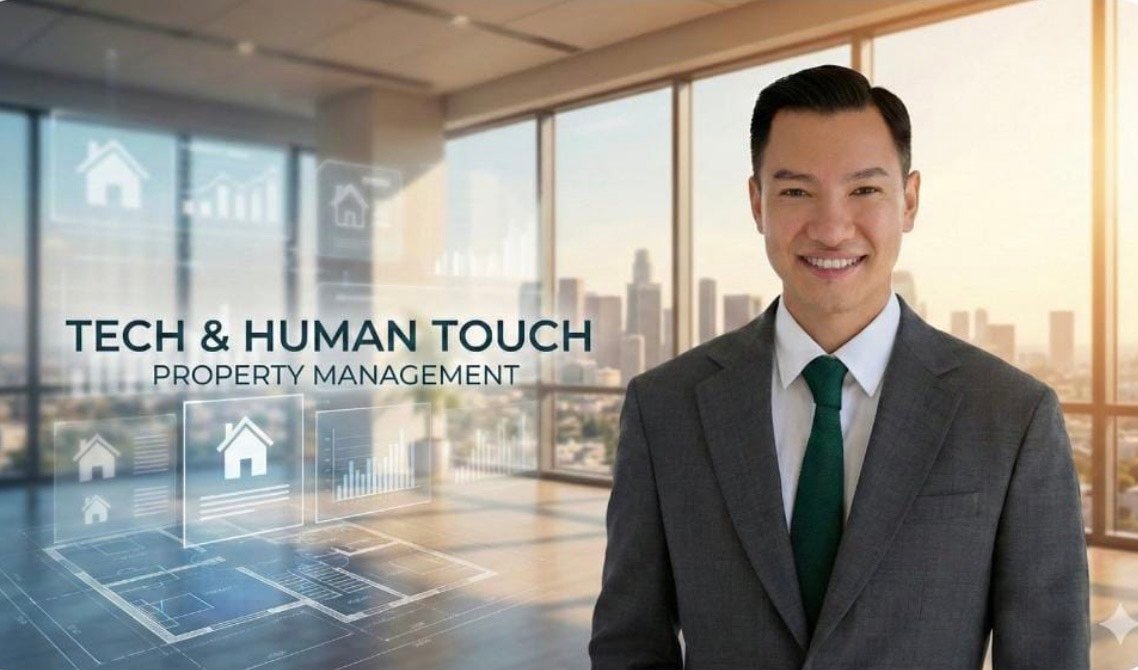
You’ve probably heard this one before. Someone swoops into an industry, waves around some shiny new software, and suddenly everything’s supposed to be “disrupted.” The old way was bad, the new way is genius, and anyone still doing things manually might as well be using a rotary phone.
Except… When it comes to property management, that story’s gotten a little tired. Because sure, automation can help. But it can also create a nightmare of cold, impersonal interactions where nobody picks up the phone and every problem gets routed through a chatbot that doesn’t quite understand what you’re asking.
So when you hear about someone like Akarapong “Jesse” Sasomsup, who runs a property management firm in Los Angeles called Earnest Homes, you might roll your eyes a little. Another tech-forward property manager promising to change the game, right?
Actually, what Jesse’s doing is actually kind of interesting. And it’s not about replacing people with algorithms. It’s about using technology to make the human part better.
Starting From Scratch in a City That Eats People for Breakfast
Jesse didn’t grow up in real estate. He showed up in Los Angeles almost twenty years ago with the same basic ingredients most people bring to LA: ambition, a willingness to work hard, and probably a few doubts about whether this was actually going to work out.
And LA being LA, it tested him. This is a city that rewards hustle but doesn’t hand out participation trophies. You either build something real or you don’t.
What Jesse figured out early was that reputation matters more than just about anything else in property management. People don’t want the flashiest pitch or the cheapest rate. They want someone they can trust when their tenant calls at 11 p.m. because the water heater just exploded. They want someone who answers emails, keeps promises, and doesn’t disappear when things get messy.
So that’s what he built. Not overnight. But steadily, one relationship at a time.
Running a $650 Million Portfolio Without Losing Your Mind (Or Your Soul)
Fast forward to today, and Jesse’s firm manages over $650 million in assets. That’s a big number. It includes celebrities, international investors, people who’ve never been landlords before and are slightly terrified about it.
But here’s where it gets interesting. Most property managers at that scale start to feel a little… corporate. A little detached. You become a number in a queue, your maintenance request becomes a ticket, and good luck getting anyone on the phone who actually knows your property.
Jesse’s approach is different. And I think it comes down to how he thinks about leadership.
Leadership That Isn’t Just a Checklist
A lot of property management is grunt work. Collect rent. Fix the sink. Handle the noise complaint. Rinse, repeat.
And sure, those things matter. But Jesse seems to operate from a different question: How do you make this experience better for everyone involved?
That sounds vague. But in practice, it means his team isn’t just reacting to problems. They’re trying to anticipate them. They’re asking what systems can reduce stress without sacrificing quality. They’re thinking about how to keep tenants happy and owners informed without turning into helicopter managers.
It also means he listens. Like, actually listens. In meetings, he’s not the first one talking. He’s gathering input, asking questions, making sure people feel heard before decisions get made.
That might not sound revolutionary, but in an industry where a lot of managers just bark orders and expect compliance, it’s refreshing.
The Tech Part (Without the Cult of Tech)
Okay, so here’s where we get to the automation thing. And I promise this won’t turn into a boring product pitch.
Jesse uses technology. Obviously. You kind of have to at this point unless you want to drown in spreadsheets and sticky notes.
But he’s not obsessed with it. The tech exists to handle the boring stuff. Rent reminders, maintenance scheduling, reporting. The kind of tasks that don’t need a human touch but eat up hours if you do them manually.
What that frees up is time. Time for his team to actually build relationships. Time to solve problems that require insight, not just a script. Time to, you know, be human.
He also leans on data. Not in a creepy surveillance way, but in a “let’s look at actual metrics instead of guessing” way. Market trends, tenant feedback, portfolio performance. That stuff helps property owners make smarter decisions and helps tenants get more consistent service.
If you’re curious about where the real estate industry is headed and how technology fits into that picture, there’s a solid breakdown here. The point is, Jesse’s not chasing every shiny new tool that promises to revolutionize everything. He’s using what works and ignoring what doesn’t.
The Credentials That Actually Mean Something
Anyone can call themselves a property manager. The bar to entry isn’t exactly high.
But Jesse’s got the kind of credentials that suggest he’s serious about this. He’s part of the National Association of Residential Property Managers (NARPM), the Apartment Association of Greater Los Angeles, and the Beverly Hills/Greater Los Angeles Association of REALTORS. He was also part of the Forbes Business Council for a while.
And then there’s the Certified Apartment Manager® designation, which is not something you just get for showing up. It’s rigorous. It requires ongoing education. It’s a signal that you actually know what you’re doing.
Serving Everyone Without Pretending They’re All the Same
Here’s something I appreciate about Jesse’s setup. His clients range from first-time landlords who are nervous about everything to institutional investors who’ve seen it all.
Those are wildly different types of people with wildly different needs.
A first-time landlord wants clear communication, transparent reporting, and someone who won’t make them feel stupid for asking questions. They’re also probably worried about whether they’re actually making money or just hemorrhaging cash on repairs and vacancies. (If that sounds familiar, this breakdown of common landlord mistakes is pretty eye-opening.
An institutional investor wants reliable returns, strategic insights, and someone who won’t waste their time with fluff.
And tenants? They just want their stuff to work and to be treated with a little respect.
What’s interesting is that Jesse’s team manages to serve all of them without defaulting to a one-size-fits-all approach. The underlying principle is the same (do right by people), but the execution adapts depending on who’s on the other end.
Building a Culture That Doesn’t Suck
This part matters more than people think.
A lot of property management firms treat their employees like replaceable cogs. High turnover, low morale, zero investment in growth.
Jesse’s built something different at Earnest Homes. People are encouraged to take initiative. Innovation is welcomed. Accountability is shared, not just dumped on whoever’s lowest on the ladder.
And when your team feels valued, they treat clients better. When they treat clients better, trust builds. When trust builds, business thrives.
It’s not rocket science. But it’s also not common.
So What’s the Actual Takeaway Here?
If you’re looking for someone to manage your property in Los Angeles, or if you’re just interested in what good leadership looks like in this space, Jesse’s approach is worth paying attention to.
He leads with integrity. He uses technology without worshipping it. He listens before he acts. And he’s built systems that work not just for today, but for the long haul.
In a city like LA, where markets shift constantly and expectations keep rising, that kind of steady, thoughtful leadership is rare.
Property management isn’t glamorous. It’s not usually the subject of profiles or case studies. But when it’s done right, it makes a real difference in people’s lives. Whether you’re a tenant trying to live comfortably or an owner trying to protect your investment, having someone competent and trustworthy in your corner matters.
And, it looks like Jesse’s figured out how to do exactly that.
Also Read – How Property Managers Market Rentals During Slow Seasons