The USA Leaders
January 05, 2026
Washington, D.C. – Can Venezuelan Oil and US Energy Reshape The American Resources?
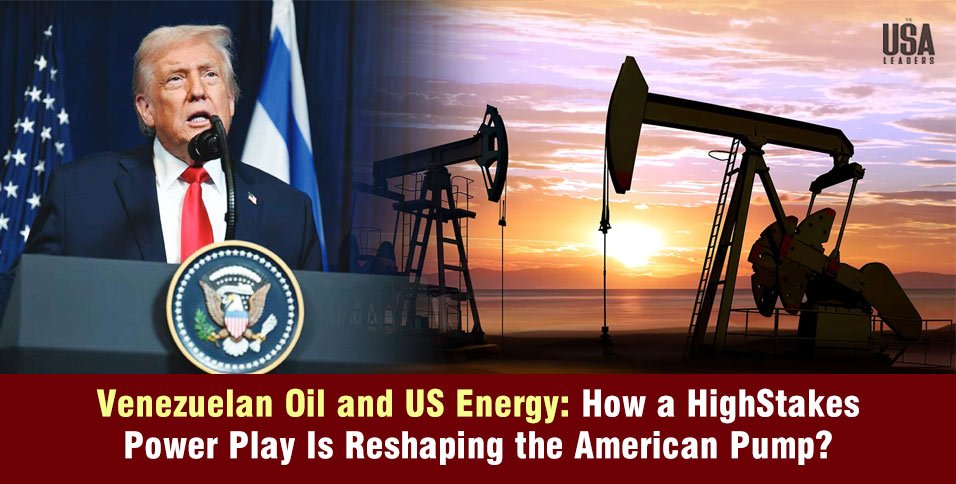
As the new year began, the geopolitical landscape of the Western Hemisphere had just shifted on its axis. Following the unprecedented US military capture of Nicolás Maduro, the global conversation has moved rapidly from “regime change” to “resource reality.” The future of Venezuelan oil and US energy is no longer a distant talking point for resources, but a live-fire exercise in economic statecraft.
What was once a stagnant pool of sanctions and stalled diplomacy has become the ultimate test of American energy strategy. With the Trump administration signaling a “reinvest to recover” policy.
The intersection of corporate debt, refinery needs, and national security is creating a new era for global energy geopolitics. The Venezuelan oil and US energy dynamic is being viewed not just as a resource recovery mission, but as the cornerstone of a reshaped hemispheric power structure.
Why Maduro’s Capture Changes the Map
For nearly a decade, the Venezuelan oil and US energy relationship was essentially frozen in time. Despite Venezuela holding the world’s largest proven oil reserves, estimated at over 300 billion barrels, the nation was a non-factor in American energy security due to a triple-threat of obstacles:
- Maximum Pressure Sanctions: US policy effectively blocked exports and barred American companies from meaningful engagement.
- Systemic Mismanagement: Decades of underinvestment and corruption left the state-run PDVSA in a state of terminal decay.
- Geopolitical Isolation: Venezuela became an operational hub for adversaries, further distancing its resources from Western markets.
The capture of Maduro has effectively frozen these assets. According to statements from the White House, Washington is now openly linking political stabilization with energy cooperation.
This represents a strategic pivot where Venezuelan oil and US energy are no longer a sanctions liability, but the primary bargaining chip in a new era of US energy diplomacy.
Why Venezuelan Oil Matters for US Energy
While the world often focuses on the volume of oil, the real story for American energy is the type of oil. Venezuela is the dominant player in heavy crude oil markets.
Unlike the light, sweet crude produced in Permian Basin fracking sites, Venezuelan oil is thick, “sour,” and requires specialized refining. This is where the synergy between Venezuelan oil and US energy becomes critical.
The US Gulf Coast features a massive network of refineries specifically designed and optimized to process heavy crude. When Venezuelan supply was cut off, these refineries were forced to rely on more expensive or geopolitically sensitive alternatives.
Bringing Venezuelan barrels back into the fold is a structural necessity that could drastically improve American refinery economics and lower costs at the pump.
Why US Oil Companies Are Leading the Charge
A critical, yet often overlooked, layer of the Venezuelan oil and US energy landscape involves the massive financial claims held by American energy titans.
When the Venezuelan government nationalized oil assets during the Chávez and Maduro eras, they didn’t just seize equipment; they triggered some of the largest international arbitration cases in history.
ConocoPhillips and ExxonMobil have been at the forefront of this battle for over a decade. The figures involved are staggering and represent a significant portion of $150–$170 billion total external debt of Venezuela.
While Chevron has been involved with Active Joint Ventures for the purpose of maintaining operational ground.
The current administration has made its stance clear. Companies seeking to recover these billions must be willing to reinvest in the country’s rehabilitation. This approach tightly links the future of Venezuelan oil and US energy to corporate balance sheets.
By encouraging oil majors to fund production recovery as a pathway to reclaiming owed funds, the US is ensuring that American interests lead the reconstruction effort rather than foreign competitors.
How Latin America’s Energy Security Works As A Shield
Beyond the balance sheets and refinery specs, there is a broader “big picture” at play with Latin America’s energy security. For years, the vacuum left by the US withdrawal from Venezuela allowed adversarial influences to gain a foothold in the Caribbean and South America.
By reintegrating Venezuelan resources into the American energy orbit, the US achieves three major geopolitical goals:
- Reduced Global Reliance: Decreasing the necessity for oil imports from volatile regions in the Middle East and Eastern Europe.
- Hemispheric Resilience: Strengthening regional ties through shared economic prosperity and infrastructure development.
- Countering Foreign Influence: Reasserting the Monroe Doctrine for the 21st century by securing vital mineral and energy resources within the Western Hemisphere.
In this light, the Venezuelan oil and US energy together are a defensive shield against global market shocks.
As Secretary of State Marco Rubio recently noted, “the goal is to ensure Venezuela never again becomes an ‘operational hub’ for foreign powers seeking to undermine American interests.”
Can the $100 Billion Save the Infrastructure
Despite the optimistic outlook, the immediate impact on oil prices remains speculative. Market analysts are watching closely, but they are also realistic about the condition of Venezuela’s oil fields. Rebuilding a hollowed-out industry is a monumental task.
Experts suggest that the path to full restoration will require:
- Estimates suggest it will take at least $100 billion over the next decade to return production to its 1970s peak.
- Years of “brain drain” and equipment theft mean that companies like SLB and Baker Hughes will need to lead a massive technical overhaul.
- Investors are demanding ironclad legal frameworks to ensure their new investments are protected from future political swings.
However, even a marginal increase in output would be enough to stabilize heavy crude oil markets and provide the US Gulf Coast with the specific feedstock it needs to run at maximum efficiency.
The Bottom Line
The capture of Maduro has done more than just end a regime; it has rewritten the American energy playbook. The Venezuelan oil and US energy relationship has moved from a peripheral concern to the very core of the economic and geopolitical planning of America.
If managed with precision, this shift will not only secure a more resilient energy supply for the United States but also catalyze the recovery of the entire Latin American region.
Also read: Silver Prices in 2025: How Did Silver Dip After Hitting Record Highs of $80?