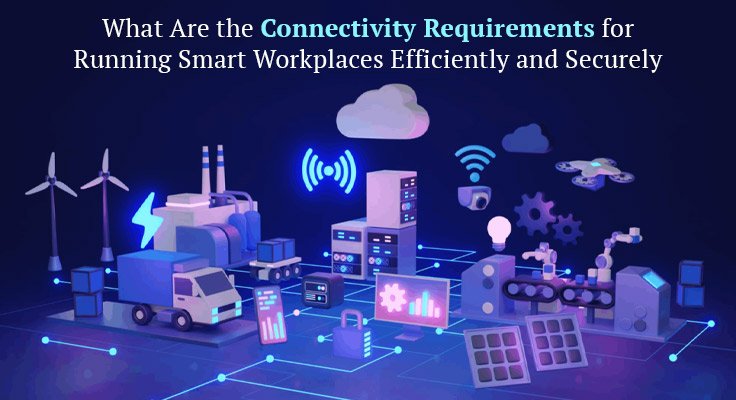
Running a smart workplace requires a robust and seamless connectivity infrastructure that supports a wide range of interconnected devices, sensors, and applications. The core requirement is a reliable, high-speed network that ensures uninterrupted communication and data exchange between systems, enabling real-time monitoring and intelligent automation. Without this foundation, key features like occupancy sensors, space management, and security solutions cannot function effectively.
Your connectivity setup must also be scalable and flexible, as smart workplaces grow and integrate new technologies over time. This includes secure wireless access, strong network integration, and the ability to handle increased data traffic while maintaining privacy and performance standards. Meeting these needs is essential to creating an environment where productivity, well-being, and collaboration thrive through technology.
Key Takeways
- Reliable, high-speed networks are essential for smart workplace functionality.
- Scalability and security are critical to support ongoing technology integration.
- Seamless communication across devices enhances productivity and collaboration.
Core Connectivity Requirements for Smart Workplaces
Ensuring smooth, reliable connectivity is fundamental for smart workplaces to operate efficiently. You need to focus on robust network infrastructure, seamless integration of IoT devices, cloud-based platform support for hybrid setups, and strong security measures to protect data and control access.
Network Infrastructure and Bandwidth Essentials
Your smart workplace depends on a network infrastructure that delivers consistent high-speed connectivity with low latency. This includes wired and wireless components such as Ethernet cabling and Wi-Fi 6 or Wi-Fi 7 access points, which support multiple devices simultaneously without performance loss.
Bandwidth must be scalable to meet fluctuating demands from video conferencing, cloud applications, and IoT sensors. Consider combining multiple connections like fixed-line broadband and mobile data to optimize reliability and speed. Services likeDigicel Business connectivity services provide tailored solutions that fit these needs for both office and remote environments.
Integration of IoT Devices and Smart Systems
IoT devices are central to smart workplace solutions, controlling lighting, HVAC, security, and building management systems. Your connectivity must support multiple protocols such as Wi-Fi, Zigbee, and Bluetooth to ensure interoperability between diverse smart systems.
Reliable, low-latency connections are crucial to maintain real-time data exchange for device automation and monitoring. A strong network backbone allows device scalability as you expand or upgrade. You should also plan for efficient device onboarding and management through centralized platforms to reduce complexity.
Cloud-Based Platforms for Hybrid and Remote Work
Hybrid work models rely heavily on cloud-based applications to keep employees connected regardless of location. Your workplace connectivity should guarantee consistent bandwidth and access to services hosted across public or private clouds.
Support for VPNs, remote desktop, and collaboration tools like video conferencing platforms is essential for productivity. Your infrastructure must handle dynamic traffic loads from remote workers while maintaining low latency to avoid disruptions. Cloud integration also supports continuous updates and scalability as your operational needs evolve.
Security and Access Control Considerations
Security is vital to protect sensitive workplace data across your network, IoT devices, and cloud applications. Firewalls and secure gateways should be implemented to monitor and filter incoming and outgoing traffic.
Access control systems, including biometric authentication and smart locks, need encrypted communication channels to prevent breaches. Regular security updates and network segmentation can limit exposure if a device is compromised. Deploying these security measures within your smart workplace connectivity framework helps you mitigate cyber risks effectively.
Enabling Enhanced Productivity and Collaboration
To run a smart workplace effectively, you need a system that fosters smooth communication, automates routine tasks, manages resources smartly, and incorporates sustainability. These elements improve operational efficiency and employee experience through connected, intelligent technologies.
Unified Communication Tools and Digital Workspaces
Your smart workplace must integrate unified communication tools like Microsoft Teams, Slack, and Google Workspace to streamline collaboration. These platforms enable virtual meetings, instant messaging, and file sharing all in one place, reducing friction across teams.
Using digital workspaces, you provide employees with a centralized hub for tasks, calendars, and projects. This reduces the need to switch between apps, which boosts productivity. Seamless access to communication tools ensures quicker decision-making and real-time collaboration.
Ensure your IT support maintains these platforms with minimal downtime. Reliable connectivity and compatibility across devices are essential to prevent disruptions in communication workflows.
Automation and AI Integration
Incorporate automation and AI-powered solutions to handle routine workplace functions such as scheduling, meeting transcription, and follow-ups. AI-driven analytics can provide insights into team performance and communication patterns, enabling data-driven improvements.
You can leverage machine learning to personalize notifications, prioritize tasks, and detect bottlenecks in workflows. Automation decreases the time spent on administrative duties, freeing employees to focus on higher-value work and increasing productivity.
Integrating AI with collaboration tools also supports smarter virtual meetings by automatically generating summaries or action items, which enhances operational efficiency and clarity.
Resource Booking and Space Optimisation
Effective resource booking systems are crucial for managing desks, meeting rooms, and equipment in hybrid work environments. Utilize desk booking apps and meeting room reservation tools to prevent conflicts and underutilization.
Occupancy sensors connected to these systems provide real-time data on space usage. This data helps optimize office layouts, improves employee satisfaction by guaranteeing workspace availability, and reduces wasted resources.
Space optimisation also supports hybrid work models by adjusting office capacity based on actual attendance. This flexibility ensures your smart workplace remains efficient and responsive to changing needs.
Sustainability and Energy Efficiency
Smart workplaces should integrate energy management systems to reduce consumption and promote sustainability. Automated controls on HVAC systems and smart lighting adjust energy usage based on occupancy and time of day.
Data analytics from smart devices allow you to monitor energy patterns and identify energy-saving opportunities. This proactive approach decreases operational costs and contributes to corporate sustainability goals.
Implementing these systems not only improves environmental impact but also enhances employee experience by maintaining comfortable work conditions efficiently without manual intervention.
Conclusion
You need a reliable and scalable network to support the growing number of connected devices in smart workplaces. Prioritize technologies like 5G, Wi-Fi 6, and secure IoT protocols to ensure seamless connectivity and data flow.
Balancing security, integration, and ease of use is essential to maintain productivity without overcomplicating your infrastructure. Your smart workplace connectivity should enhance collaboration, automate routine tasks, and optimize resource use effectively.
Also Read: How Window Films Enhance Safety During Break-Ins or Accidents