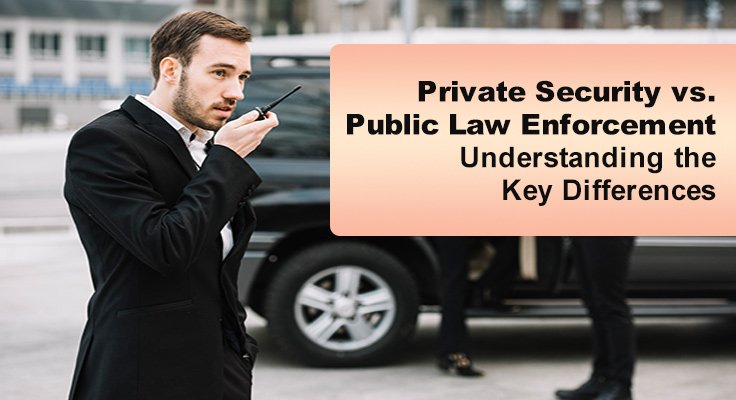
The discussion of private security vs. public law enforcement often arises when considering personal safety, corporate protection, and property management. Both fields work to maintain safety, yet their jobs, responsibilities, and operational methods are quite distinct.
Grasping these differences helps individuals and organizations make educated decisions about the protection measures that best fit their unique needs.
Jobs and Responsibilities
Public law enforcement agencies are funded and operated by local, state, or federal governments. Officers are sworn to uphold the law, investigate crimes, and protect the public at large. Their authority extends to arresting offenders, issuing citations, and conducting investigations within legal limits.
Training for public law enforcement is typically standardized, covering criminal law, emergency response, and community engagement. Officers operate under strict procedural and legal guidelines, and their actions are subject to government oversight and public accountability.
Private security operates within a separate framework. Organizations and individuals hire private personnel to deal with specific risks and protect defined assets. Unlike public officers, private security staff do not have inherent law enforcement authority.
Their powers are limited to observation, reporting, and protective actions permitted by law or defined in a contract.
Many private security professionals specialize in areas such as estate security services, corporate protection, or personal safety. Training is customized to their specific position and environment, emphasizing threat recognition, risk assessment, and tactical response appropriate to the site or client.
Objectives of Protection
The objectives of private security often differ from public law enforcement. Public officers focus on broader societal safety, responding to incidents that affect the community as a whole. Private security personnel concentrate on the safety of particular individuals, organizations, or properties.
Teams may manage access control, monitor surveillance systems, and respond to threats against a specific estate, business, or event.
Some private security specialists offer close protection services, safeguarding executives, public figures, or clients who face elevated personal risk. The emphasis on targeted protection allows clients to feel secure in high-risk situations or high-value environments.
Accountability and Oversight
Accountability represents another distinction. Public law enforcement is governed by laws, departmental policies, and civilian oversight boards. Misconduct may trigger internal investigations, disciplinary measures, or criminal proceedings.
Private security companies are primarily accountable to their clients and to regulatory bodies that oversee licensing and professional standards.
Contracts define the responsibilities, duties, and limitations of private security personnel, creating clear expectations and allowing flexibility to adapt methods to the client’s environment. This contractual approach creates a personalized service experience that is in keeping with specific protection objectives.
Training and Preparedness
Training requirements vary greatly between the two sectors. Law enforcement officers undergo academy training covering physical conditioning, firearms, legal studies, and tactical response.
Continued professional development helps tend to evolving threats, technological advancements, and community relations.
Private security training emphasizes practical, situational skills relevant to the environments they protect. Teams may learn emergency evacuation protocols, surveillance monitoring, threat deterrence, and intrusion response techniques.
Some private security providers also conduct investigative services, collecting information on potential risks, breaches, or suspicious activity. Focused training helps guarantee that personnel are prepared to respond efficiently within the legal boundaries of private protection.
Response Protocols
Response methods differ in meaningful ways. Public law enforcement follows legal authority and standardized procedures designed to serve the general population. Response times depend on resource allocation, call prioritization, and geographic considerations.
Private security follows prearranged protocols specific to the client. This allows for faster, more focused intervention when personnel are already on-site or monitoring sensitive areas. Immediate action and constant vigilance are hallmarks of private security, especially in high-value or high-risk scenarios.
Technology in Security
Technology use represents another distinction. Public law enforcement agencies deploy large-scale surveillance, communication networks, and forensic resources to support investigations. These tools serve communities broadly and require formal authorization to use.
Private security can implement specialized technologies for individual sites, including advanced alarm systems, motion detection, and custom monitoring networks.
Technology in private security often emphasizes rapid detection, deterrence, and situational awareness precise to the client’s specific environment.
Community Presence and Perception
Community perception differs between public law enforcement and private security. Officers are visible representatives of state authority, and interactions with citizens are subject to scrutiny and media attention.
Private security personnel remain largely inconspicuous to the general public, focusing on protecting the client’s immediate environment. Their presence deters crime, reassures clients, and maintains safety without attracting unwanted attention or creating tension with the community.
Legal Authority and Enforcement Capacity
Legal authority and enforcement capabilities also separate the two sectors. Public law enforcement can detain suspects, make arrests, and file charges within the judicial system.
Private security personnel may intervene in incidents, but their powers are primarily limited to detaining individuals temporarily, preventing unauthorized access, and calling law enforcement when necessary. Recognizing these boundaries is imperative for clients to avoid legal complications or unnecessary risk.
Complementary Positions
Private security often complements public law enforcement rather than replacing it. By handling site-specific risks, monitoring for suspicious activity, and maintaining a protective presence, private security allows law enforcement to focus on community-wide safety concerns.
Organizations benefit from teams dedicated exclusively to their protection goals. Consulting a professional will help clarify whether a client’s needs are best served by private security, law enforcement support, or a combination of both.
Cost and Flexibility
Cost considerations influence decisions about security solutions. Public law enforcement services are funded through taxes and are not billed to individual clients. Private security is contracted and paid, with costs varying based on scope, specialization, and duration of services.
Hiring private security may be justified when the assets or individuals at risk are valuable or require continuous, focused protection.
Services can adjust to meet changing threats, expand coverage during high-risk periods, or incorporate specialized offerings such as estate security services and investigative services. Consulting a private security company allows clients to explore different strategies that match their unique needs.
Choosing the Right Approach
Selecting the appropriate security solution requires knowing the strengths and limitations of each system. Public law enforcement offers legal authority, investigative capabilities, and broad protection.
Private security provides rapid, specialized response, fine-tuned to high-risk individuals or sensitive properties. Many organizations benefit from combining both, creating a layered approach that balances legal authority, operational flexibility, and tactical expertise.
Making the Best Security Choice
Recognizing the distinctions in private security vs. public law enforcement allows individuals and organizations to make intelligent safety decisions. Public officers serve broad communities, while private security delivers focused protection for high-value targets and sensitive sites.
Specialized offerings such as close protection services, estate security services, and investigative services provide highly customized solutions.
Consulting a private security company clarifies options and establishes a proactive approach to safety. Thoughtful evaluation of these choices allows clients to match security measures with their priorities, promoting confidence and resilience against potential risks.
Also Read: What Does a Patent Lawyer Actually Do for Inventors?