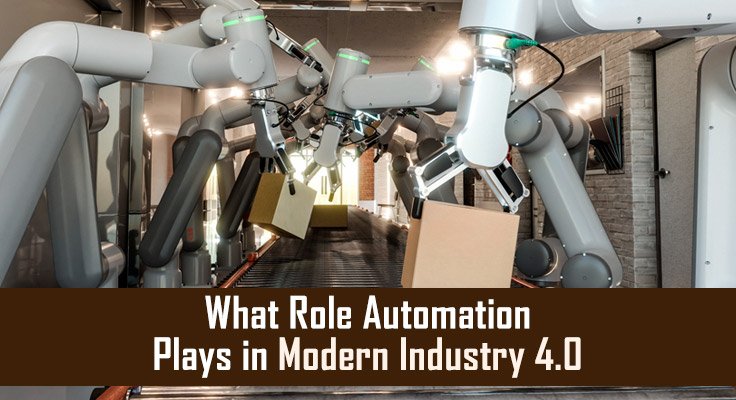
The manufacturing world is undergoing a fundamental transformation — a digital revolution known as Industry 4.0. This new era combines advanced technology, data intelligence, and connectivity to create smarter, more agile industrial systems. At the center of this evolution stands one powerful enabler: automation.
Automation is no longer limited to robotic arms or simple control systems; it’s now the backbone of intelligent manufacturing. In every UL 508A Panel Shop, automation connects machines, processes, and people through real-time data, driving efficiency, precision, and innovation like never before.
Let’s explore how automation shapes modern Industry 4.0 and why it has become essential for every forward-thinking industrial operation.
1. The Foundation of Smart Manufacturing
Automation forms the structural core of Industry 4.0. It enables machines and systems to communicate, make decisions, and execute tasks without constant human intervention.
In traditional manufacturing, repetitive tasks and manual control often led to errors, delays, and inconsistencies. Automation eliminates these barriers by introducing programmable logic controllers (PLCs), smart sensors, and robotic systems that handle operations with unmatched accuracy and speed.
These systems work in coordination with supervisory platforms such as SCADA (Supervisory Control and Data Acquisition), allowing real-time monitoring and process adjustments. The result is an integrated production environment where machines operate as intelligent units rather than isolated components.
2. Enhancing Precision and Productivity
One of the most tangible benefits of automation is precision. Automated systems perform repetitive tasks with exact consistency, ensuring that each product meets strict quality standards.
In modern facilities, robotic assembly lines, CNC machines, and automated inspection systems maintain high accuracy even during continuous operation. This consistency not only improves product quality but also reduces material waste and rework.
Automation also boosts productivity. With round-the-clock operation and minimal downtime, automated systems can achieve higher output levels while maintaining cost efficiency — a crucial advantage in today’s competitive manufacturing landscape.
3. Real-Time Data and Decision-Making
In Industry 4.0, automation doesn’t just control machines — it generates and interprets data. Every process, from temperature regulation to equipment performance, is continuously monitored through connected sensors and data platforms.
This data-driven visibility gives manufacturers a complete picture of operations in real time. Managers can detect inefficiencies, forecast maintenance needs, and optimize production schedules without guesswork.
By integrating automation with analytics and artificial intelligence, organizations transform raw data into actionable insights. This leads to better decisions, faster response times, and a deeper understanding of how each process impacts overall performance.
4. Integration Across Systems and Processes
The true strength of automation lies in its ability to integrate different processes into a unified, intelligent network. In the context of Industry 4.0, this integration connects everything — from the motor control center and switchgear systems to sensors, robotics, and enterprise software.
When automation links production equipment, supply chain data, and energy management systems, operations become more synchronized and efficient. Information flows freely across departments, creating a connected ecosystem where every action is informed by data.
This level of coordination ensures consistent output, balanced workloads, and reduced downtime, giving manufacturers a significant competitive edge.
5. Predictive Maintenance and Equipment Reliability
Unplanned downtime is one of the biggest challenges in manufacturing. Traditional maintenance strategies, based on fixed schedules, often result in either unnecessary service or unexpected equipment failures.
Automation changes this through predictive maintenance. Sensors and control systems track the performance of motors, drives, and mechanical components, detecting early signs of wear or deviation. When integrated with data analytics, these systems can forecast potential failures before they occur.
Maintenance teams can then plan interventions proactively, avoiding costly disruptions and extending equipment life. In modern Industry 4.0 facilities, predictive maintenance is not just a convenience — it’s a necessity for reliability and productivity.
6. Energy Management and Sustainability
Automation plays a critical role in improving energy efficiency across industrial operations. By precisely controlling equipment performance and monitoring power consumption, automated systems ensure that energy is used only where and when it’s needed.
For example, smart drives and control panels can adjust motor speed based on load requirements, significantly reducing waste. Data from connected systems can identify high-consumption areas and suggest corrective measures.
As sustainability becomes a key business priority, automation helps industries reduce their carbon footprint while maintaining operational excellence. Efficient processes don’t just save energy — they reinforce a company’s commitment to responsible manufacturing.
7. Workforce Transformation and Collaboration
A common misconception is that automation replaces people. In reality, it enhances human capability. As machines take over repetitive or hazardous tasks, employees can focus on higher-value work such as system optimization, problem-solving, and process improvement.
Automation empowers workers by providing better tools and data insights. For example, engineers can access real-time system diagnostics, operators can monitor processes remotely, and maintenance teams can use digital twins to simulate repairs.
This collaboration between human intelligence and machine efficiency defines the new industrial workforce — one that is skilled, adaptable, and essential for managing modern smart factories.
8. Driving Flexibility and Customization
Industry 4.0 emphasizes agility — the ability to adapt production quickly based on market demand. Automation enables this flexibility by making systems programmable, modular, and easily reconfigurable.
Automated production lines can switch between different product types or designs with minimal downtime. Machines equipped with advanced controls can adjust parameters automatically, maintaining quality even during rapid transitions.
This flexibility allows manufacturers to respond faster to changing customer needs without compromising efficiency, making automation a cornerstone of modern, customer-driven production.
9. Building Resilient and Scalable Operations
In today’s volatile market, resilience is just as important as productivity. Automation gives manufacturers the ability to scale operations up or down quickly, ensuring stability even during unexpected disruptions.
Integrated systems allow remote monitoring, remote troubleshooting, and cloud-based control — giving businesses more control over their operations regardless of physical limitations.
By combining automation with digital technologies, manufacturers create a foundation for long-term scalability, adaptability, and resilience in an ever-evolving global industry.
Conclusion
Automation is the driving force behind Industry 4.0 — the link that connects intelligent machines, data, and human expertise into one cohesive system. For any switchgear manufacturer, it defines how modern factories operate, learn, and adapt.
From predictive maintenance to real-time analytics and process integration, automation delivers efficiency, consistency, and control that manual systems simply cannot match.
As industries continue to evolve, automation will remain the cornerstone of innovation — not replacing people, but empowering them to work smarter, safer, and more strategically in a connected industrial future.
Also Read: The Role of Automation in Modern Compliance Practices