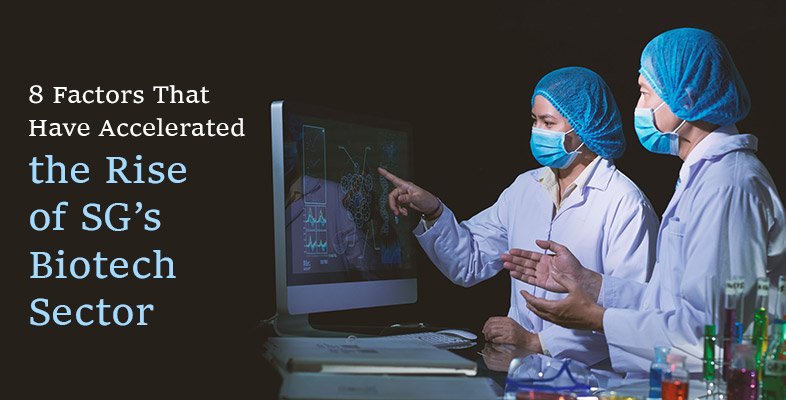
Over the last two decades, Singapore has built one of Asia’s most dynamic and forward-looking biotechnology industries. From a small biomedical base in the early 2000s, the city-state has evolved into a world-class hub for research and innovation, and manufacturing. Now, it’s an ideal venue for biotech companies targeting the Asia-Pacific region and beyond.
What factors made this transformation possible? These elements have played a role in accelerating the rise of Singapore’s biotech sector and attracting both start-ups and multinational firms alike:
1) Strong Government Support and Strategic Planning
At the heart of Singapore’s biotech success lies consistent government backing. The country identified life sciences as a strategic growth sector early on, launching a series of multi-year research and development frameworks under the Research, Innovation and Enterprise (RIE) initiative.
The current RIE2025 plan allocates billions in funding for biomedical sciences to ensure sustained investment in health technologies, therapeutics, and precision medicine. Agencies such as the Economic Development Board, Enterprise Singapore, and the Agency for Science, Technology and Research (A*STAR) have programmes that are designed to support local firms in their efforts to scale up and attract foreign investment. This long-term planning, coupled with a pro-business environment, gives biotech companies confidence to set up operations and grow within Singapore’s ecosystem.
2) World-Class Infrastructure and Innovation Clusters
Singapore’s success also stems from its ability to build the right physical and institutional infrastructure. Flagship hubs such as Biopolis and Tuas Biomedical Park provide integrated environments for research and development as well as advanced manufacturing.
These clusters feature laboratories, pilot plants, and shared facilities that lower entry barriers for biotech start-ups. They are also equipped with Biosafety Level 2 laboratories or BSL2 lab for rent facilities. These allow safe handling of biological agents and research into infectious diseases under controlled conditions, an essential feature for both diagnostics and therapeutics development.
Because they cluster research institutions and firms together, these innovation zones promote collaboration. They also play an important role in speeding up technology transfer and reducing operational costs.
3) Highly Skilled Talent Pool and Robust Education System
A thriving biotech industry depends on skilled people, and Singapore has consistently invested in its human capital. Its universities and research institutes offer strong programmes in biology, chemistry, engineering, and bioinformatics, producing a steady stream of local talent.
The ability to attract international researchers and professionals is equally important, and this is another area where Singapore continues to shine. The country has a reputation as a clean, safe, and cosmopolitan city, making it an appealing destination for global experts. This combination of local capability and international expertise has created a diverse and multidisciplinary workforce that is capable of tackling complex challenges.
4) Predictable Regulatory Environment and Strong IP Protection
Biotechnology companies rely on regulatory clarity and intellectual property (IP) protection. Singapore delivers both. The Health Sciences Authority (HSA) is widely regarded as an efficient and transparent regulator that offers clear guidance for clinical trials, product registration, and manufacturing standards.
Meanwhile, Singapore’s IP regime is one of the strongest in Asia. The ability to secure patents and enforce IP rights gives innovators and investors confidence that their discoveries are safe. This, in turn, encourages greater private investment and collaboration across the ecosystem.
5) Access to Capital and Investment Opportunities
Biotech innovation is capital-intensive, and Singapore has built an environment where funding is accessible through both public and private channels. Enterprises based in the country can utilise the following resources:
- Government-backed funding. Grants and co-investment schemes from Enterprise Singapore and A*STAR help early-stage companies de-risk innovation.
- Venture capital and corporate investment. A growing network of VCs, pharmaceutical companies, and institutional investors actively fund promising biotech ventures.
- Public markets. The Singapore Exchange (SGX) has also developed frameworks for listing healthcare and life sciences firms, offering liquidity to mature companies.
These financing mechanisms provide start-ups and established firms alike with the flexibility to expand research, scale production, and enter new markets.
6) Strategic Location and Global Connectivity
Geographically, Singapore sits at the crossroads of major Asian markets. Its well-developed logistics network, efficient port, and world-class airport infrastructure make it easy for companies here to manage supply chains. The city-state’s political stability and low corruption levels further enhance its appeal. For global biotech firms, establishing a regional base in the country allows them to serve Southeast Asia and the wider Asia-Pacific with reliability and ease.
7) Integration of Emerging Technologies
The fusion of biotechnology with digital innovation is another factor behind the sector’s acceleration. Singapore’s biotech firms increasingly integrate artificial intelligence (AI) and machine learning into areas such as:
- Drug discovery and clinical trial optimisation
- Personalised medicine and genomics
- Diagnostic technology and early disease detection
This convergence of life sciences and digital technologies helps shorten development timelines while reducing R&D costs. It also positions Singapore as a key player in next-generation health innovation.
8) Collaboration and Cross-Sector Partnerships
Lastly, Singapore’s approach to biotech growth is deeply collaborative. Public-private partnerships, which link government agencies, academia, hospitals, and private companies, are central to its strategy.
Examples include shared research platforms and translational programmes that move discoveries from the lab to commercial application. The close cooperation between global pharmaceutical leaders and local research entities also facilitates technology transfer and the development of high-value manufacturing capabilities. This spirit of collaboration not only strengthens the domestic ecosystem but also fosters a culture of innovation that draws international partners.
Ultimately, Singapore’s biotech success can be attributed to its long-term vision. Rather than chasing short-term gains, the country has systematically built the foundations for a sustainable innovation economy by balancing research excellence, manufacturing capability, and global connectivity. That foresight continues to pay off. With strong infrastructure and government commitment, the country is not only sustaining its position as a biotech hub but also setting the standard for how small nations can play a leading role in global science and innovation.
Also Read: How U.S. Biotech Companies Are Revolutionizing NGS Library Preparation