There is a particular kind of frustration that every HR manager, payroll administrator, and business founder knows intimately. It is the frustration of doing the same thing twice, or three times, or twelve times. A new employee joins the company, and suddenly someone has to enter their name into the payroll system, then into the IT system, then into the benefits portal, then into the Slack workspace, and then into whatever other platform happens to live in the company’s digital ecosystem. The information is the same every time. The process is different every time.
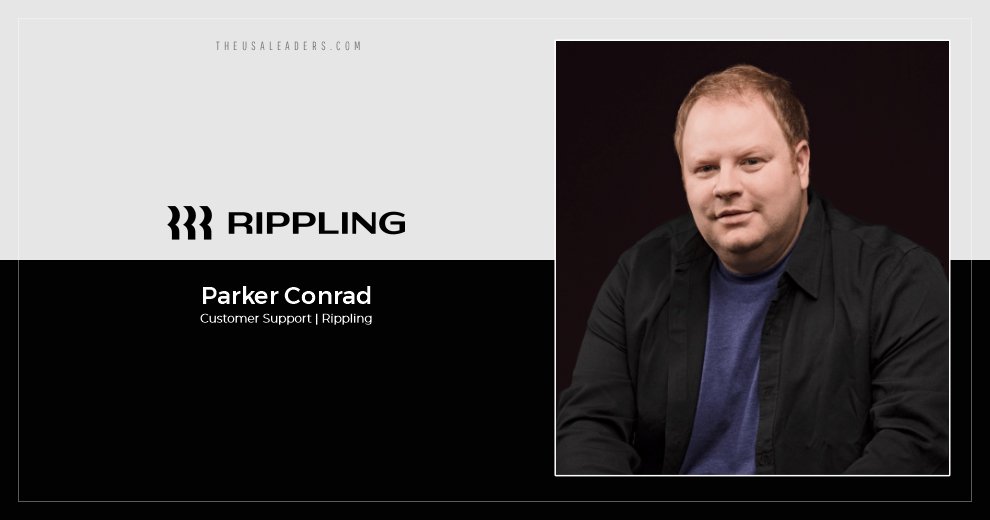
Parker Conrad has spent years thinking about this problem. And thinking about it, and thinking about it some more. What he arrived at was not a workaround or a patch. It was a philosophy.
One System to Rule Them All
The core idea behind Rippling, the company Parker founded, is deceptively straightforward: fragmentation of employee information is the unacknowledged root cause of almost all the administrative work of running a company.
Say that out loud. Think about what it means. Every time a company hires someone, fires someone, promotes someone, or changes that person’s role, a dozen different systems need to know about it. And in most companies, a human being has to tell each of those systems individually. The cost, in time and in focus, accumulates quietly, invisibly, until it is simply accepted as the way things are.
“The right solution,” Parker has argued, “is to create a single system for employee data that sits, like a layer, underneath all your business software and services, and which pipes employee data, configuration instructions, and access rules into all of these systems.”
This is not a small idea. It is, in fact, the kind of idea that sounds obvious only after someone has articulated it clearly. Most platforms in the HR and payroll space focus on a narrow use case, serving one specific department’s needs. Rippling was built on a different premise: that the problem is not payroll, or IT, or benefits in isolation. The problem is that these things are not talking to each other.
The Button That Changes Everything
In practice, what this means is that Rippling can do something rather remarkable. You click a button to hire someone, and then you are done. Not done in the sense of having handed the task off to someone else. Done in the sense that the task is, actually, finished.
The platform generates agreements and paperwork for electronic signing. It collects the new employee’s personal information. It ships them a pre-configured computer with security already set up, ready on day one. It sets up their accounts across every business system that needs them: G Suite, Slack, Box, Salesforce, GitHub, AWS, and the list continues. It enrolls them in payroll and benefits. All of this, from one button.
The same logic applies when someone is promoted. Or when someone leaves. Rippling automates onboarding, offboarding, and every change in between, across every system that needs to know. The human in the loop is freed from data entry and restored to judgment.
The Mission Behind the Product
Rippling’s mission, as Parker has framed it, is “to eliminate the administrative drudgery of running a business by creating a single system of record for employee information that all business software and services plug into.”
The word “drudgery” is worth sitting with. It is not a word that appears in most corporate mission statements. It is an honest word. It acknowledges that the work of running a company is, at its core, full of tedious, repetitive tasks that consume time and energy that could be spent on something more worthwhile. Parker’s ambition is to make that drudgery disappear.
What is particularly interesting about the Rippling model is not just what it automates, but what it assumes. It assumes that a company’s data should be unified, not siloed. It assumes that the systems a company uses should be connected, not isolated. And it assumes that the people responsible for managing those systems have better things to do than re-enter the same name into the same fields across a dozen different platforms.
Why This Matters in 2026
The workforce landscape in 2026 is more complex than it has ever been. Companies are managing distributed teams across time zones, navigating an expanding ecosystem of software tools, and working to maintain compliance across multiple jurisdictions. The administrative burden on HR and operations teams has not gotten lighter. If anything, it has grown in proportion to the complexity of modern work.
Against that backdrop, the Rippling model represents something more than a software product. It represents a reimagining of what the infrastructure of a company can look like. When employee data lives in a single place, and every system that needs it can draw from that single source of record, the possibility space for what HR teams can actually focus on expands considerably.
Parker is not selling a time-saving tool. He is arguing, with the conviction of someone who has stared at this problem for a long time, that the structure of most companies is wrong at its foundation, and that getting it right changes everything that sits on top of it. That is a substantial argument. And in 2026, it is one that the business world is paying close attention to.
Also Read: The 10 Transformative Payroll & Leadership Advisors to Watch in 2026