Organizational learning followed a predictable pattern for a very long time. People were trained, evaluated, and expected to perform. It was effective sometimes but the majority of the time, it did not convert into practical implementation as easily as we had planned.
Even now, most businesses struggle with this gap between learning and acting.
In order to create realistic, hands-on environments where employees may learn by actually performing the task rather than merely reading PPTs or watching videos how it is done, many firms are shifting to solutions like Assima Train.
Because education rarely prepares individuals for reality if it does not mirror it.
Why Traditional Learning Models Are Falling Short
Let’s be honest. Most training programs today are still built around content, not context. We focus heavily on what employees need to know, but not enough on how they will actually use that knowledge when work gets real.
We give employees presentations, videos, documentation, and step by step guides. On paper, it looks comprehensive. It feels structured. It even checks all the right boxes from a learning perspective.
But the moment they sit in front of the actual system or deal with a real scenario, everything changes. That is where the gap becomes visible and measurable.
Here is what that disconnect typically looks like in practice:
| Training Approach | What It Looks Like in Theory | What Actually Happens in Practice |
| Content-heavy learning | Employees attend sessions, watch videos, and read guides | Information overload leads to low retention |
| Step-by-step instructions | Clear, structured processes explained during training | Real scenarios do not follow perfect steps |
| One-time training sessions | Learning is completed before work begins | Employees forget when they need it most |
| Controlled learning environment | No pressure, no risk, guided experience | Real work involves pressure, urgency, and uncertainty |
| Assumed readiness | Employees are marked “trained” and ready | Employees hesitate, make errors, or seek help |
Because if this disconnects what we end up with is a system where learning feels complete, but performance tells a very different story. And that gap between knowing and doing is not just a learning problem anymore. It is a business problem.
What Simulation Technology Changes
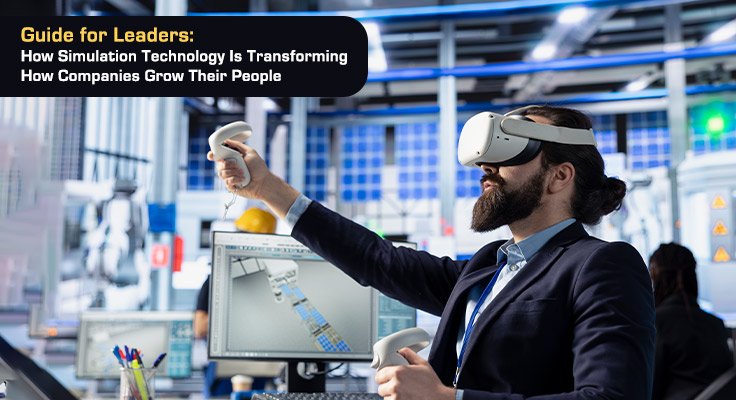
Simulation technology flips the approach. Instead of telling people what to do, it lets them experience it.
Move from passive learning to active practice
Simulations allow employees to interact with systems, processes, and scenarios in a safe environment. They can make mistakes, try again, and learn without the risk of real-world consequences.
That kind of practice builds confidence in a way traditional training never can.
Bring learning closer to real work
One of the biggest advantages of simulation is how closely it mirrors actual workflows.
Instead of abstract examples, employees are working through situations that feel real. This makes the transition from learning to doing much smoother.
Reduce dependency on memory
Let’s face it, people forget.
No matter how good a training session is, retention drops over time. Simulations reduce this problem because they focus on practice rather than recall. When people have already done something, even in a simulated environment, they are far more likely to do it correctly in real situations.
Where Leaders Need to Rethink Their Approach
Even with all its potential, simulation technology is not a magic fix. The impact depends on how we use it.
We cannot treat it as just another training tool
If simulation is added on top of existing learning programs without changing the approach, it loses its value. It works best when it becomes part of how people learn and perform continuously, not just during onboarding or formal training.
We need to align it with real business goals
Simulation shouldn’t be used alone. It should be linked to results like reduced errors, increased productivity, and quicker onboarding. If not, it runs the risk of becoming just another project that appears promising but has little effect.
Usability must be prioritized over capability.
An intricate simulation that is challenging to use is counterproductive. The experience must be clear, pertinent, and clearly related to the work that people actually accomplish.
The Bigger Shift:
More broadly, this goes beyond simulation technologies. It is about how we approach human development. We are shifting from a model that views learning as an isolated event to one that incorporates it into routine tasks.
During such change, simulation turns into a potent facilitator. In a way that feels organic and useful, it aids in bridging the gap between knowing and doing. As part of a broader plan to enhance performance in the real world, some firms are already embracing this by incorporating platforms like Assima into their learning ecosystems rather than using them as stand-alone tools.
Where This Leaves Leaders:
If we step back, the message is quite simple. The goal is not to train people more. It is to help them perform better.
Leaders who understand this are not just building better training programs. They are building more capable, confident teams. And that is what ultimately drives growth.