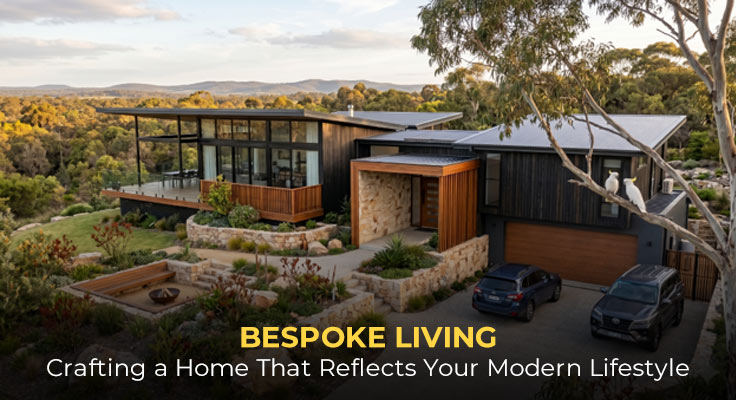
The way households interact with their physical environments has undergone a fundamental shift. The residential floor plans of past decades—characterized by rigid, formal dining rooms, isolated kitchens, and uniform bedroom sizes—frequently conflict with contemporary daily routines. Modern life demands fluid, multi-functional spaces capable of transitioning from high-energy family hubs to quiet, acoustically isolated workspaces at a moment’s notice.
When establishing a long-term footprint in South Australia, homeowners face a critical decision: modify a mass-produced catalog design or build a bespoke residence. Opting for a volume builder often requires compromising your daily habits to fit a pre-existing blueprint.
To create a residence that actively supports your daily routine, engaging a specialist custom home builder is essential. This approach allows you to design a structural footprint around your specific lifestyle patterns, site dynamics, and long-term financial goals.
The Behavioral Shift: Where Catalog Homes Fall Short
Mass-market home designs are engineered for a statistical average, not an individual family. They rely on predictable layouts that fail to account for how modern households use space.
The Breakdown of Single-Zone Living
The open-plan layout was originally celebrated for maximizing light and connection. However, unrestricted open living often creates significant acoustic challenges. With multiple family members simultaneously working from home, streaming media, or studying, a single open room quickly becomes chaotic.
Volume builders frequently resolve this by adding a small “study nook” or a secondary lounge directly adjacent to the main living zone. This approach fails to provide true acoustic separation.
A bespoke design approaches spatial planning through an acoustic lens. It utilizes architectural zoning techniques—such as offset hallways, solid-core cavity sliding doors, and structural soundproofing—to isolate quiet workspace zones from high-traffic family areas without sacrificing natural light or open sightlines.
Accommodating Multi-Generational and Flexible Households
The traditional nuclear family structure is no longer the sole blueprint for Australian households. Increasingly, homes must accommodate adult children staying home longer, aging parents requiring independent living arrangements, or long-term interstate guests.
Standard off-the-plan catalogs offer minimal flexibility for these dynamics. A custom floor plan can incorporate dual master suites, self-contained wings with private access points, or flexible rooms designed to transition seamlessly from a children’s playroom to a teenage retreat and eventually a private studio.
Designing for the Adelaide Lifestyle and Climate
Adelaide’s geographical positioning creates a unique lifestyle profile, balancing outdoor entertaining with distinct seasonal weather extremes. A home designed for the modern Adelaide lifestyle must be highly responsive to its environment.
Perfecting the Indoor-Outdoor Transition
In South Australia, the outdoor alfresco area is often treated as a secondary living room rather than a simple patio. Volume homes typically attach a standard portico to the rear of a house, which can block natural light from entering the main kitchen and living spaces.A custom layout optimizes this transition by accounting for local wind patterns and solar paths. By using flush-threshold commercial sliding doors, integrated outdoor kitchens, and custom roof orientations, a bespoke home creates a sheltered outdoor living space usable across all four seasons.
Integrating Advanced Solar Passive Design
Adelaide features hot, dry summers and cool, damp winters. This climate requires careful attention to thermal efficiency. A custom home builder reviews the exact orientation of your allotment to implement passive solar design principles.
Technical Precision: Soil, Engineering, and Site Realities
The aesthetic brief of a modern home is only as secure as its subterranean engineering. Building across the Adelaide Plains, foothills, or coastal strips introduces distinct civil realities that standard building models often overlook.
Navigating Highly Reactive Clay Soils
Adelaide features some of the most reactive clay soils in the country, often classified as H1, H2, or E (highly to extremely reactive). These soils swell significantly when wet and shrink as they dry, placing immense structural stress on foundations.
Standard building contracts usually include allowance for an “M-class” (moderately reactive) slab. When the soil report indicates more complex earth conditions, buyers often face significant unexpected site costs before construction begins.
A custom builder coordinates comprehensive soil profiling and structural engineering reviews early in the design phase. This ensures that the concrete footings and underlying piering are engineered precisely for your site’s specific soil profile, providing clear pricing from the start.
Managing Topography Without Destructive Earthworks
If your allotment features a slope—a common characteristic across the Adelaide foothills and southern suburbs—forcing a standard flat slab onto the terrain requires major excavation. This cut-and-fill approach requires intrusive retaining walls and can leave your home feeling disconnected from its natural landscape.
Bespoke construction works with the natural slope of the land through custom engineering, such as split-level framing. This approach limits soil disruption, reduces the risk of long-term foundation movement, and uses the changing floor heights to create unique internal spaces with elevated views.
Streamlining the SA Planning and Design Code
The regulatory framework in South Australia requires careful navigation. The statewide Planning and Design Code sets strict guidelines for how a home can sit on its allotment.
Overcoming Local Council Constraints
Whether you are executing an urban infill project in the City of Marion or constructing a modern residence within a historic character overlay in the City of Norwood Payneham & St Peters, council compliance is central to the project’s timeline. The code dictates clear boundaries regarding:
- Site Coverage: The maximum percentage of the block that the home’s footprint can occupy.
- Boundary Setbacks: The minimum distance required between your walls and the property lines to maintain neighborhood consistency.
- Privacy Mitigation: Specific window sill heights or obscured glazing requirements to prevent overlooking adjacent yards.
When bespoke home builder adelaide, choosing a custom design approach ensures compliance is integrated into the layout from day one. Rather than trying to modify a standard catalog plan to fit complex local rules, a custom design is crafted to meet council guidelines from the start, paving the way for a smoother development approval process.
Smart Home Technology and Future-Proofing
A modern lifestyle relies heavily on digital connectivity and energy independence. A truly modern home must look ahead to future infrastructure requirements.
Integrated Tech and Energy Automation
Bespoke building allows you to integrate your technological needs into the structural bones of the home. This includes running dedicated data channels for high-speed connectivity, establishing centralized hubs for home automation, and pre-wiring for battery backup systems and electric vehicle (EV) charging stations.
By planning these elements during the framing stage, you avoid the high costs and aesthetic disruption of retrofitting these systems later.
Elevating Long-Term Market Value
A home is both a personal sanctuary and a significant financial investment. While volume builds often depreciate at a similar rate to the broader market due to their generic nature, bespoke architectural homes tend to maintain strong value over time.
A custom home is a unique asset tailored to its specific location, optimized for thermal efficiency, and constructed to address local environmental conditions. When the time comes to sell, a home that features clever spatial design, low energy bills, and high-quality materials often commands a premium from buyers looking for an alternative to generic properties.
By partnering with an experienced builder who understands the local landscape, regulations, and construction methods, you can transform your property vision into an enduring architectural asset.